Top 10 Best Portable Solar Panels of 2026: Ranked & Reviewed
One $175 panel embarrassed competitors costing three times as much. These are the 10 best portable solar panels of 2026, ranked honestly for campers, van lifers, and off-grid setups.
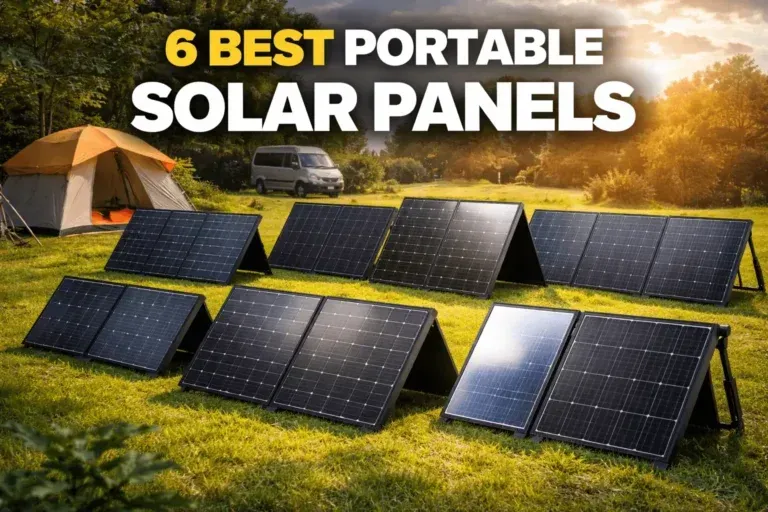
Most people shopping for portable solar panels make the same mistake: they buy the panel their favorite overlander uses, then wonder why their power station takes three days to charge. The best portable solar panels of 2026 aren't the ones with the most YouTube sponsorships. They're the ones with the right efficiency, the right ports, and the right price for your setup. One panel stood out above everything else: Renogy's 100W Starter Kit (#1). But whether you're hunting for the best portable solar panels for camping, outfitting an RV, or building a full off grid rig, there's a panel on this list that fits.
| # | Product | Price | Rating | |
|---|---|---|---|---|
| #1 | Renogy 100W Starter Kit | $132.99 | 4.7/5 | View Deal |
| #2 | Renogy 200W Portable | $174.94 | 4.5/5 | View Deal |
| #3 | EcoFlow 220W Bifacial | $449.00 | 4.5/5 | View Deal |
| #4 | EcoFlow 220W Portable | $280.00 | 4.5/5 | View Deal |
| #5 | Goal Zero Boulder 200 | $549.00 | 4.4/5 | View Deal |
| #6 | Jackery SolarSaga 200W | $379.00 | 4.4/5 | View Deal |
| #7 | Goal Zero Nomad 200 | $599.95 | 4.4/5 | View Deal |
| #8 | FlashFish 100W Foldable | $129.00 | 4.4/5 | View Deal |
| #9 | BLUETTI PV350 | $649.00 | 4.3/5 | View Deal |
| #10 | BougeRV Arch 200W | $205.00 | 4.3/5 | View Deal |
#1. Renogy 100W 12V Solar Panel Starter Kit
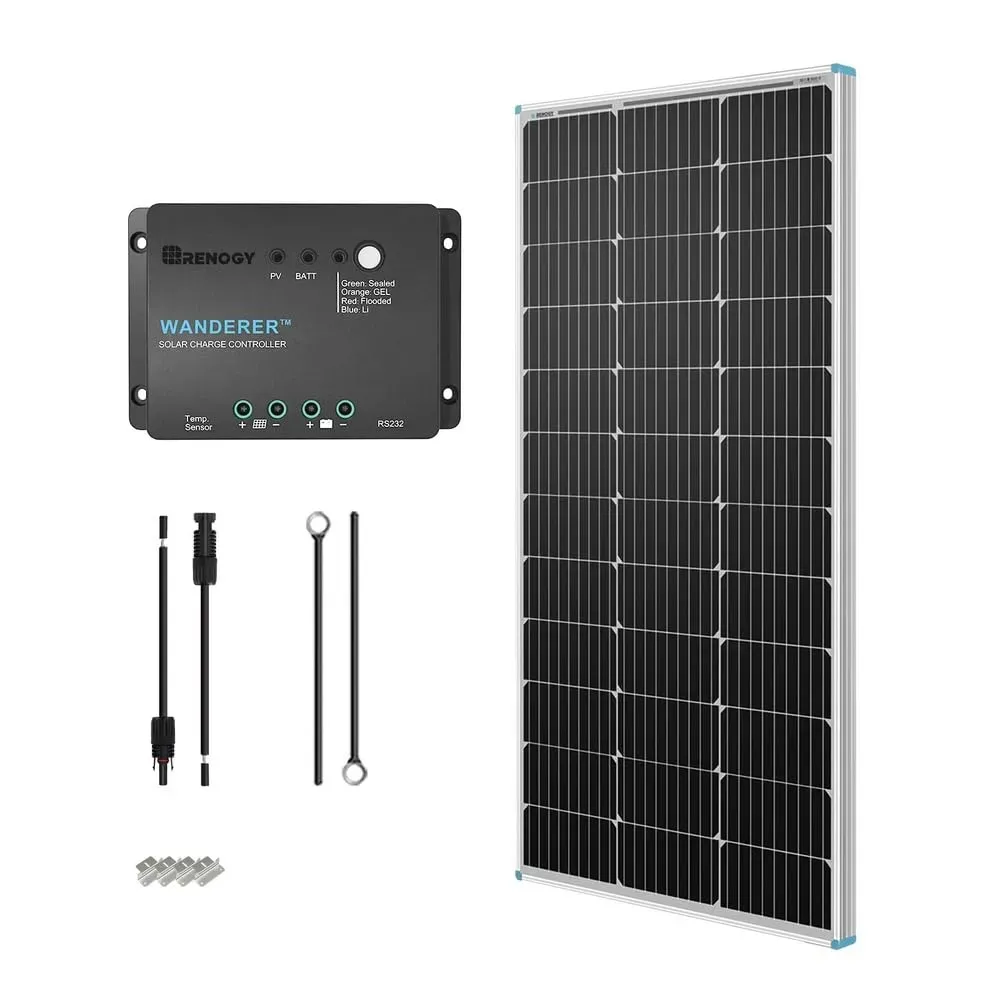
The complete solar kit that eliminates guesswork: panel, controller, and cables in one box.
Price: $132.99 Rating: 4.7/5 Best For: Solar Starter Kits Check Price on Amazon
The Renogy 100W Starter Kit isn't the most powerful panel here. Not even close. The BLUETTI PV350 (#9) cranks out 350W. But power isn't why this kit wins. It ships with everything: a charge controller, MC4 connectors, tray cable, mounting brackets. One box. The Goal Zero Boulder 200 (#5) makes you buy a controller separately. The EcoFlow panels (#3, #4) lock you into the XT60i ecosystem. This kit works with AGM, Gel, Flooded, and Lithium batteries straight out of the box. If you're building your first off grid system and the idea of sourcing components separately makes your head hurt, this is the fix. It simply removes the friction between you and functional solar power.
Pros
- Generates an average of 500Wh of electricity per day with 22.5% cell efficiency
- UL 61730, CSA C22.2#61730 certified — withstands 2400Pa wind and 5400Pa snow loads
- 10-year materials warranty, 25-year power output service plan
- RS232 Bluetooth port compatible with Renogy BT-1 module for remote monitoring
- Expandable up to 400W for growing power needs
Cons
- PWM charge controller included — not the more efficient MPPT type
- No USB output ports — strictly for battery and power station charging
- Permanent mounting requires drilling; not a grab-and-go panel
Verdict: Buy this if you're new to solar and want a complete, certified system without the component scavenger hunt. Skip it if you need USB-C fast charging on the panel itself or prefer MPPT efficiency.
#2. Renogy 200W Portable Solar Panel, IP65 Waterproof Foldable
25% efficiency at under $175. The best dollar per watt ratio on this entire list.
Price: $174.94 Rating: 4.5/5 Best For: Budget Portable Power Check Price on Amazon
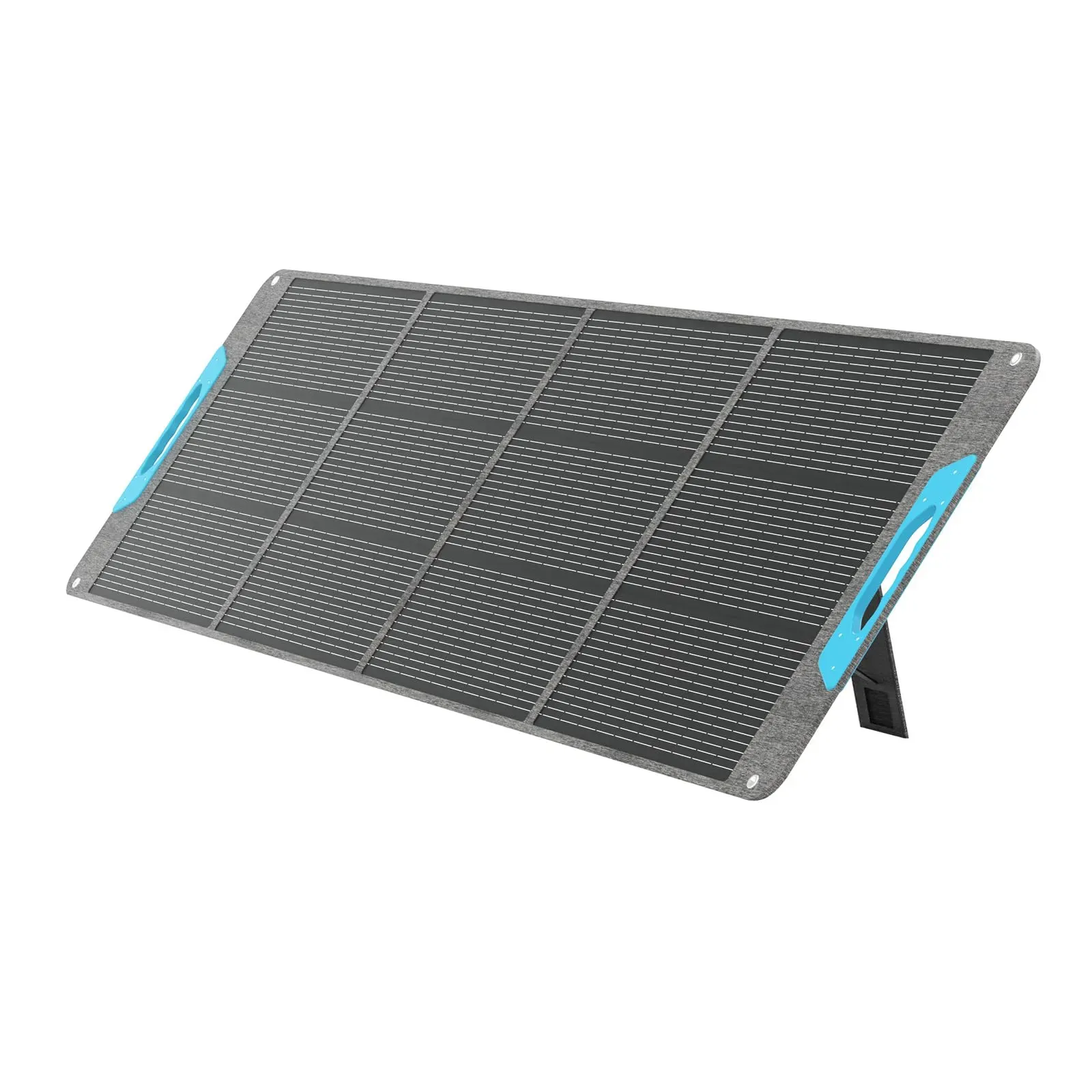
Twenty five percent efficiency. Under $175. That sentence would have been fiction three years ago. The Renogy 200W Portable outclasses panels at twice the price: the Goal Zero Nomad 200 (#7) asks $599.95 and delivers less. The magnetic handles actually stay shut during transit, which sounds trivial until you've chased a flapping panel across a windy campsite. This is the panel that makes you question why anyone pays more. When you can run a power station, laptop, and phone simultaneously from something that costs less than a weekend at a campground, the value math stops being abstract. Honest answer: for most people reading this, the #2 pick is the smartest buy on the entire list.
Pros
- Industry-leading 25% efficiency via 16BB N-Type cell technology
- Lightweight at 13.89 lbs — folds to 23.72 x 22.99 x 1.97 inches
- 3-angle adjustable kickstands (40, 50, 60 degrees) for optimal sun tracking
- IP65-rated and UL 61730 certified for dust and water splash protection
- Simultaneous triple-device charging: USB-C PD 45W, 2x USB-A, MC4
Cons
- Kickstands can slip on smooth surfaces like polished concrete or wet grass
- No integrated battery storage — you'll need a separate power station
- MC4 output only — no ring terminal adapter included for direct battery connections
Verdict: The best value panel on the market right now. Buy it if you want premium efficiency without the premium price. Skip if you're deep in the EcoFlow or Goal Zero ecosystem and want native connector compatibility.
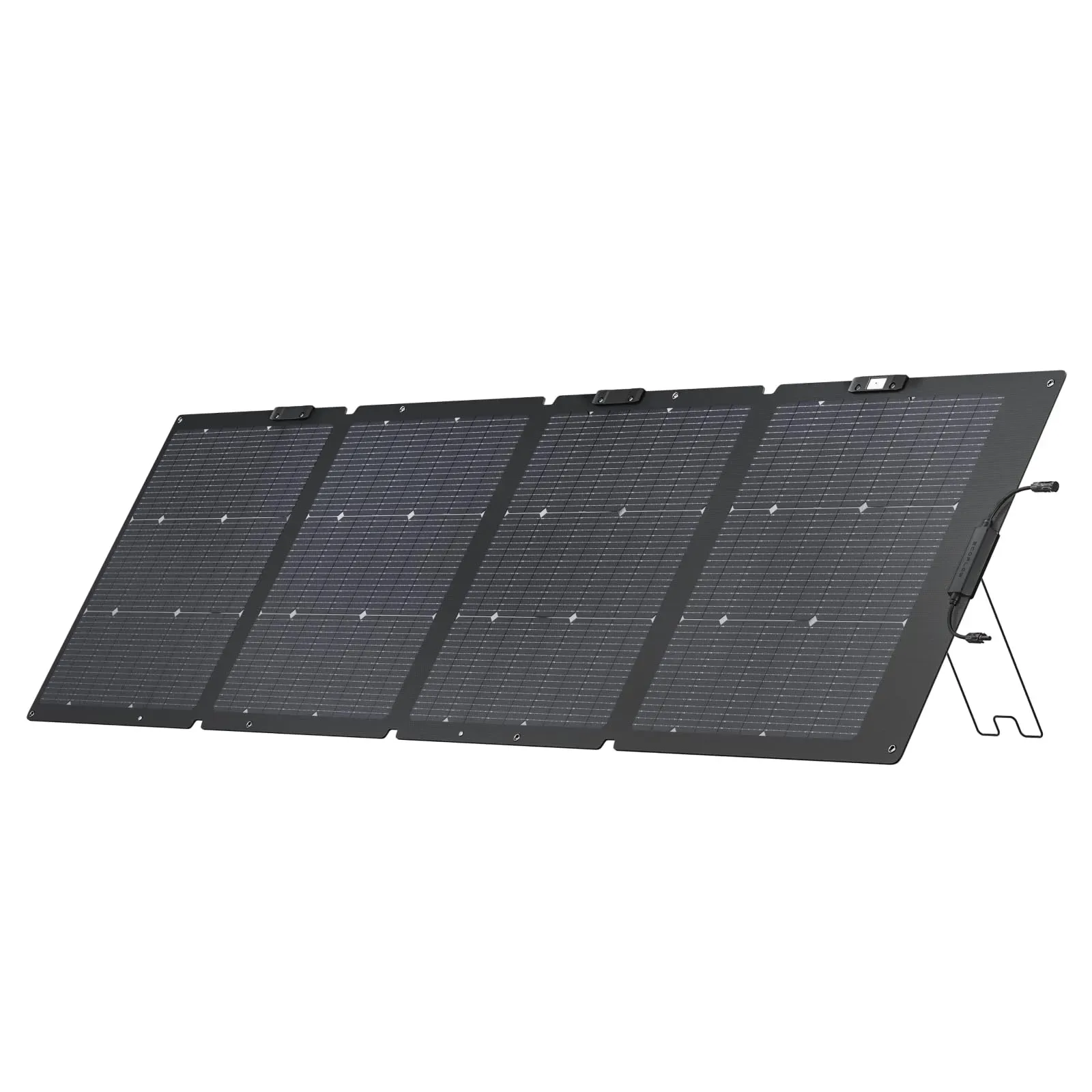
#3. EF ECOFLOW 220W Portable Solar Panel, Bifacial Design
Bifacial design captures reflected light for up to 28% more energy. A genuine innovation, not a gimmick.
Price: $449.00 Rating: 4.5/5 Best For: EcoFlow Power Station Users Check Price on Amazon
Bifacial solar panels used to live on solar farms, not in car trunks. The EcoFlow 220W Bifacial changes that. Its dual sided design captures up to 28% more energy from light bouncing off snow, sand, or concrete. In those conditions, it outperforms its rating while single sided panels like the Renogy 200W (#2) hit their ceiling. Pair it with an EcoFlow Delta station via XT60i and charge speeds jump noticeably. The built in solar angle guide on the kickstand is brilliant: no more guessing whether your panel's aimed correctly. $449 is steep, no question. But if your camping involves sand, snow, or light gravel, the bifacial gain pays off. Camp mostly on grass or forest floor? Save your money and grab #4 instead.
Pros
- Industry-first N-Type cells achieving 25% conversion efficiency
- Bifacial design captures up to 28% more energy from reflected light
- Adjustable 30 to 60 degree kickstand with integrated solar angle guide
- IP68 water and dust resistant — fully sealed for harsh conditions
- Compact 15.4 lb foldable design with ETFE coating for durability
Cons
- $449 is steep — you're paying a real premium for the bifacial tech
- Bifacial gain is negligible on dark or non-reflective surfaces like grass or asphalt
- XT60i connector limits full-speed compatibility to EcoFlow power stations
Verdict: The smartest premium panel for EcoFlow ecosystem users who frequently camp on sand, snow, or light-colored ground. If your adventures mostly involve forest floors and grass, save the $169 and grab the non-bifacial version (#4).
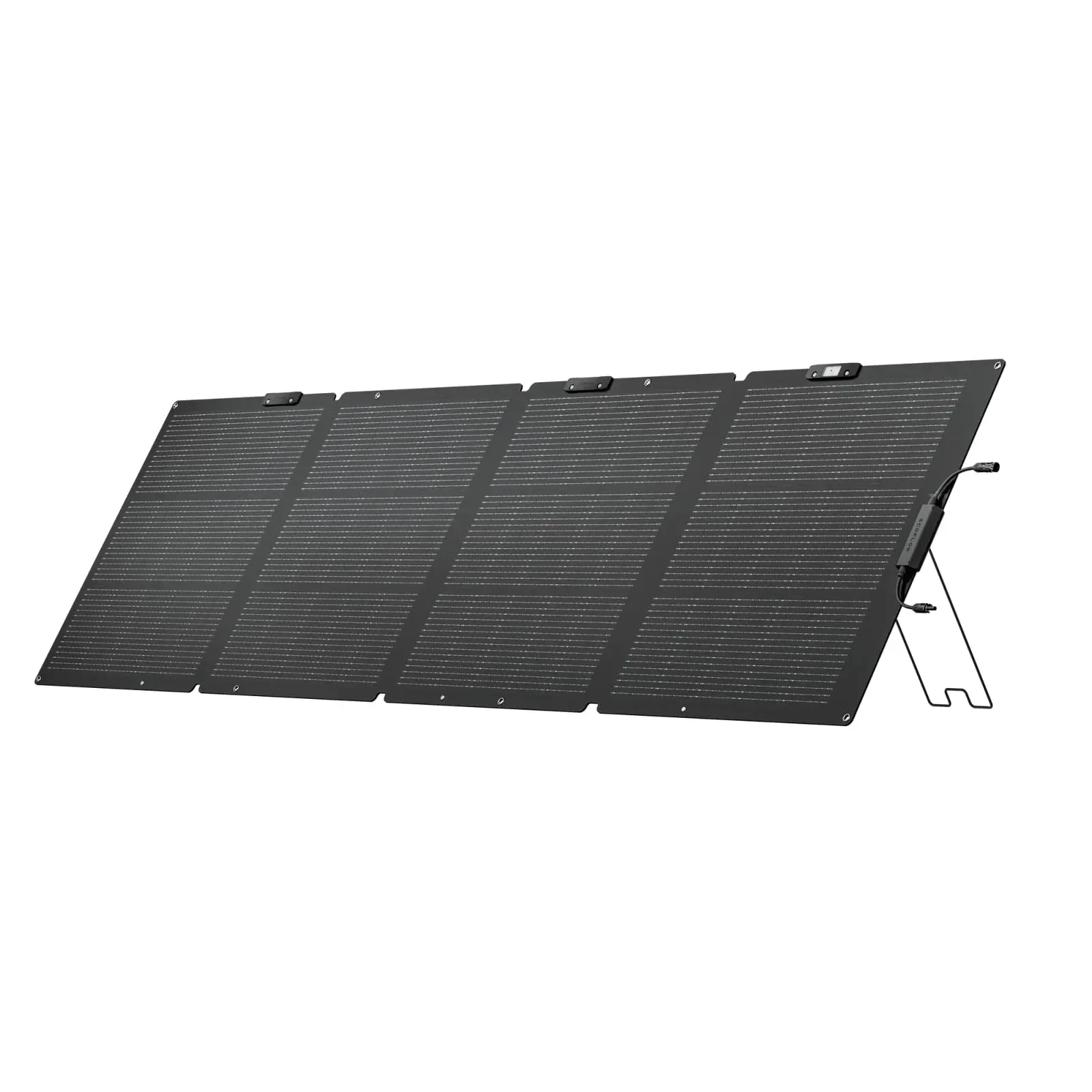
#4. EF ECOFLOW 220 Watt Portable Solar Panel, 25% High Conversion Efficiency N-Type Solar Cell
Same N-Type cell tech as the bifacial model, minus the $169 premium for the rear panel.
Price: $280.00 Rating: 4.5/5 Best For: NextGen Solar Users Check Price on Amazon
Here's the thing about EcoFlow's 220W lineup: the bifacial version (#3) is brilliant on sand and snow. On grass or dirt, the rear panel does almost nothing. That's where this panel shines. You pocket the $169 savings and lose no front side performance at all. The comparison gets interesting against the Renogy 200W (#2): you're paying about $105 more for the EcoFlow name and the XT60i fast charging with Delta power stations. Worth it if you're already in the EcoFlow ecosystem. If not, the Renogy delivers nearly identical real world results for less. This panel exists for the EcoFlow owner who camps in forests, not deserts.
Pros
- 25% conversion efficiency with N-Type solar cell technology
- Adjustable 30 to 60 degree kickstand with integrated solar angle guide
- Durable ETFE coating with resistance against harsh weather
- IP68 water and dust resistant for reliable outdoor use
- Compact 15.9 lb foldable design for easy transport
Cons
- No bifacial capability — you lose the 28% reflected-light energy gain entirely
- Heavier than the Renogy 200W (#2) at 15.9 lbs vs 13.89 lbs, while costing over $100 more
- At $280 it's mid-range — not the budget steal the Renogy 200W (#2) is at $175
Verdict: The rational choice for EcoFlow users who don't need bifacial gains. Buy it for N-Type efficiency at a more digestible price. Skip if you want the best raw value — the Renogy 200W (#2) beats it on price per watt.
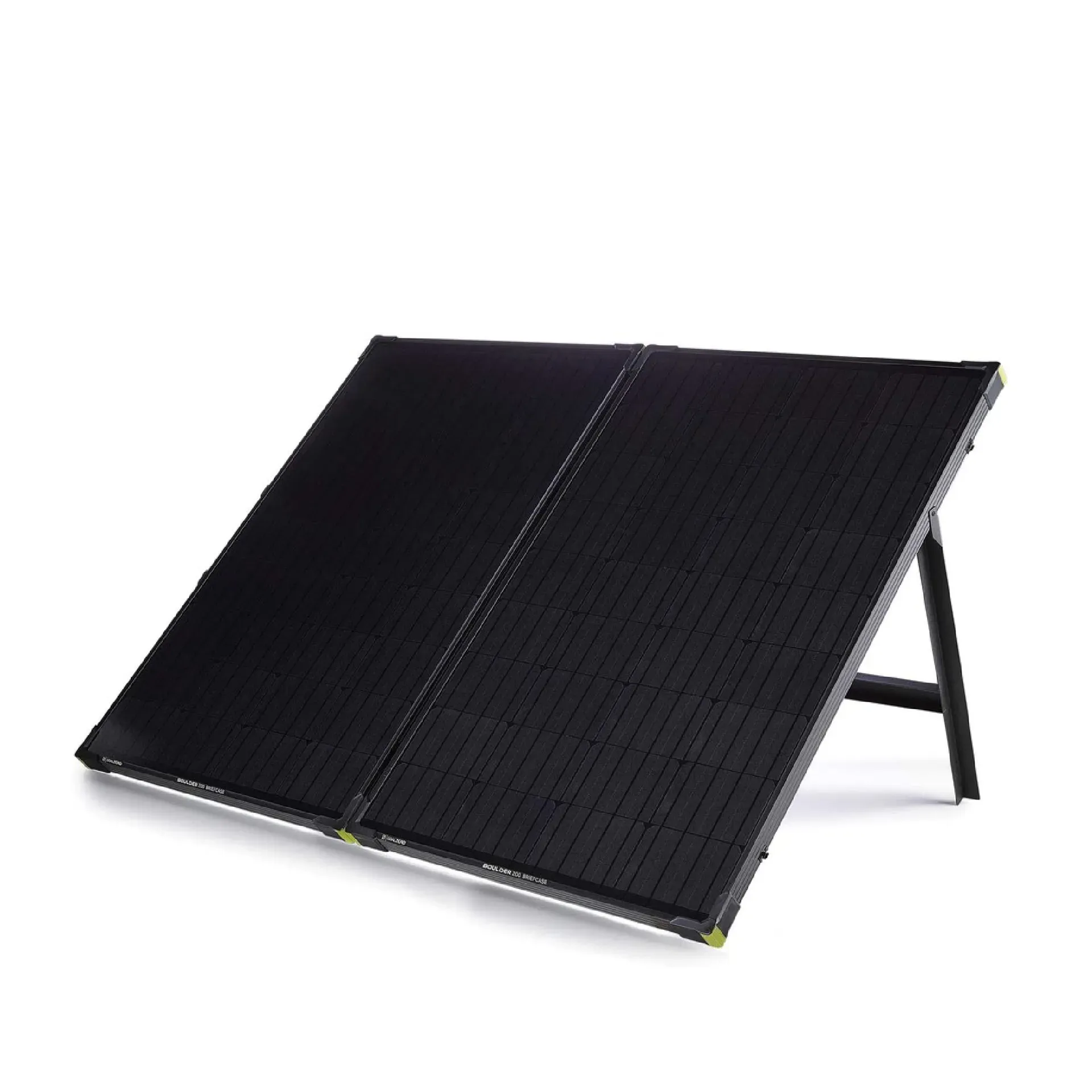
#5. Goal Zero Boulder 200 Briefcase, 200-Watt Monocrystalline Solar Panel
Tempered glass and aluminum. The most ruggedly built panel here, designed for abuse.
Price: $549.00 Rating: 4.4/5 Best For: Rugged Off-Grid Use Check Price on Amazon
Thirty three pounds. That's more than double the Renogy 200W (#2). But the Boulder 200 earns its heft. Where other panels use fabric and polymer, Goal Zero went with tempered glass and an aluminum frame with reinforced corners. Pop out kickstand legs with stake down loops keep it planted in wind that would send lighter panels cartwheeling across the campsite. This is the panel for van lifers who leave their rig parked in the desert for weeks, remote workers who can't afford a cracked panel on day two, and anyone who treats their gear like it owes them money. It's not portable in the backpack sense. It's portable in the sense that it survives everything you throw at it.
Pros
- Two 100W flexible panels in a hinged briefcase format with tempered-glass and aluminum-frame construction
- Reinforced corner protection for impact resistance
- Built-in pop-out kickstand legs with stake-down loops for wind security
- Zero-emission, zero-noise operation
- Seamless integration with Goal Zero Yeti power stations
Cons
- Roughly 33 pounds — more than double the weight of the Renogy 200W (#2)
- All power routes through the Yeti connector only — you cannot charge a phone or laptop directly from the panel
- Briefcase format is bulkier to store than quadfold or roll-up designs
Verdict: Buy it if durability is your #1 priority and weight doesn't matter. This is the best portable solar panel for RV and van-life setups where the panel stays at camp. Skip if you need something you can carry more than a few hundred yards.
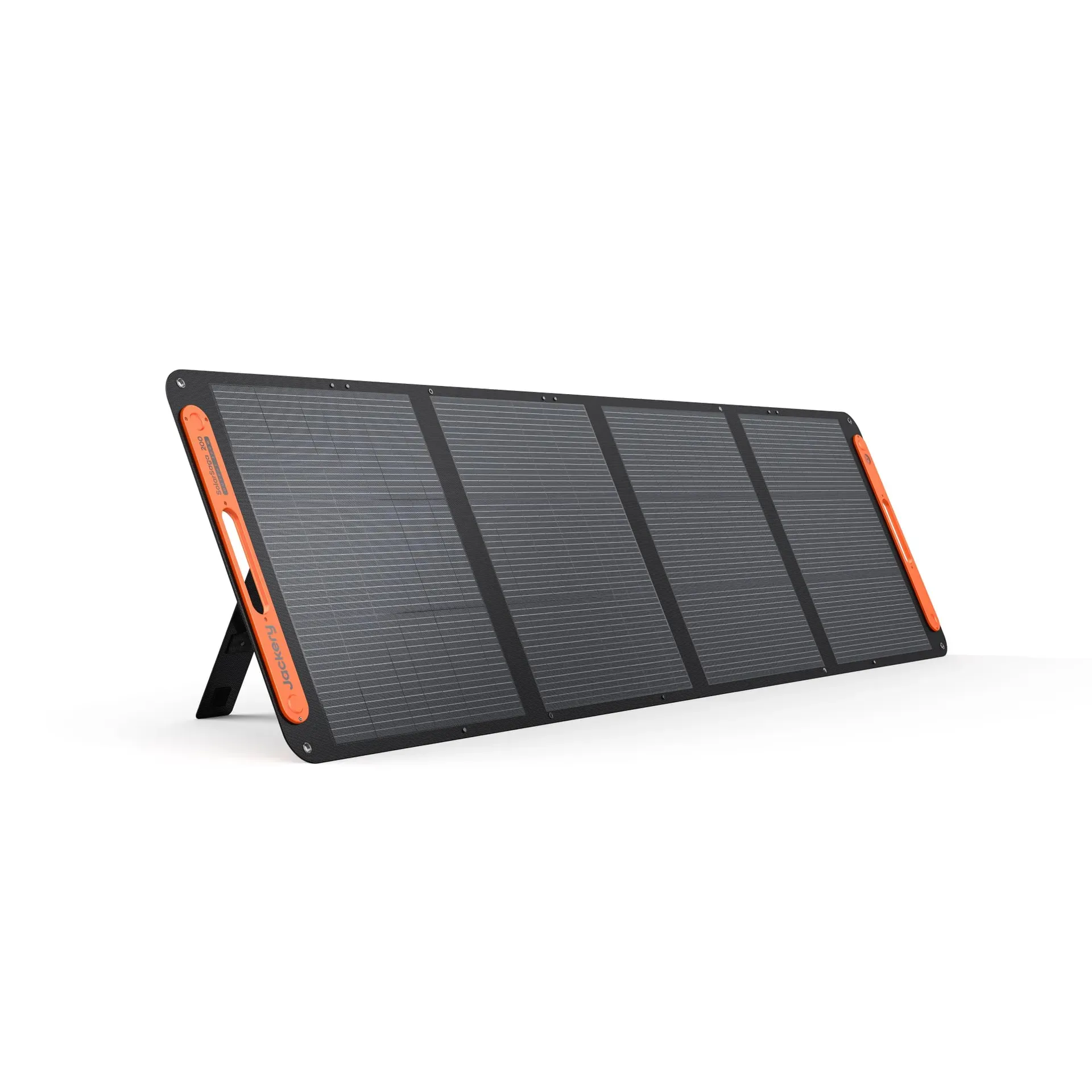
#6. Jackery SolarSaga 200W Portable Solar Panel, IP68 Foldable Bifacial
26.7% efficiency and 10 second setup. The fastest deploying premium panel on the market.
Price: $379.00 Rating: 4.4/5 Best For: Off-Grid Power Stations Check Price on Amazon
Ten seconds. That's how fast the SolarSaga 200W goes from folded to functional. When you're racing daylight at a campsite, that deployment speed matters more than spec sheet numbers. The efficiency edge over the EcoFlow 220W Bifacial (#3) is small but real. So is the price difference: you save $70 versus the EcoFlow while getting faster setup. But the DC8020 port is Jackery specific. Pair this with a Jackery Explorer power station and it sings. Use it with anything else and you're leaving performance on the table. That ecosystem lock in is either a feature or a bug depending on what's already in your gear closet. The 5 year warranty helps, but with only 108 reviews so far, long term reliability data is still thin.
Pros
- IBC bifacial technology achieving up to 26.7% conversion efficiency
- 200W rating — charges 2042Wh Explorer 2000 Plus in 2.5 hours with six panels
- USB-C, USB-A, and DC8020 ports for versatile device and power station charging
- 10-second setup with ergonomic carry handle
- IP68 rated, operates from -4 degrees F to 149 degrees F
Cons
- DC8020 port limits full-speed compatibility primarily to Jackery power stations
- Only 108 reviews — newer product with less long-term reliability data than competitors
- $379 positions it awkwardly between the Renogy 200W (#2) value pick and the EcoFlow (#3) premium tier
Verdict: The obvious choice for Jackery power station owners who want the fastest possible recharge times. Everyone else should compare it against the EcoFlow 220W Bifacial (#3). You'll likely pick whichever matches your existing power station brand.
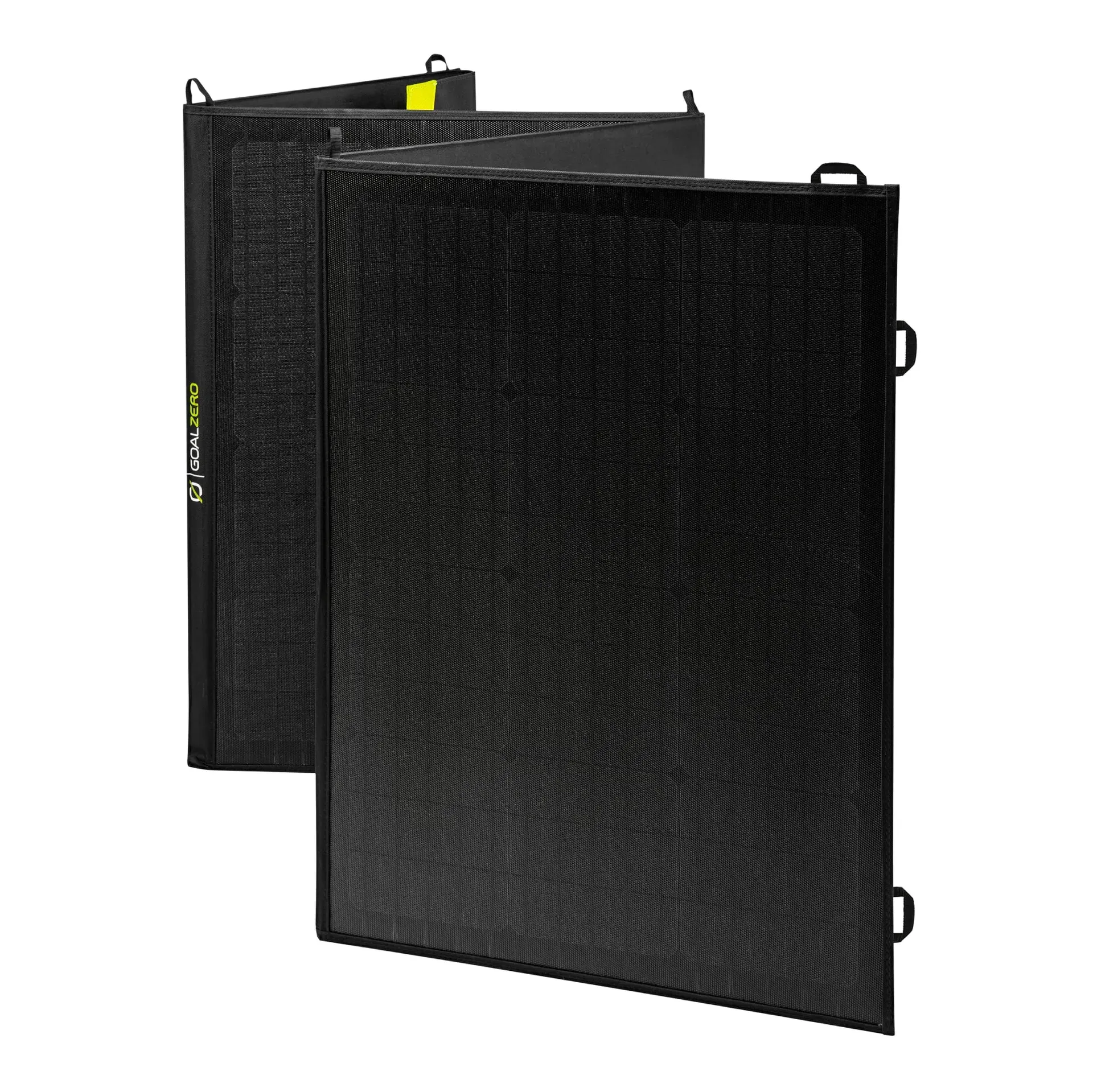
#7. Goal Zero Nomad 200-Watt Solar Panel, Folding Solar-Panel Charger
Goal Zero's proven fold out design with a built in 6 foot cable. True plug and play for Yeti owners.
Price: $599.95 Rating: 4.4/5 Best For: Goal Zero Yeti Owners Check Price on Amazon
Goal Zero makes great power stations, and the Nomad 200 exists for people who already own one. Four monocrystalline panels fold into a briefcase with an integrated kickstand and hang loops. The built in 6 foot APP charging cable plugs directly into most Yeti power stations with zero adapter hunting. That plug and play simplicity is the entire pitch. The raw specs, honestly, are not impressive in 2026. The Renogy 200W (#2) delivers better efficiency at less than a third of the price. But Goal Zero owners don't buy this for the specs. They buy it because it works the moment they unfold it, with the gear they already have, and Goal Zero's support backs it up. The 1 year warranty stings though. At $600, that's hard to defend.
Pros
- Four panels fold into a briefcase case with hang loops for versatile mounting
- Built-in 6-foot APP charging cable integrates directly with most Goal Zero Yeti power stations
- Built-in stabilizer legs for secure ground positioning
- USA engineered with 50+ years of solar energy experience
Cons
- $599.95 — the most expensive panel on this list by a significant margin
- Only a 1-year manufacturer warranty, far shorter than Renogy's 10-year coverage
- Approximately 21% efficiency trails every other 200W+ panel in our top 10
Verdict: The pick for diehard Goal Zero users who value ecosystem simplicity above all else. For everyone else, the Renogy 200W (#2) delivers better efficiency at less than a third of the price.
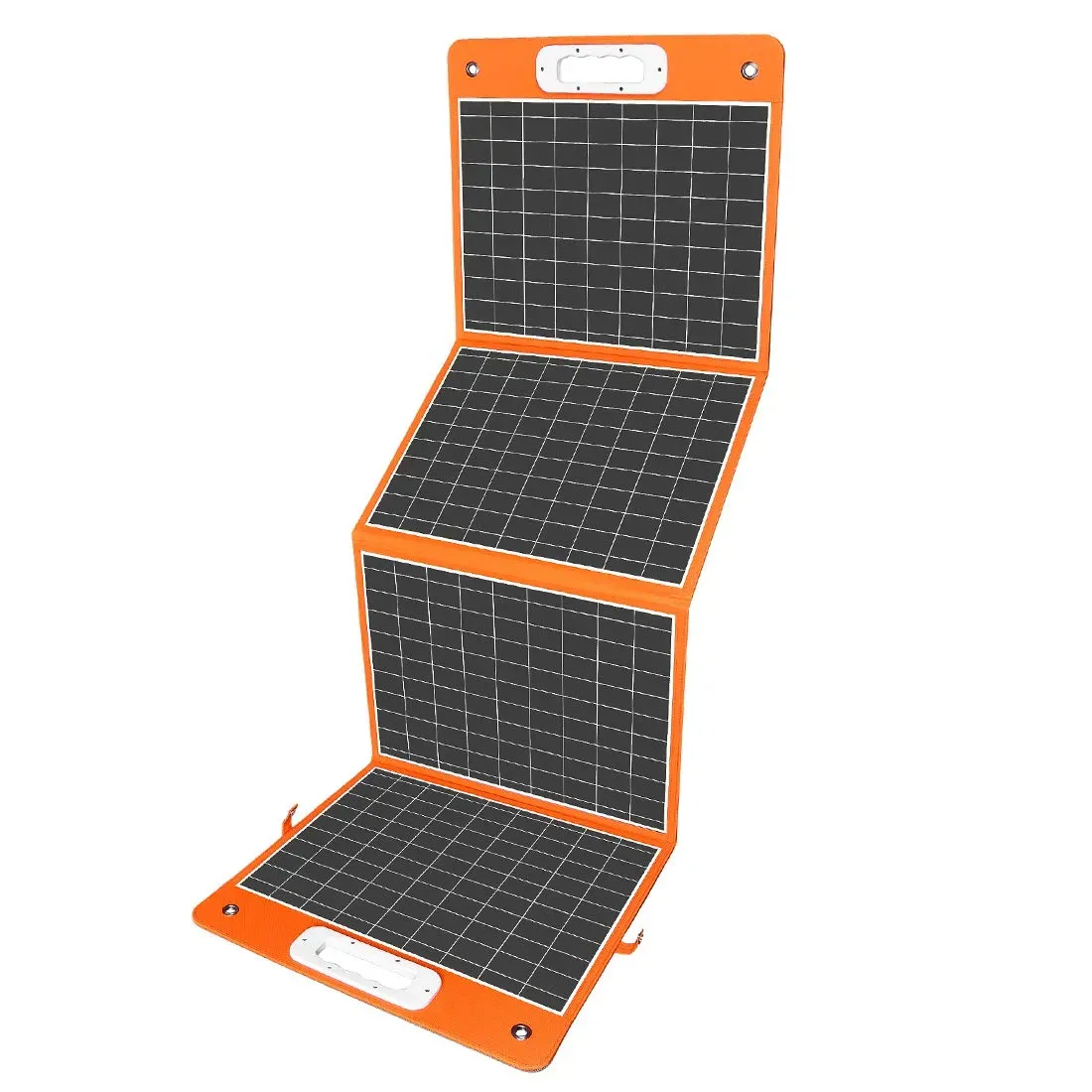
#8. FF FLASHFISH 100W Foldable Solar Panel
Three outputs including 65W USB-C PD. The budget pick that doesn't feel like a compromise.
Price: $129.00 Rating: 4.4/5 Best For: Budget Camping Check Price on Amazon
Most budget solar panels feel like budget solar panels. The FlashFish 100W doesn't. At $129, it charges laptops, phones, and power stations simultaneously from three separate ports. The included adapter kit covers most connector types you'll encounter, so compatibility headaches are minimal. No, it won't match the Jackery SolarSaga (#6) on efficiency. At roughly a third of the price, that's not the point. This is the panel for campers who want to keep their phone, tablet, and small power bank topped off without spending serious money. It's also the smartest emergency prep buy on this list: cheap enough to stash in a closet, capable enough to matter when the power goes out.
Pros
- USB-C PD (65W max), USB-A QC3.0 (18W max), and DC 5521 port for triple-device simultaneous charging
- Monocrystalline cells converting 22 to 23% of solar power
- Smart foldable design with 4 kickstands for stable surface placement
- Includes DC3.5x1.35mm, DC5.5x2.5mm, DC8mm, DC6.3x3mm connector adapters
- 12-month warranty
Cons
- Only 100W — half the output of most panels on this list, so charge times are longer
- 22 to 23% efficiency is below the 25%+ achieved by N-Type cells in premium panels
- DC port requires adapters for power stations — no native MC4 or XT60 connector
Verdict: The best affordable portable solar panel for weekend campers who charge phones, tablets, and small power banks. Skip it if you need to charge a full-size power station — 100W simply won't cut it for that job.
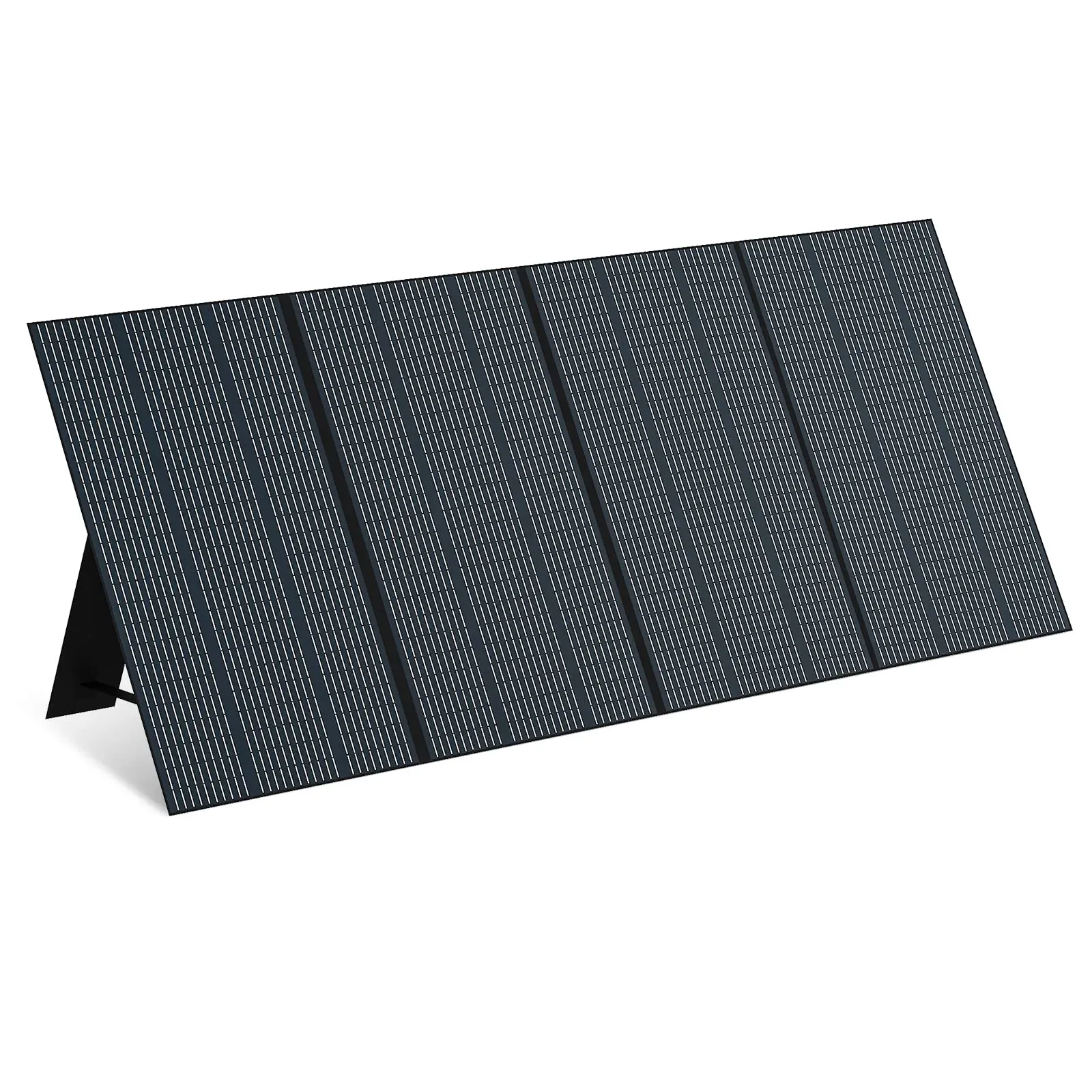
#9. BLUETTI PV350 350W Portable Solar Panel
350 watts. The highest output panel on this list, built for serious off grid power.
Price: $649.00 Rating: 4.3/5 Best For: High-Wattage Camping Check Price on Amazon
Three hundred fifty watts. That's the number that matters. The PV350 charges a BLUETTI AC300 in roughly half the time a 200W panel takes. Compare it to the Jackery SolarSaga (#6) or Renogy 200W (#2) and the gap isn't subtle: this panel is in a different weight class entirely. Literally. At 30.6 pounds, call it transportable, not backpackable. The MC4 connector works with BLUETTI's full lineup from the AC70 through AC500, plus most third party solar generators. This is the panel for base camps, construction sites, and multi day stationary setups where you need serious wattage and don't care about carrying it more than a hundred feet. If your solar needs involve hiking, look elsewhere. If they involve running a fridge and charging batteries fast, this is the tool.
Pros
- 350W high power output — the highest wattage in its class for faster charging
- Monocrystalline cells converting up to 23.4% of sunlight
- Long-lasting ETFE coating resistant to scratches and water splashes
- Folds to 35.6 x 24.1 inches for transport
- MC4 connector compatible with BLUETTI AC70, AC180, AC200L, AC300, AC500 and most third-party generators
Cons
- 30.6 pounds — nearly as heavy as the Goal Zero Boulder 200 (#5) but without the armored case
- MC4 connector only — unlike the Renogy 200W (#2), there's no USB-C or USB-A for direct device charging
- Folded size is still larger than most car trunks expect; check your storage dimensions before buying
Verdict: The right panel for BLUETTI power station owners and anyone who prioritizes raw wattage over portability. If you need to charge large battery banks fast and don't plan on hiking with your panel, this is the one.
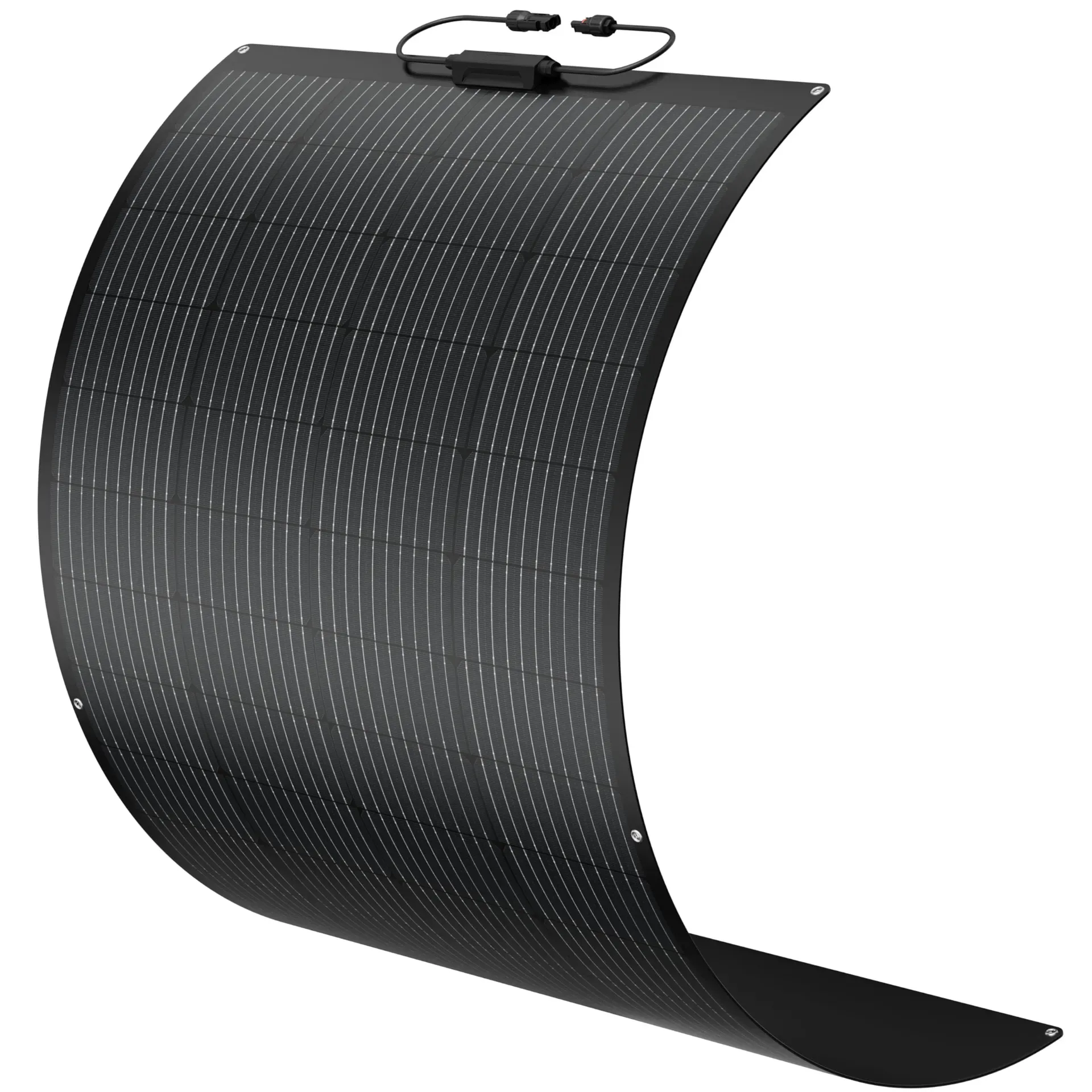
#10. BougeRV Arch 200 Watts Fiberglass Flexible Solar Panel
Bends 270 degrees for curved surfaces. The only panel here that mounts on RV roofs and boat decks.
Price: $205.00 Rating: 4.3/5 Best For: Curved Surface Installations Check Price on Amazon
Not every solar panel needs to sit flat on the ground. The BougeRV Arch 200W thrives where rigid panels fear to tread: RV roofs with a curve, boat decks, camper shells, even vehicle hoods. It bends up to 270 degrees thanks to double fiberglass construction that increases impact resistance while preventing the cracking that plagues cheaper flexible panels. At 7 pounds and 2mm thin, it's the lightest 200W panel on this list. The Renogy 200W (#2) weighs nearly twice as much. But understand what you're buying: this is a permanently mounted solution, not a fold out camping panel. The IP68 junction box handles marine environments without drama. For van dwellers and sailors with curved surfaces, this is a specialist tool that solves a real problem. For everyone else, the Renogy 200W (#2) is the better buy.
Pros
- Double fiberglass protection increases impact resistance and prevents cracking
- Bends up to 270 degrees to match curved surfaces where rigid panels cannot install
- ETFE covering — anti-scratch, self-cleaning, sand-proof, longer lifespan than PET
- Only 7 lbs and 2mm thin for easy transport
- 10BB cell design achieving 23% conversion rate
- IP68 waterproof junction box for harsh environments
- 5-year product warranty, 25-year power output support
Cons
- No kickstand — this panel needs to be mounted or laid completely flat; no angle adjustment
- Installation required (adhesive or screws) — not a grab-and-go portable solution like foldable panels
- Flexible panels generally have shorter real-world lifespans than rigid framed alternatives
Verdict: The specialist pick for van-dwellers, sailors, and overlanders with curved mounting surfaces. If you're looking for a fold-out camping panel, move along — the Renogy 200W (#2) is what you actually want.
How to choose the best portable solar panels of 2026
Key specs that actually matter
Forget the marketing. When comparing portable solar panels for camping or RV use, focus on three numbers: efficiency, wattage, and weight. Cell efficiency tells you how much sunlight becomes usable power. In 2026, anything below 22% is outdated. The best panels now push 25 to 26.7% using N-Type or IBC cell technology. Wattage determines raw charging speed: a 100W panel like the FlashFish (#8) charges a power station roughly half as fast as a 200W panel. Weight and folded dimensions matter more than most buyers realize. A 33 pound briefcase panel stays at camp. A 14 pound quadfold goes wherever you go. Also check the port selection: USB-C PD, MC4, XT60i, and DC connectors are not interchangeable, and buying the wrong one means adapter hell.
Price vs. value: when to spend more
The price spread in portable solar is wild. $129 to $649 in this list alone. Budget panels ($129 to $205) like the FlashFish (#8) and BougeRV (#10) work perfectly for weekend campers charging phones and small power banks. Mid range panels ($175 to $380) like the Renogy 200W (#2) and EcoFlow 220W (#4) represent the sweet spot: premium cell efficiency without the premium markup. High end panels ($449 to $649) earn their price through bifacial technology, military grade durability, or ecosystem specific fast charging. Ask yourself: are you a twice a year camper or a full time van lifer? The answer determines which tier makes sense.
Brand reliability and ecosystem lock in
Here's the uncomfortable truth about portable solar panels in 2026: the best panel for you is probably the one that matches your power station brand. EcoFlow panels use XT60i connectors that charge EcoFlow stations faster than third party alternatives. Jackery's DC8020 port does the same for Explorer series owners. Goal Zero uses proprietary APP connectors. Renogy and BLUETTI play nicer with third party gear via MC4 and DC ports. Before buying, check what connector your power station uses. A panel with the wrong plug is an expensive paperweight. Or at minimum, an extra adapter purchase waiting to happen.
Frequently asked questions
Are portable solar panels worth it?
For anyone who spends time off grid (camping, RVing, van living, or emergency prep), yes. A single 200W panel like the Renogy 200W Portable (#2) can keep a power station topped off indefinitely with zero fuel costs. After roughly 15 to 20 camping trips, a $175 panel has paid for itself compared to running a gas generator or paying for powered campsites.
How long do portable solar panels last?
Quality portable solar panels last 10 to 25 years with proper care. The cells themselves degrade slowly: most manufacturers guarantee 80%+ output after 25 years. The weak points are the folding mechanisms, kickstands, and fabric casings on foldable models. Rigid panels like the Goal Zero Boulder 200 (#5) with tempered glass and aluminum frames typically outlast flexible and foldable designs. Renogy leads the warranty race with 10 year materials coverage and a 25 year power output guarantee.
What are the best portable solar panels for camping?
For weekend camping, the Renogy 200W Portable (#2) hits the ideal balance of efficiency, weight, and price. Budget campers should look at the FlashFish 100W (#8): at $129, it handles phones, tablets, and small power banks without fuss. For base camp setups where weight doesn't matter, the BLUETTI PV350 (#9) delivers 350W for the fastest possible charge times.
Can portable solar panels work with battery storage?
Yes. That's exactly how most people use them. Panels fall into two categories: those with built in charge controllers that connect directly to 12V batteries (like the Renogy 100W Starter Kit, #1) and those designed to feed portable power stations via MC4, XT60i, or DC connectors. If you're pairing a panel with a power station, match the connector type. If you're building a fixed battery bank, get a panel with a charge controller included or budget for a separate MPPT unit.
What's better: a single high wattage panel or multiple smaller ones?
It depends on your setup. A single high wattage panel like the BLUETTI PV350 (#9) is simpler to deploy and manage. Multiple smaller panels offer redundancy: if one fails, you still have power. They also let you scale your system gradually. The Renogy 100W Starter Kit (#1) is expandable to 400W, so you can start with one and add more over time. For portable setups where you're moving camp daily, a single 200W panel is usually more practical than juggling multiple units.
Final verdict
The Renogy 100W Starter Kit (#1) is the best portable solar panel of 2026 for anyone starting from scratch: complete, certified, and backed by the best warranty in the business. The Renogy 200W Portable (#2) is the value champion, delivering 25% N-Type efficiency at a price that makes competitors look greedy. And the EcoFlow 220W Bifacial (#3) leads on innovation for those willing to pay for every last watt of reflected light energy. Truth is, every panel on this list has earned its place. The right choice comes down to your power station brand, your portability needs, and whether you're a weekend warrior or a full time off grinder. Prices on Amazon shift constantly, so check current deals before you buy.