Top 10 Best Digital Microscopes of 2026: Ranked & Reviewed
From a $32 wireless microscope with 9,500+ reviews to a $460 lab-grade trinocular scope, these are the 10 best digital microscopes of 2026. The #1 pick does something no other model can.
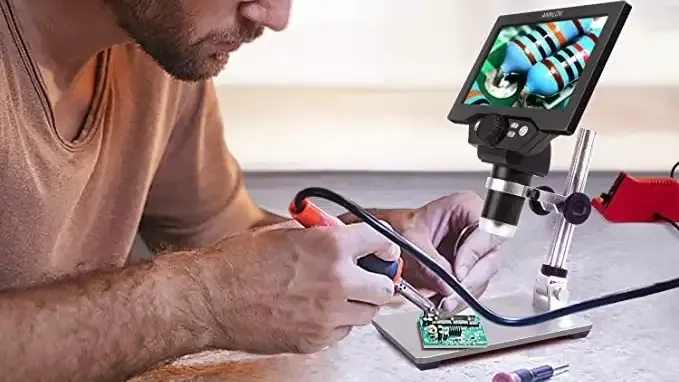
The best digital microscopes aren't the ones with the biggest magnification numbers on the box. Walk down any Amazon search results page and you'll see 1000X, 2000X, even 5000X claims plastered on $30 devices. Most of it is meaningless digital zoom that turns images into colorful mush. Real performance lives in the sensor quality, the lens glass, the stand stability, and whether the thing actually stays in focus when you let go of the knob. This list cuts through the noise. Here are the 10 best digital microscopes of 2026, spanning from a $32 wireless kid-friendly model to a $460 laboratory-grade trinocular compound scope, with the versatile three-lens Andonstar AD246S-M claiming the top spot. Whether you're inspecting solder joints, coin mint marks, pond water, or prepared slides, there's a pick here that won't disappoint.
| # | Product | Price | Rating | |
|---|---|---|---|---|
| #1 | Andonstar AD246S-M | $139.99 | 4.6/5 | View Deal |
| #2 | TOMLOV DM9 Max | $119.99 | 4.5/5 | View Deal |
| #3 | ANNLOV 7" LCD | $59.99 | 4.4/5 | View Deal |
| #4 | AmScope T490B | $459.99 | 4.4/5 | View Deal |
| #5 | Swift SW350B | $269.99 | 4.4/5 | View Deal |
| #6 | Jiusion WiFi 4K | $36.99 | 4.3/5 | View Deal |
| #7 | Skybasic Wireless | $31.99 | 4.2/5 | View Deal |
| #8 | Hayve DM9 7" | $129.00 | 4.2/5 | View Deal |
| #9 | AmScope M150C-MS | $114.38 | 4.1/5 | View Deal |
| #10 | WonderQuest 4K | $38.99 | 4.4/5 | View Deal |
#1. Andonstar AD246S-M HDMI Digital Microscope 2000x for Adults, 3 Lens 2160P UHD
Three interchangeable lenses make this the most versatile digital microscope for soldering, coins, and slides.
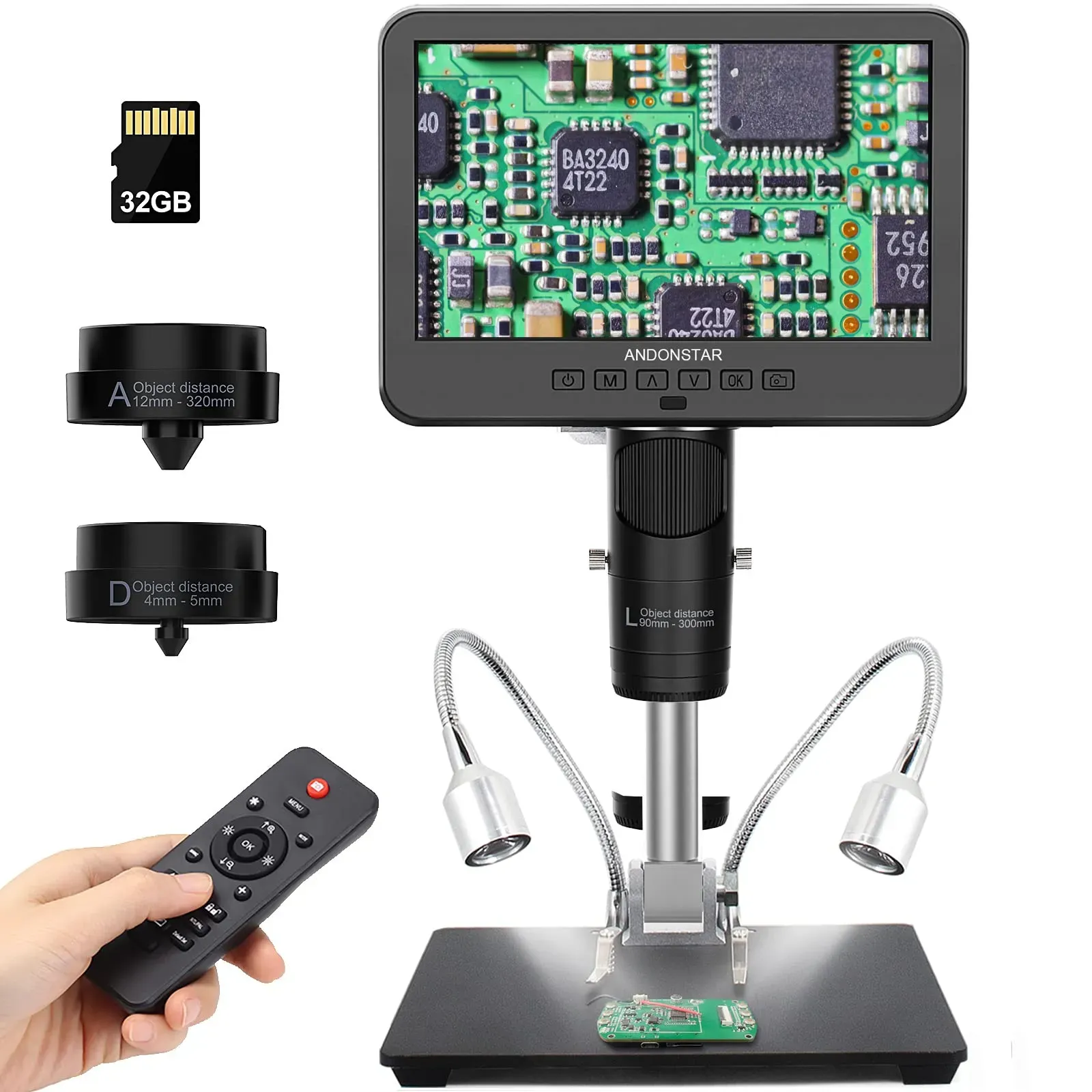
Price: $139.99 Rating: 4.6/5 Best For: Electronics Repair & Soldering Check Price on Amazon
Here's the problem the AD246S-M solves: most microscopes make you pick between soldering and slides, between working distance and magnification. This one doesn't. At $140, it's the most versatile microscope on the list by a wide margin. The HDMI output to a monitor is a genuine workflow upgrade if you spend hours at the bench. Compared to the TOMLOV DM9 Max (#2), you give up a big built-in screen. What you gain is substantially better optics, a boom arm that stays locked in position, and the ability to switch between three entirely different use cases without switching microscopes. The 1,200-plus verified reviews at 4.6 stars back up what the specs suggest: this is the one that does it all.
Pros
- UHD 2160P video recording with HDMI output to external monitors
- Three interchangeable lenses cover soldering, coin/plant inspection, and biological slides
- Professional boom arm stand with multi-axis adjustable positioning
- Included measurement software for Windows PC with precise dimensional analysis
- Wireless remote control with 8-level adjustable LED brightness
- 32GB Micro SD card included for immediate out-of-box use
Cons
- 2000X magnification relies on digital zoom; optical ceiling is lower
- Measurement software is Windows-only, leaving Mac users without that feature
- Boom arm requires more desk space than a standard vertical stand
Verdict: The best all-around digital microscope for hobbyists and professionals alike. Buy this if you need one microscope that handles soldering, coin collecting, and slide work without compromise. Skip only if you're on a tight budget or exclusively need a large built-in screen. The TOMLOV DM9 Max (#2) serves those needs better.
#2. TOMLOV DM9 Max Digital Microscope: 20MP 10.1" 1500X HD IPS Coin Microscope
A massive 10.1-inch display and 20MP sensor, purpose-built for coin collectors and jewelry inspection.
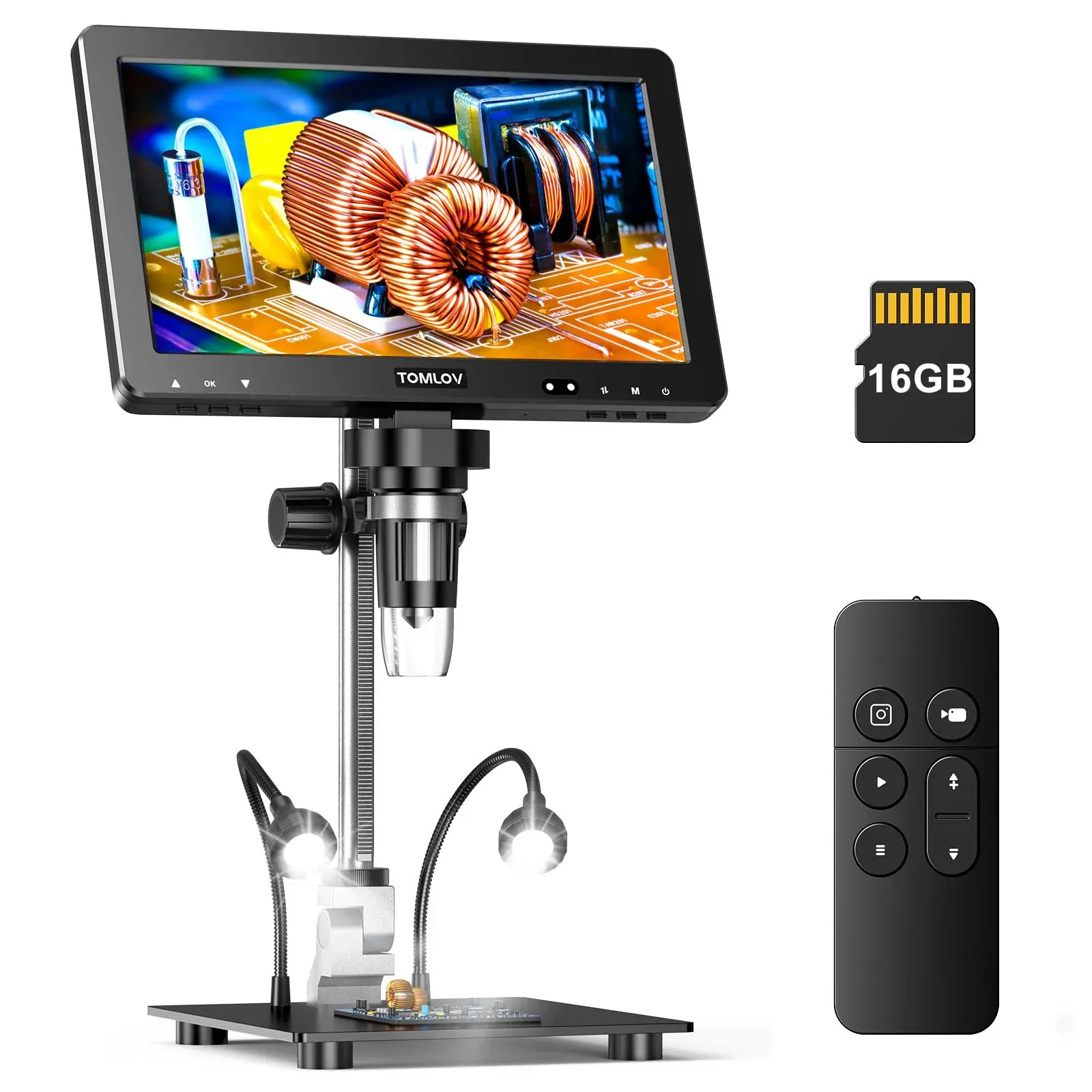
Price: $119.99 Rating: 4.5/5 Best For: Hobbyists & Coin Collectors Check Price on Amazon
If you want the biggest screen available, this is it. The DM9 Max's 10.1-inch panel makes a real difference when you're inspecting coins for mint marks or showing jewelry details to a customer across the counter. You don't need a computer. You don't need cables. Just power it on and the entire workstation is ready. The sensor out-resolves every other model on this list for still photography. Coin collectors, take note. What you sacrifice is flexibility: no lens swapping, no HDMI passthrough to a TV, and the fixed vertical stand doesn't give you the positioning freedom of the Andonstar's boom arm. But for self-contained coin and jewelry inspection where screen real estate is everything, nothing else comes close.
Pros
- Massive 10.1" HD IPS display with 178-degree viewing angle for comfortable group viewing
- 20MP sensor captures 6096x3424 still images, the highest photo resolution on this list
- 12.6" stand with 7x8" base accommodates large coins and circuit boards
- Dual lighting: 8 adjustable ring LEDs plus 2 flexible gooseneck side lights
- Wireless remote enables shake-free photo capture
- Advanced noise reduction chip with audio recording for video documentation
Cons
- No HDMI output; the 10.1" screen is your only display option
- Larger footprint requires more permanent desk space than compact alternatives
- 1500X maximum magnification is lower than the Andonstar (#1)
Verdict: The definitive choice for coin collectors and anyone who prioritizes screen size above all else. The 10.1-inch display and 20MP sensor make this the most self-contained, shareable microscope on the list. Soldering enthusiasts should look at the Andonstar (#1) instead for its superior working distance and boom arm.
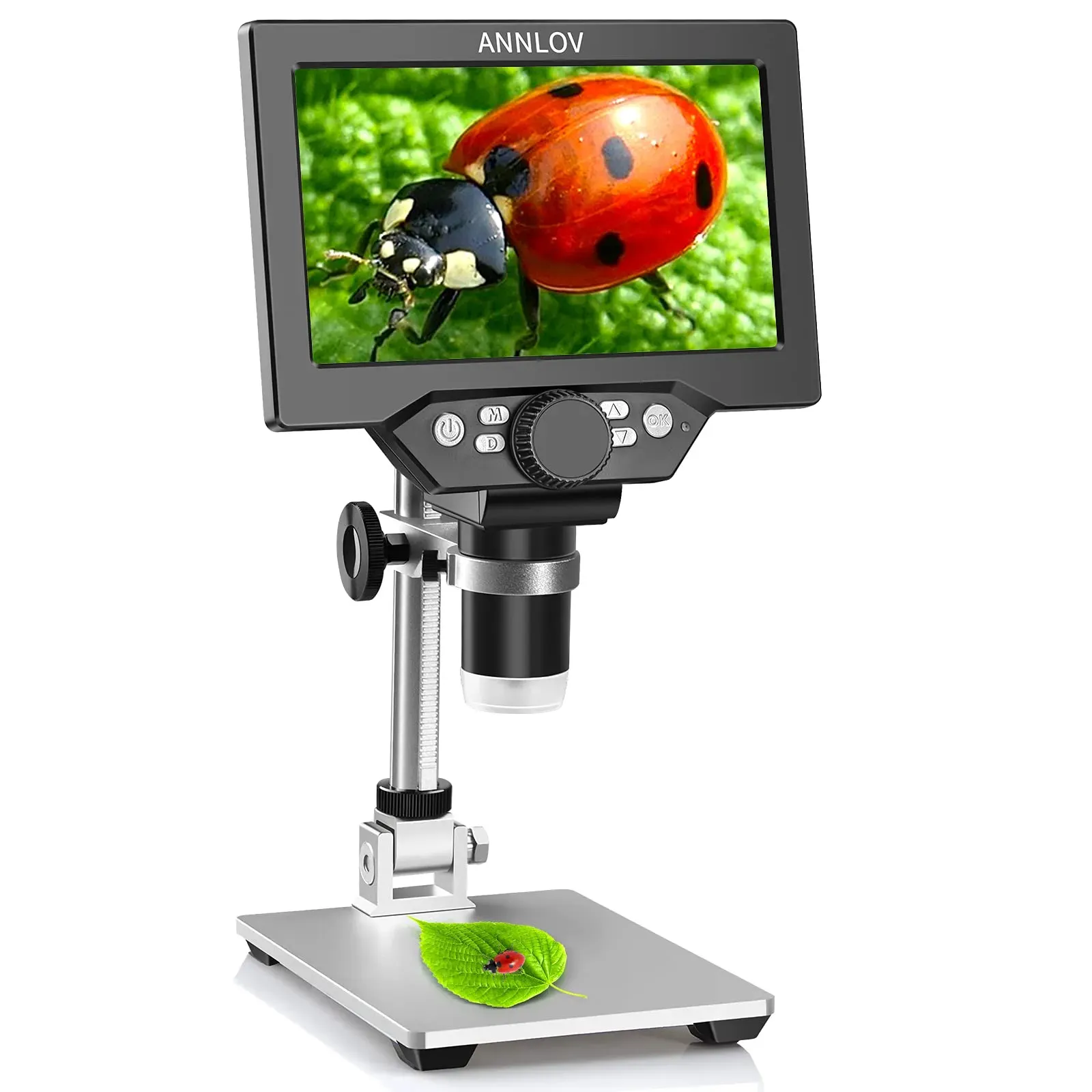
#3. ANNLOV 7" LCD Digital Microscope 1200X
The best value on this list: a 7-inch screen, metal stand, and 12MP sensor for $60.
Price: $59.99 Rating: 4.4/5 Best For: Hobbyists & Beginners Check Price on Amazon
Here's what $60 gets you in 2026: a microscope that does about 80% of what the $120 models do. The build quality is the shocker. At this price, competitors ship wobbly plastic stands that drift out of focus when someone walks past. The ANNLOV uses metal. It stays planted. The trade-offs are real: magnification tops out lower than the Andonstar or TOMLOV, and you're locked into either the built-in screen or a Windows 10 computer. Mac and Linux users are out of luck. But for casual coin collecting, stamp inspection, and dipping a toe into soldering inspection, the value here is hard to match. If you're just getting started and don't want to spend triple digits, buy this.
Pros
- 7" LCD HD screen for direct, computer-free viewing
- 12MP sensor captures 4023x3024 still images
- 1080p Full HD video recording at 30fps
- All-metal stand and base for superior stability at this price point
- 8 adjustable LED lights provide even illumination
Cons
- PC compatibility limited to Windows 10 only; no Mac or Linux support
- Screen is standard LCD, not IPS; viewing angles are narrower than the TOMLOV or Hayve
- 1200X ceiling is modest compared to higher-ranked models
Verdict: The best value digital microscope with a built-in screen on the market. At $60, it's an easy recommendation for beginners, hobbyists, and anyone curious about digital microscopy who doesn't want to tether to a computer. Serious soldering work demands the Andonstar (#1) or Hayve (#8).
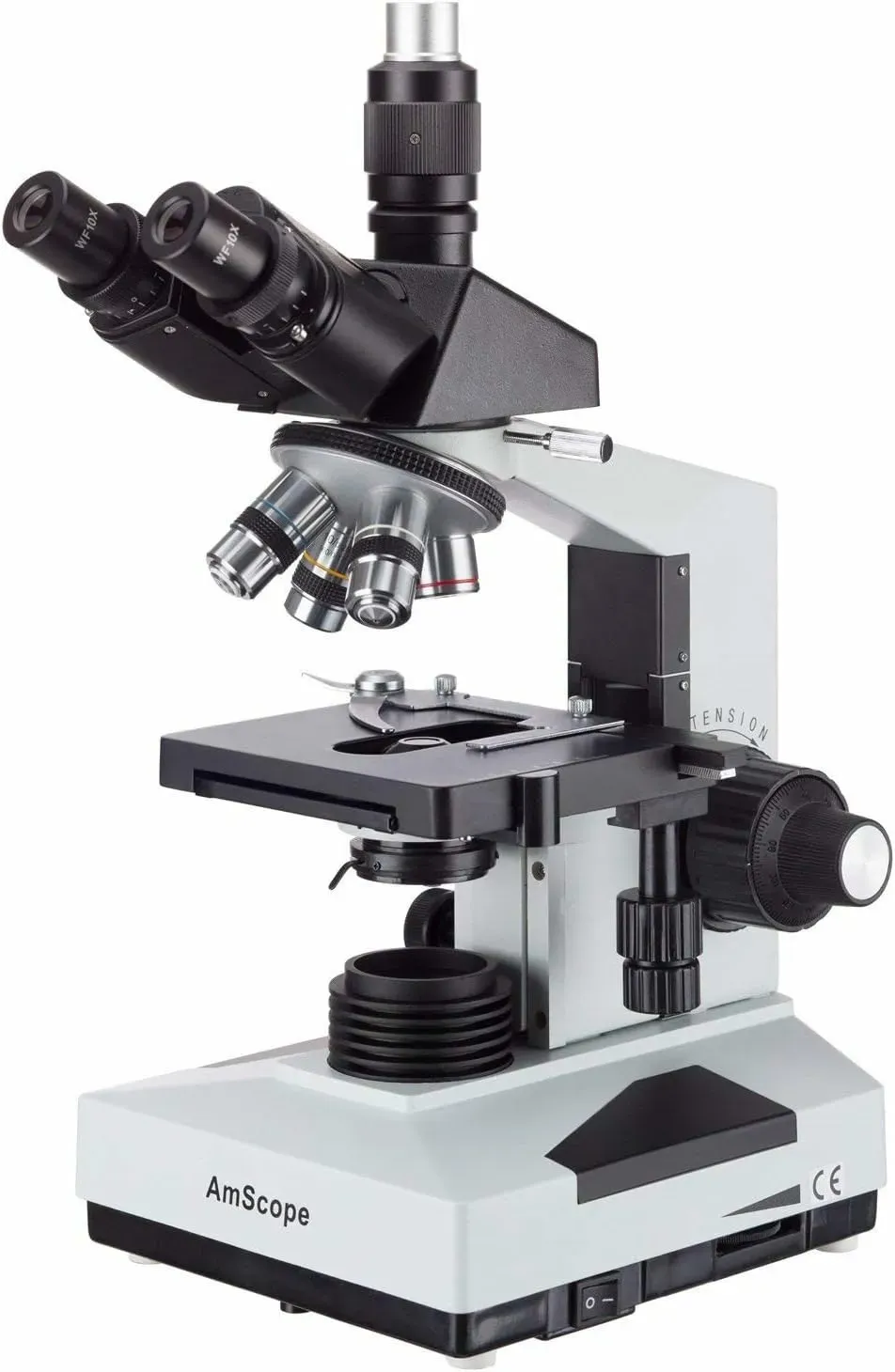
#4. AmScope T490B Compound Trinocular Microscope 40X-2000X
The only laboratory-grade compound microscope here, with true optical precision up to 2000X.
Price: $459.99 Rating: 4.4/5 Best For: Lab & Educational Use Check Price on Amazon
At $460, the T490B costs more than the next three microscopes on this list combined. That price buys you something no other model here offers: a genuine laboratory instrument, not a consumer gadget. Digital microscopes simulate magnification by cropping and enlarging pixels. This one uses glass. Real optical objectives. Real Abbe condenser illumination. The result is clarity at 1000X that makes USB scopes look like security camera footage. The trinocular head is the other big deal: you can teach a class through the eyepieces while simultaneously recording through the camera port. It's massive overkill for coin collectors and casual hobbyists. For lab technicians, researchers, and educators, it's the only serious option here.
Pros
- Eight widefield magnification settings from 40X to 2000X with true optical zoom
- Simul-focal trinocular head enables simultaneous viewing and camera capture
- C-mount adapter included for direct camera attachment
- Four DIN achromatic objectives deliver professional-grade optical clarity
- LED illumination through Abbe condenser for bright, even slide lighting
- Precision two-layer mechanical stage with low-position controls
Cons
- $460 price point is the highest on this list by a wide margin
- Requires a separate digital camera; no built-in imaging sensor
- Steep learning curve for users accustomed to screen-based digital microscopes
Verdict: The right choice for labs, universities, and serious researchers who need true optical precision with digital documentation. Overkill, and over budget, for hobbyists and casual users. If you're not regularly examining biological slides at 1000X+, the Andonstar (#1) or Swift SW350B (#5) will serve you better.
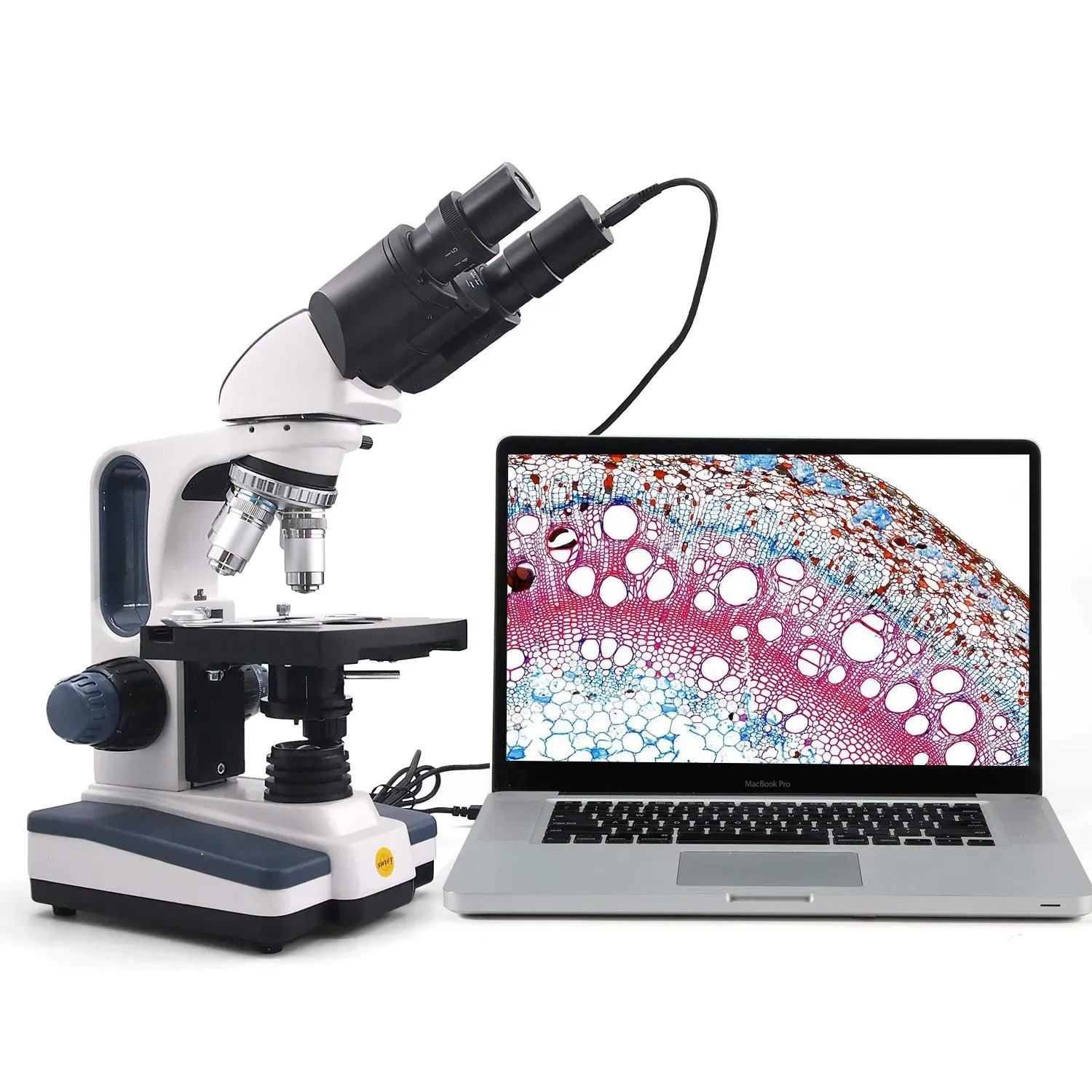
#5. Swift SW350B Digital Microscope 40X-2500X
Traditional compound optics with digital capture, hitting the sweet spot between quality and price.
Price: $269.99 Rating: 4.4/5 Best For: Budget Hobbyists Check Price on Amazon
The SW350B is a traditional microscope first and a digital one second. That's not a criticism. It's what makes it useful. Slide contrast from the optical light path beats what any screen-based microscope can produce, which matters enormously if you're doing actual biology rather than coin inspection. The digital side is where it shows its age. The included camera captures at 1.3MP, a resolution that was standard a decade ago. The software helps (image stitching, extended depth of field), but you're not going to frame these photos. Still, at $270 — nearly $200 less than the AmScope T490B (#4) — you get the same fundamental optical architecture. For students and hobbyists who prioritize the view through the eyepieces over digital capture, it's a smarter spend than the AmScope.
Pros
- Six magnification levels from 40X to 2500X via four DIN achromatic objectives
- Professional Siedentopf binocular head rotates 360 degrees with 30-degree tilt
- Interchangeable 10X and 25X wide-field glass eyepieces
- Included software offers image stitching, EDF, and measurement tools
- LED illumination with Abbe condenser and adjustable brightness control
Cons
- 1.3MP camera resolution is significantly lower than even budget USB microscopes
- Compound optical design limits use to slide-mounted specimens only
- Heavier and bulkier than screen-based digital microscopes
Verdict: The best compound microscope with digital capture for budget-conscious students and hobbyists. If you need genuine optical magnification for slide work and can live with a basic 1.3MP camera, this is your pick. For screen-based digital microscopes with better imaging, look at the Andonstar (#1) or ANNLOV (#3).
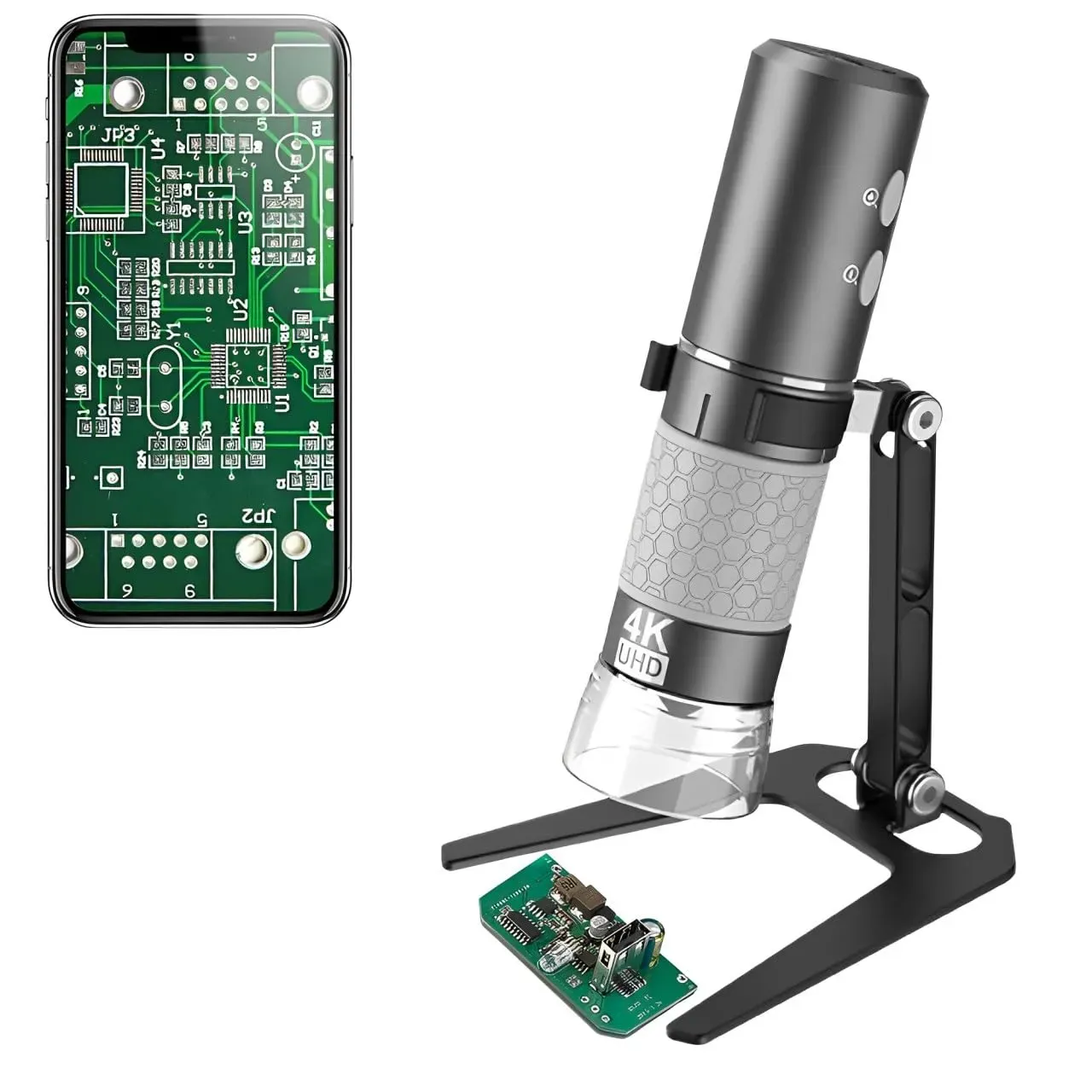
#6. Jiusion WiFi USB Digital Handheld Microscope 4K 50-1000X
Genuine 4K resolution in a handheld, WiFi-connected microscope for under $40.
Price: $36.99 Rating: 4.3/5 Best For: Budget Inspection Tasks Check Price on Amazon
Don't judge this one by its looks. A plastic wand with a focus knob and some LEDs shouldn't produce video this sharp, but it does. The 4K output embarrasses microscopes at four times the price. Where the Jiusion really shines is portability. WiFi to your phone. USB to your laptop. It works with everything: iOS, Android, Windows, Mac, Linux, Chrome OS. That kind of universal compatibility is rare at any price. The catch is ergonomics. For quick PCB inspections or reading a chip label, the handheld form factor works fine. For a two-hour soldering session, your wrist will hate you. The included stand helps but won't replace a proper boom arm. For $37, though, the performance-per-dollar ratio is absurd.
Pros
- True 4K 3840x2160P resolution at a budget price point
- WiFi plus USB dual connectivity for smartphones, tablets, and computers
- Broad OS compatibility: iOS, Android, Windows, Mac, Linux, Chrome OS
- 8 adjustable LED lights for subject illumination
- Dedicated zoom buttons for 1.2-2.0X digital magnification on mobile
Cons
- Included stand is basic and lacks the stability of metal alternatives
- Handheld design is less ergonomic for extended soldering sessions
- 1000X maximum magnification is lower than most competitors on this list
Verdict: The best budget digital microscope for electronics inspection and casual exploration. The 4K resolution at $37 is unmatched. Serious hobbyists should invest in a model with a better stand, but for quick PCB inspections and outdoor curiosity, it's outstanding. One of the best portable digital microscopes you can buy at any price.
#7. Skybasic Wireless Digital Microscope 50X-1000X WiFi
Nearly 9,500 reviews confirm this WiFi microscope is the easiest way to start exploring.
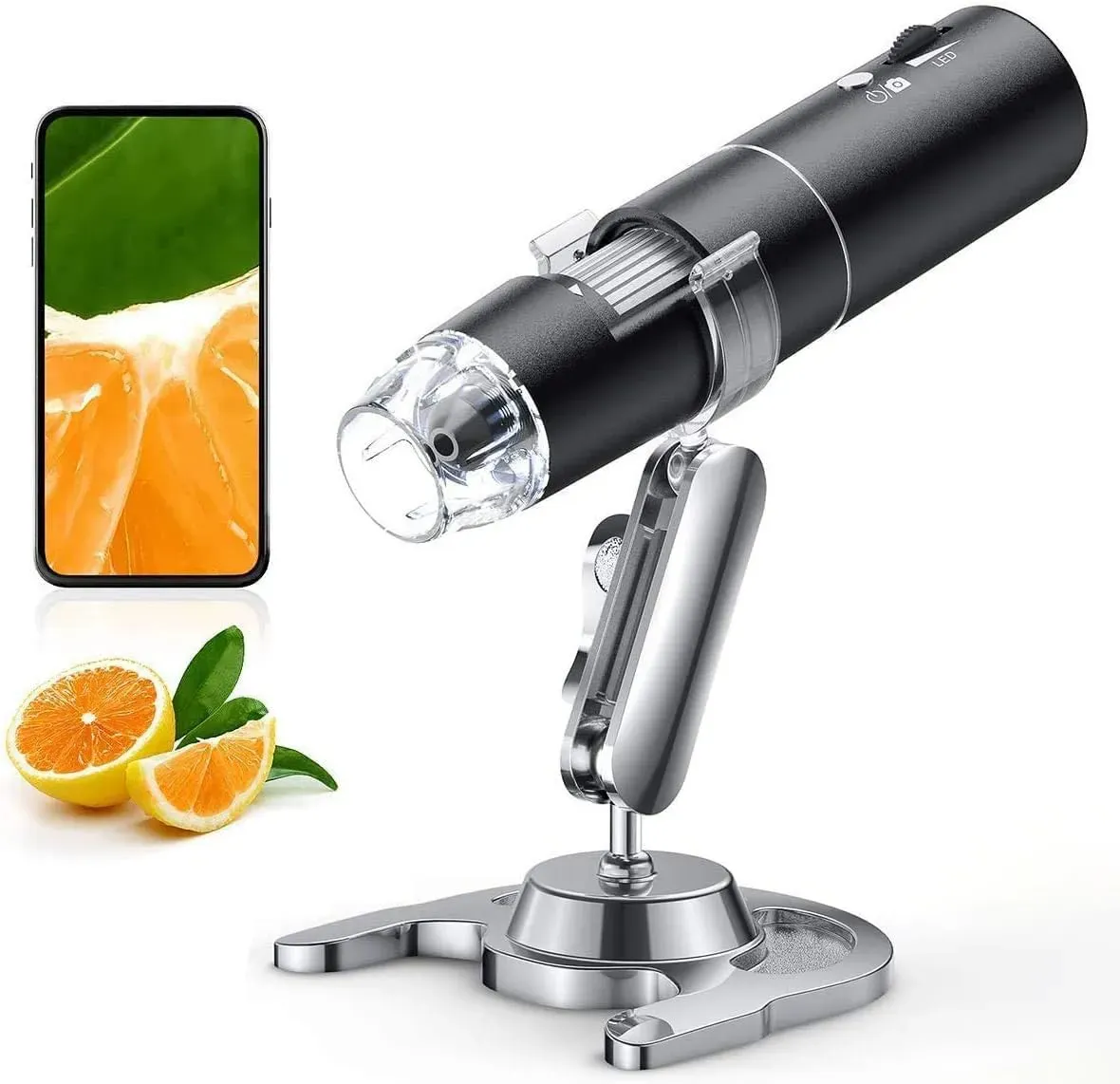
Price: $31.99 Rating: 4.2/5 Best For: Kids & Beginners Check Price on Amazon
Nearly 9,500 reviews don't lie. The Skybasic is the gateway microscope: the one families buy, actually use, and leave positive feedback about. At $32, it's the cheapest model on this list by a noticeable margin, and the 2MP sensor shows that cost-cutting in every image. But here's what it gets right: the WiFi-to-phone connection through the Max-see app is dead simple. A kid can have pond water on an iPad screen inside two minutes of opening the box. That accessibility matters more than megapixels when you're trying to hook a 10-year-old on science. It won't work for soldering. It won't work for serious coin grading. For kitchen-table exploration and backyard discoveries, it's perfect.
Pros
- WiFi connectivity for instant streaming to Android and iOS devices
- Lightweight, portable design for field use
- 8 adjustable LED lights for flexible illumination
- Nearly 9,500 reviews confirm reliable real-world performance
- One-button photo and video capture via device or app
Cons
- 2MP sensor resolution produces noticeably softer images than higher-ranked models
- 720P on computer vs 1080P on phone; inconsistent resolution across platforms
- Plastic construction feels less durable than metal-framed alternatives
Verdict: The best entry point for families and beginners who want WiFi convenience at the lowest possible price. Image quality won't impress serious users, but the accessibility and massive review count speak for themselves. Kids and classrooms are the sweet spot here. Adults needing precision should jump to the ANNLOV (#3) or higher.
#8. Hayve DM9 7" Digital Microscope 1200X HDMI
A 7-inch IPS screen with HDMI output, purpose-built for soldering and coin display.
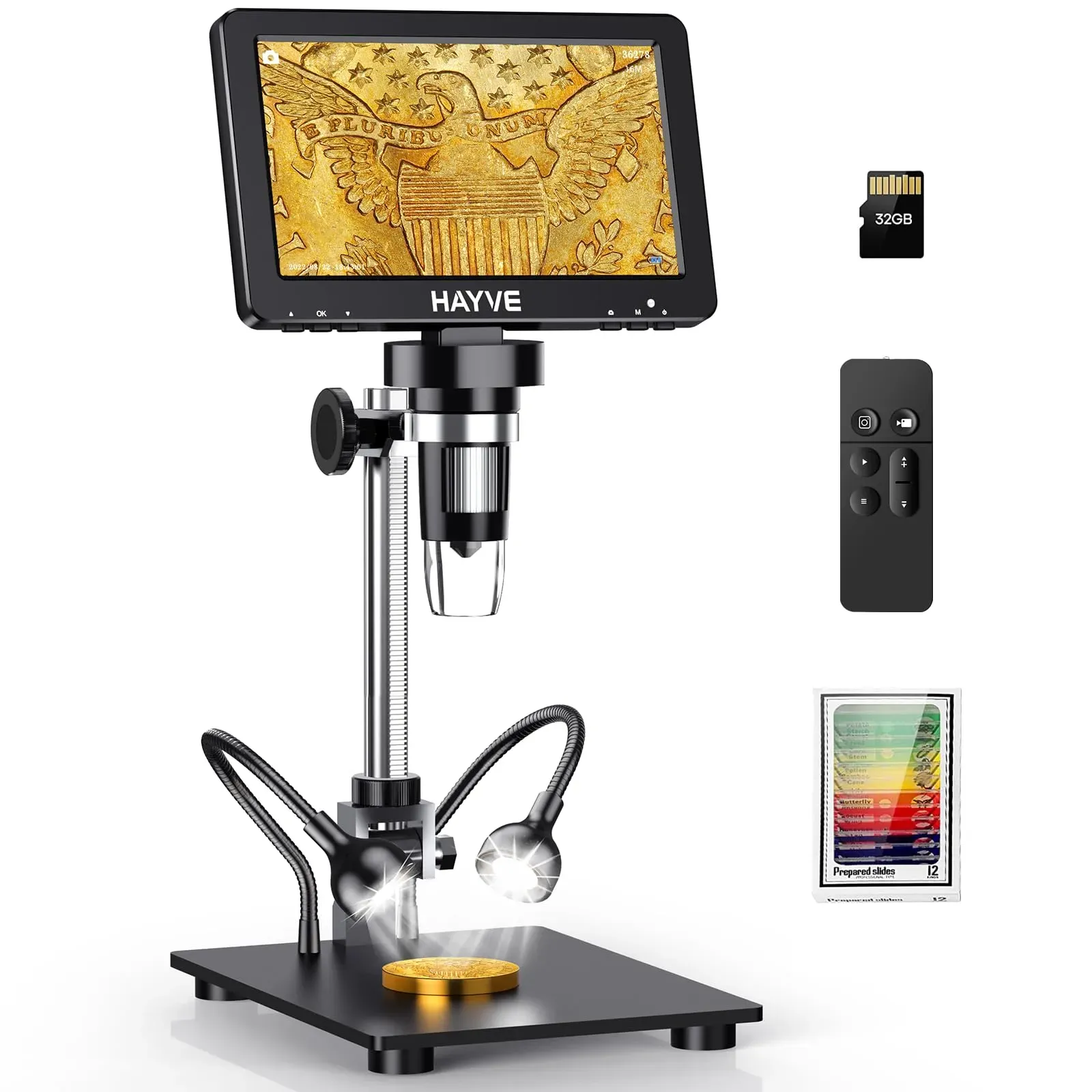
Price: $129.00 Rating: 4.2/5 Best For: Soldering & Hobby Work Check Price on Amazon
The Hayve occupies a narrow niche: it's the only microscope on this list that combines a built-in screen with HDMI output. That dual-display trick means you can work on the device itself for quick inspections, then push the feed to a 50-inch TV when you want to show a room full of people what you're looking at. The gooseneck side lights earn their keep on reflective surfaces where ring lights alone create hotspots. At $129, it's priced dangerously close to the Andonstar (#1), and with only 137 reviews backing it up, the track record is thinner than the category leaders. But if built-in screen plus HDMI is your specific need, this is the only game in town at this price.
Pros
- 7" IPS HD screen with HDMI output for external TV or monitor connection
- 16MP camera delivers sharp, detailed still images
- 8.5" stand height fits whole coins including large silver dollars
- Dual lighting: 8 ring LEDs plus 2 independently powered gooseneck lights
- 32GB memory card included for ample photo and video storage
Cons
- At $129, priced close to the higher-rated Andonstar (#1) and TOMLOV (#2)
- 137 reviews is a smaller sample size than top competitors on this list
- Screen quality, while good, doesn't match the TOMLOV's 10.1" IPS panel
Verdict: A strong choice for hobbyists who want both a built-in screen and HDMI output in one device. The dual gooseneck lights give it an edge for reflective surfaces. At $129, it faces tough competition from the higher-rated Andonstar (#1) at a similar price. Choose the Hayve if HDMI plus built-in screen matters more than lens versatility.
#9. AmScope M150C-MS 40X-1000X Student Biological Compound Microscope
Rugged all-metal student microscope built to survive years of classroom use.
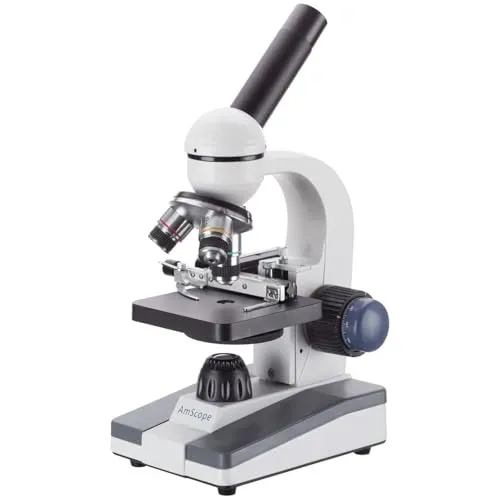
Price: $114.38 Rating: 4.1/5 Best For: Students & Classroom Use Check Price on Amazon
There's nothing flashy about the M150C-MS, and that's exactly the point. This is a student microscope built to get knocked off a lab bench and keep working. The all-metal frame isn't a premium feature. It's survival gear for classrooms where equipment takes abuse. The five magnification steps use glass optics rather than digital tricks, so students learn what real microscopy looks like rather than staring at pixelated digital zoom. The mechanical stage teaches proper slide navigation, a skill that handheld digital scopes never develop. There's no camera, no screen, no WiFi, no app. It's a pure optical instrument, and at $114, it will outlast every digital device on this list by a decade.
Pros
- All-metal frame construction built for classroom durability
- Five magnification powers up to 1000X with glass optics
- Coaxial coarse and fine focus knobs for precise adjustments
- Mechanical stage with secure slide holder teaches proper technique
- 360-degree rotatable monocular head for easy student sharing
Cons
- No digital imaging capability; purely optical with no camera or screen
- Monocular design limits comfort during extended use sessions
- Limited to biological slide viewing; not suitable for soldering or coin inspection
Verdict: The ideal student microscope for classroom and homeschool settings where durability matters more than digital features. If you need a camera or screen, look elsewhere. This is a pure optical workhorse built for slide-based biology education. The Swift SW350B (#5) offers similar optics with digital capture if that's essential.
#10. WonderQuest 4K Digital Microscope 2" IPS Screen 1000X
Battery-powered handheld 4K microscope designed to spark curiosity in young explorers.
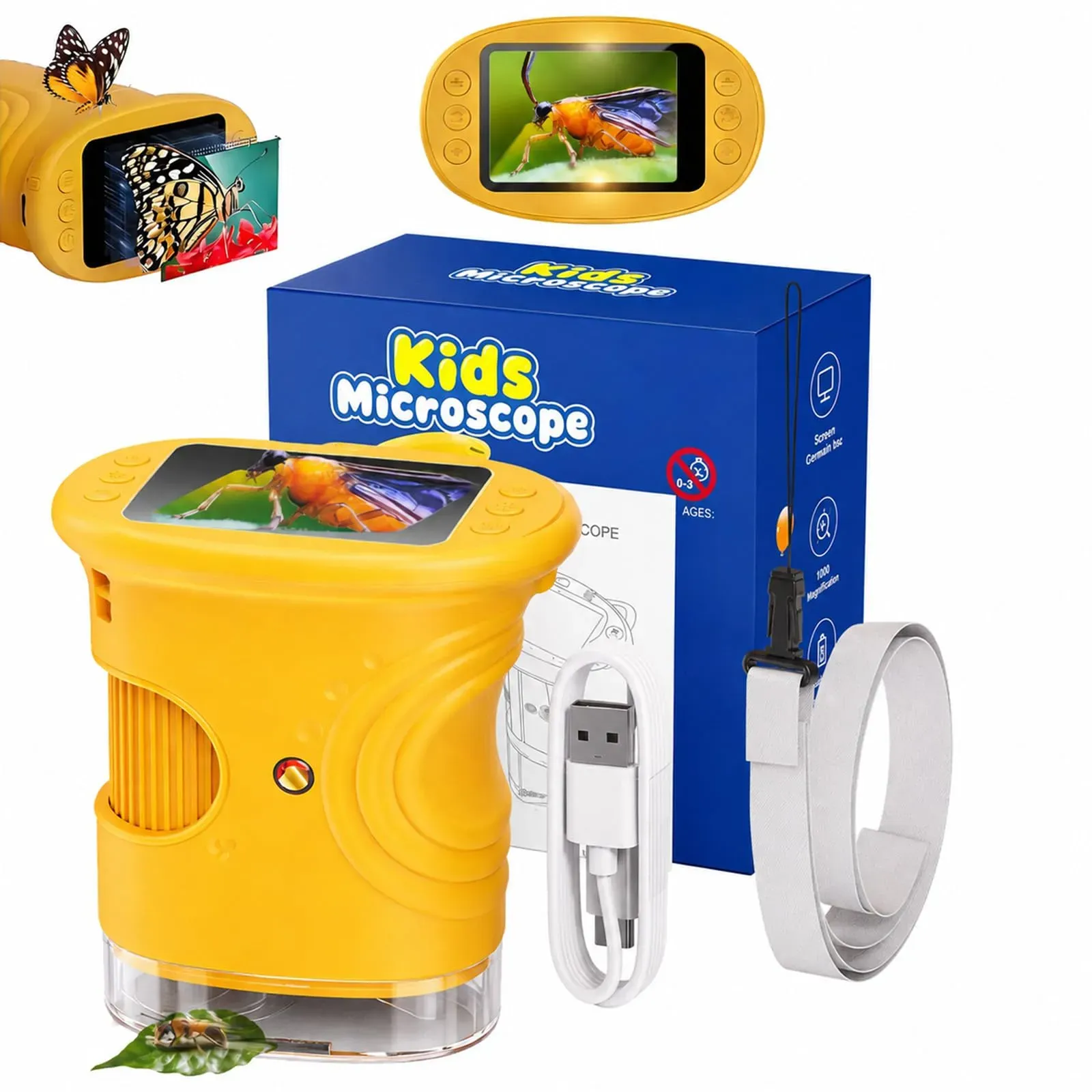
Price: $38.99 Rating: 4.4/5 Best For: Kids & STEM Education Check Price on Amazon
The WonderQuest is a kids' tool, not a compromised adult microscope, and it's better for knowing exactly what it is. The 2-inch screen will make any adult squint. For a 9-year-old discovering what a leaf edge or a dead fly's eye looks like at 400X, it's the perfect window. Battery power and one-button operation mean zero setup: no apps, no pairing, no parental IT support required. The 4K sensor is overqualified for the job, which means kids' photos actually look good enough to share with grandparents. It won't replace a soldering scope. It won't grade coins. It will spark curiosity in a kid who might otherwise never look at the world through a lens. At $39, that's a bargain.
Pros
- Handheld, battery-operated design for indoor and outdoor exploration
- 2" IPS screen with 4K resolution display
- Simple single-hand button operation; no apps or pairing required
- Adjustable LED lighting for different sample types
- Captures images and videos independently without external devices
Cons
- 2" screen is too small for detailed adult inspection work
- Limited review history; long-term durability is unconfirmed
- 1000X magnification is the ceiling; practical usable range is likely lower
Verdict: A purpose-built STEM tool that puts 4K microscopy in a child's hands. Adults looking for a serious inspection tool should look higher on this list, but for sparking scientific curiosity in young explorers, it's a genuine bargain at under $40. Pair it with the Skybasic (#7) for a family that wants both handheld and WiFi options.
How to choose the best digital microscope in 2026
Digital microscopes come in wildly different forms: handheld wands, screen-equipped workstations, and traditional compound scopes with camera ports. Choosing the right one starts with understanding what you'll actually use it for, not just chasing the biggest magnification number.
What magnification numbers actually mean
Most manufacturers won't tell you this, but claims above 1000X on a digital microscope are almost always digital zoom. The sensor crops and enlarges pixels rather than resolving new detail. True optical magnification through glass objectives, like you get with the AmScope T490B (#4) and Swift SW350B (#5), delivers clarity that digital zoom cannot replicate. For 95% of users (coin collectors, soldering enthusiasts, stamp examiners), the 50X to 500X range is where you'll live. Anything beyond that is typically unnecessary. The Andonstar (#1) and TOMLOV (#2) both offer practical zoom ranges that cover real-world use cases without relying heavily on empty digital magnification claims.
Screen size and connectivity: built-in display vs. HDMI vs. WiFi
Digital microscopes with screens (like the TOMLOV DM9 Max #2 with its 10.1-inch panel and the ANNLOV #3 with its 7-inch display) offer the most self-contained experience. No computer needed, no cables, just power on and explore. HDMI output (found on the Andonstar #1 and Hayve #8) lets you push video to a large external monitor, which is invaluable during long soldering sessions where neck strain becomes a real issue. WiFi connectivity (Skybasic #7, Jiusion #6) streams to phones and tablets, making these the best portable digital microscopes for field use and classroom sharing. Each approach has trade-offs: built-in screens add bulk, HDMI ties you to a monitor, and WiFi can introduce latency. Match the connection method to your workspace, not your spec sheet fantasies.
Price vs. value: where to spend and where to save
The $30-$60 range (Skybasic #7, Jiusion #6, WonderQuest #10, ANNLOV #3) covers casual exploration, kids' STEM activities, and basic inspection tasks. You'll sacrifice sensor quality and stand stability, but the value is genuine. The $100-$140 sweet spot (Andonstar #1, TOMLOV #2, Hayve #8) is where most serious hobbyists should aim. You get metal stands, better sensors, and features like HDMI output and lens interchangeability that transform the experience. Above $250 (Swift #5, AmScope #4), you're paying for optical precision that casual users simply won't benefit from. The best digital microscope for electronics repair doesn't need to be the most expensive. The Andonstar at $140 outperforms scopes at twice its price for soldering work.
Build quality and stand stability
The stand is the most underrated component of any digital microscope. A wobbly stand turns high magnification into a nausea-inducing experience. Every tiny vibration sends your subject bouncing across the screen. The Andonstar (#1) uses a professional boom arm that locks firmly in any position. The ANNLOV (#3) comes with an all-metal stand at a budget price. Handheld models like the Jiusion (#6) and Skybasic (#7) trade stability for portability. If you're doing soldering or any precision work, prioritize a rigid metal stand over sensor specs. A 4K sensor on a shaky stand is worse than a 1080p sensor on a rock-solid one.
Frequently asked questions
Which digital microscope is best for electronics repair?
The Andonstar AD246S-M (#1) is the clear winner for electronics repair and soldering. Its dedicated soldering lens provides the working distance you need to maneuver a soldering iron without bumping the lens, the HDMI output lets you work on a large screen without eye strain, and the boom arm stand stays locked in position. The Hayve DM9 (#8) is a solid runner-up with its dual gooseneck lights that eliminate shadows on reflective PCB surfaces.
Are digital microscopes worth it compared to optical microscopes?
For the vast majority of hobbyist applications (coin collecting, soldering, stamp inspection, jewelry appraisal), digital microscopes are absolutely worth it. The ability to view on a screen, capture photos and video, and share discoveries instantly makes them far more practical than squinting through eyepieces. However, for serious biological research requiring true optical clarity above 1000X, a traditional compound microscope like the AmScope T490B (#4) or Swift SW350B (#5) remains superior. The digital vs optical debate comes down to your use case. Most people are better served by digital.
What's the best digital microscope for kids?
The WonderQuest 4K (#10) is purpose-built for young explorers with its battery-powered handheld design, simple one-button controls, and no app or pairing requirements. For slightly older kids who want to share discoveries on a tablet, the Skybasic Wireless (#7) offers WiFi streaming and has been vetted by nearly 9,500 families. Both are excellent digital microscopes for kids at different age and interest levels.
How much magnification do I actually need?
Far less than the box suggests. For coin collecting and soldering, 50X to 500X covers virtually all practical inspection needs. The jump from 500X to 1000X on most digital microscopes is achieved through digital zoom that degrades image quality. True optical magnification above 1000X requires immersion oil and precision glass objectives found on compound microscopes like the AmScope T490B (#4). Don't buy based on the highest magnification number. Buy based on sensor quality, lens glass, and stand stability.
Can digital microscopes with screens work without a computer?
Yes, absolutely. The ANNLOV (#3), TOMLOV DM9 Max (#2), Hayve DM9 (#8), and WonderQuest (#10) all feature built-in screens for fully standalone operation. They save images and video directly to SD cards or internal storage, making them ideal for workshops, classrooms, and anywhere a computer isn't convenient. Just power on and start exploring.
Final verdict
The digital microscope market in 2026 offers impressive options at every price point. The Andonstar AD246S-M (#1) is the top recommendation for its unmatched three-lens versatility and HDMI output. It's the one microscope that handles soldering, coin collecting, and slide work with equal competence. The TOMLOV DM9 Max (#2) wins for screen-focused users, offering a 10.1-inch display and 20MP sensor that coin collectors and jewelers will appreciate. And the ANNLOV 7" (#3) proves that $60 still buys a surprisingly capable tool with a metal stand and sharp 12MP imaging. Any of the best digital microscopes of 2026 on this list will serve you well. The right choice depends entirely on what you're inspecting and how you prefer to work. Check current prices at Amazon using the links above, as deals and availability shift throughout the year.