Top 10 Best AR Smart Glasses of 2026: Ranked & Reviewed
Some AR glasses are pocket IMAX theaters. Others are AI-powered sunglasses you'd never guess are smart. Here are the 10 best, ranked by what they actually do well.
AR smart glasses in 2026 have split into two camps that barely talk to each other. Camp one: pocket IMAX theaters. A 201-inch virtual screen that makes every economy seat feel like a front-row ticket. Camp two: AI companions with cameras, quietly translating menus and snapping POV footage while looking like ordinary sunglasses. The mess happens when you buy one expecting the other. This list separates the display-first titans from the AI-first assistants and ranks them without the marketing noise, starting with the Meta Oakley Vanguard, a rare hybrid that pairs a 12MP camera with Meta's full AI platform inside an Oakley frame built for actual athletes. For plenty of you, the right pick costs half as much. Here's how they stack up.
| # | Product | Price | Rating | |
|---|---|---|---|---|
| #1 | Meta Oakley Vanguard | $499.00 | 4.4/5 | View Deal |
| #2 | RayNeo Air 3s Pro | $254.15 | 4.2/5 | View Deal |
| #3 | VITURE Beast | $548.99 | 4.0/5 | View Deal |
| #4 | Rokid Max2 + Station2 | $538.00 | 4.0/5 | View Deal |
| #5 | XREAL One Pro | $599.00 | 3.9/5 | View Deal |
| #6 | Meta Ray-Ban Gen 2 | $459.99 | 3.9/5 | View Deal |
| #7 | XREAL Air | $299.00 | 3.7/5 | View Deal |
| #8 | VITURE Pro | $699.00 | 4.1/5 | View Deal |
| #9 | Even Realities G1 A | $299.00 | 4.0/5 | View Deal |
| #10 | Oakley Meta HSTN | $299.00 | 4.1/5 | View Deal |
#1. Meta Oakley Vanguard Smart AI Glasses
Sunglasses that outperform optically before any smart features even kick in.
Price: $499.00 Rating: 4.4/5 Best For: Sports & AI Wearable Check Price on Amazon
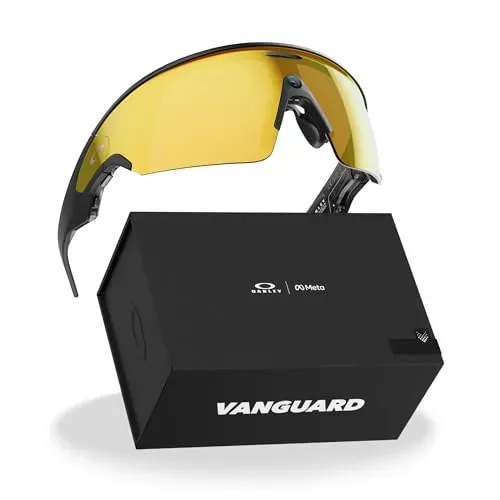
The Vanguard takes the top spot for a reason that has nothing to do with screen size. It doesn't have one. The RayNeo Air 3s Pro (#2) and XREAL Air (#7) demolish it on display specs. But Oakley spent decades solving a harder problem: making sunglasses people actually reach for every morning. Meta then wired its sharpest AI platform into that frame. The result is the only smart glasses on this list that an athlete would choose even if the tech were turned off. That's the bar, and nothing else clears it.
Pros
- 12MP ultra-wide camera with 3K Ultra HD video recording
- Meta AI assistant: real-time answers, live translation, wind-condition updates
- Open-ear audio with Bluetooth connectivity
- Activity sharing with Garmin and Strava
- Transitions adaptive lenses for all light conditions
- Hands-free capture via "Hey Meta" voice command
- 48-hour charging case on top of 8-hour built-in battery
- Privacy controls: voice command enable/disable
Cons
- $499 is steep. The RayNeo Air 3s Pro (#2) costs nearly half
- No virtual display or screen mirroring. Camera and AI features only
- Sport-forward styling limits versatility in dressier settings
Verdict: The definitive pick for athletes and outdoor enthusiasts who want best-in-class AI assistance and hands-free POV capture. If you need a virtual theater for movies, look at the RayNeo Air 3s Pro (#2) instead.
#2. RayNeo Air 3s Pro AR/XR Glasses
The brightest AR display on the market, priced like a rounding error next to the competition.
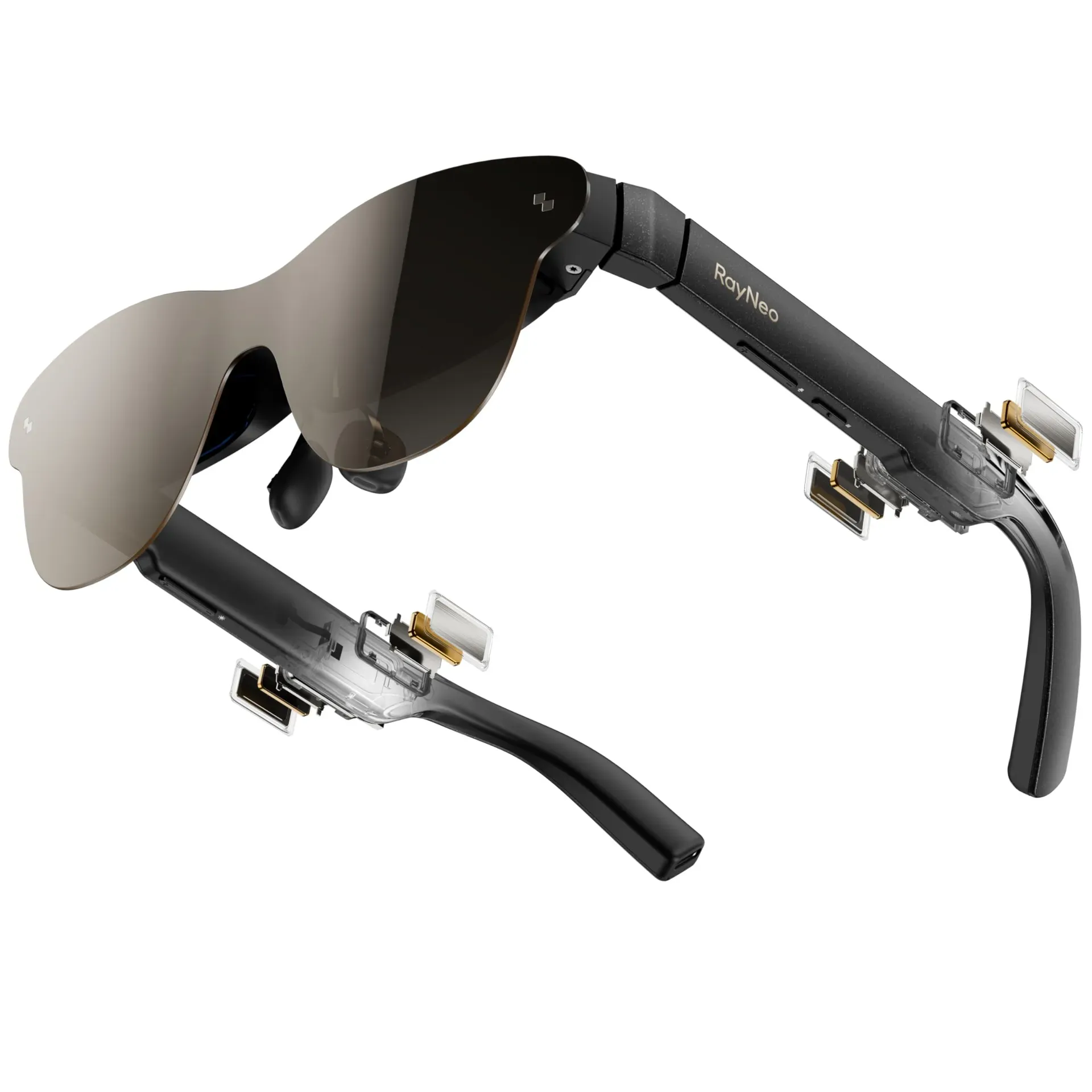
Price: $254.15 Rating: 4.2/5 Best For: Budget AR Gaming & Home Theater Check Price on Amazon
At $254, the RayNeo Air 3s Pro makes the VITURE Pro (#8) at $699 look like a typo. You get a 201-inch virtual screen that's measurably brighter than anything else here. No AI smarts. No camera. No spatial tracking without extra gear. But if your entire reason for buying AR glasses is a massive, vivid display for gaming and movies, the math tilts so hard toward the RayNeo that most of the pricier options on this list become genuinely hard to recommend. It's the category's value anchor, and every other display glass is priced relative to it.
Pros
- World's brightest AR display: 1,200 nits to-eye brightness
- 5.5th-gen tandem Micro-OLED with 200,000:1 contrast ratio
- 98% DCI-P3 color gamut coverage
- TUV SUD Low Blue Light & Flicker-Free dual certification
- 3,840Hz high-frequency PWM dimming with 20 brightness levels
- 6 optimized viewing modes for movies, games, and apps
- Prescription lens support for nearsighted users
Cons
- No built-in camera or AI assistant of any kind
- No spatial tracking without external accessories
- Requires USB-C DP alt-mode. Incompatible with some older phones
Verdict: The runaway value pick for pure entertainment. Ideal for movie watchers, casual gamers, and anyone who wants the biggest brightest screen per dollar. Skip if you need camera capture, AI features, or standalone operation.
#3. VITURE Beast XR/AR Glasses
The widest FOV in consumer AR, plus real-time 2D-to-3D conversion nobody else offers.
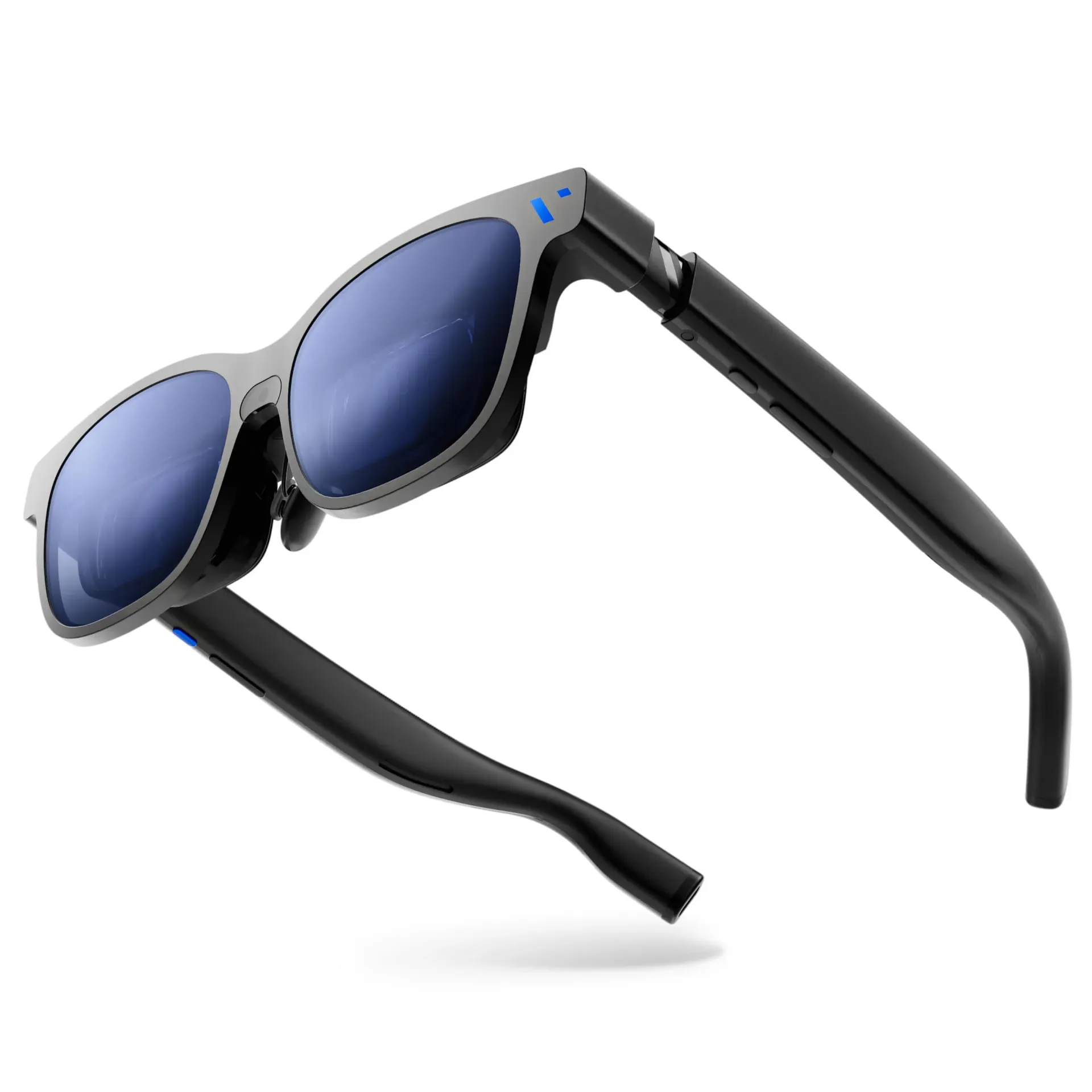
Price: $548.99 Rating: 4.0/5 Best For: Premium Immersion & Spatial Computing Check Price on Amazon
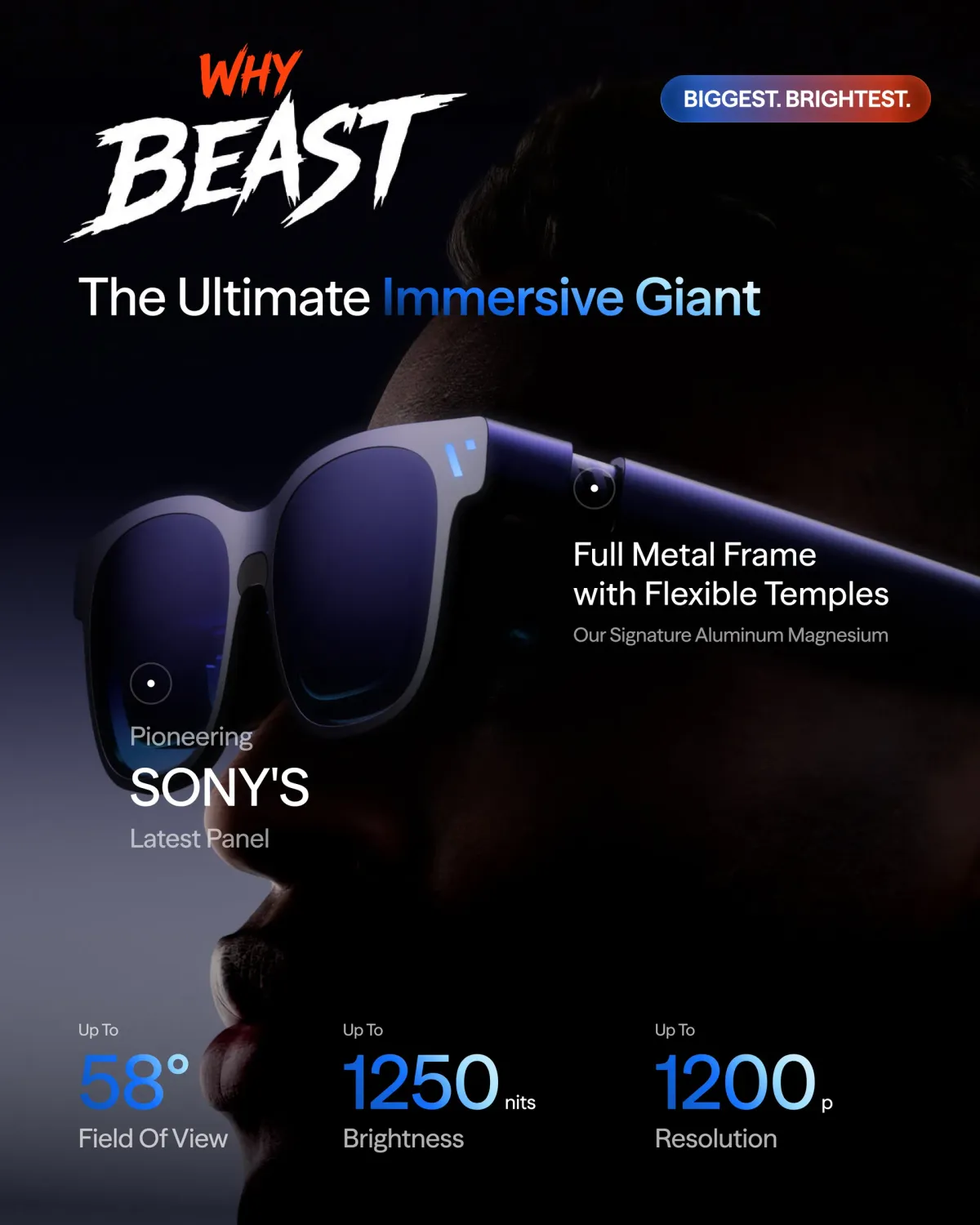
The VITURE Beast is what happens when a company decides to chase immersion at any cost. Two features put it in a category of one: a 58-degree field of view that's wider than anything else in consumer AR, and a real-time engine that converts any flat video into stereoscopic 3D on the fly. No pre-processing. No special files. Just hit play and it works. That 3D trick alone justifies the $549 price if you're the type who rewatches movies just to see them in a new format. The aerospace-grade aluminum-magnesium chassis at 88 grams feels like it belongs in a cockpit, and the Harman AudioEFX tuning outclasses both the RayNeo (#2) and Rokid (#4) on sound. NVIDIA and Stanford Medicine use these professionally. That's not a marketing bullet. It's just what happens when the hardware is this good.
Pros
- 174" virtual display with widest-in-class 58° FOV
- Sony latest-gen Micro-OLED: 1250 nits peak brightness, 1200p per eye
- 120Hz refresh rate with edge-to-edge sharpness
- Built-in VisionPair 3DoF with screen pinning and 32:9 UltraWide mode
- 9-level electrochromic dimming with Auto Transparency
- World's first real-time 2D-to-3D conversion engine
- HARMAN AudioEFX tuned speakers with deep bass
- Two IPD size options: Regular (up to 70) and Large (up to 74)
- Compatible with Switch 2, PS5, Xbox, Steam Deck, iPhone, Android, Mac, PC
Cons
- $549 puts it in premium territory. Nearly double the RayNeo (#2)
- No AI assistant or camera capture features
- 88g is the heaviest frame on this list. You'll feel it by hour three
Verdict: The right pick for immersion seekers who want the largest FOV, real 3D conversion, and premium build in one package. Overkill for casual viewers. The RayNeo Air 3s Pro (#2) gives you a bigger screen for half the price, just without the spatial tricks.
#4. Rokid AR Spatial Video Glasses: Max2 with Station2
The only AR glasses here that work as a standalone computer. No phone needed.
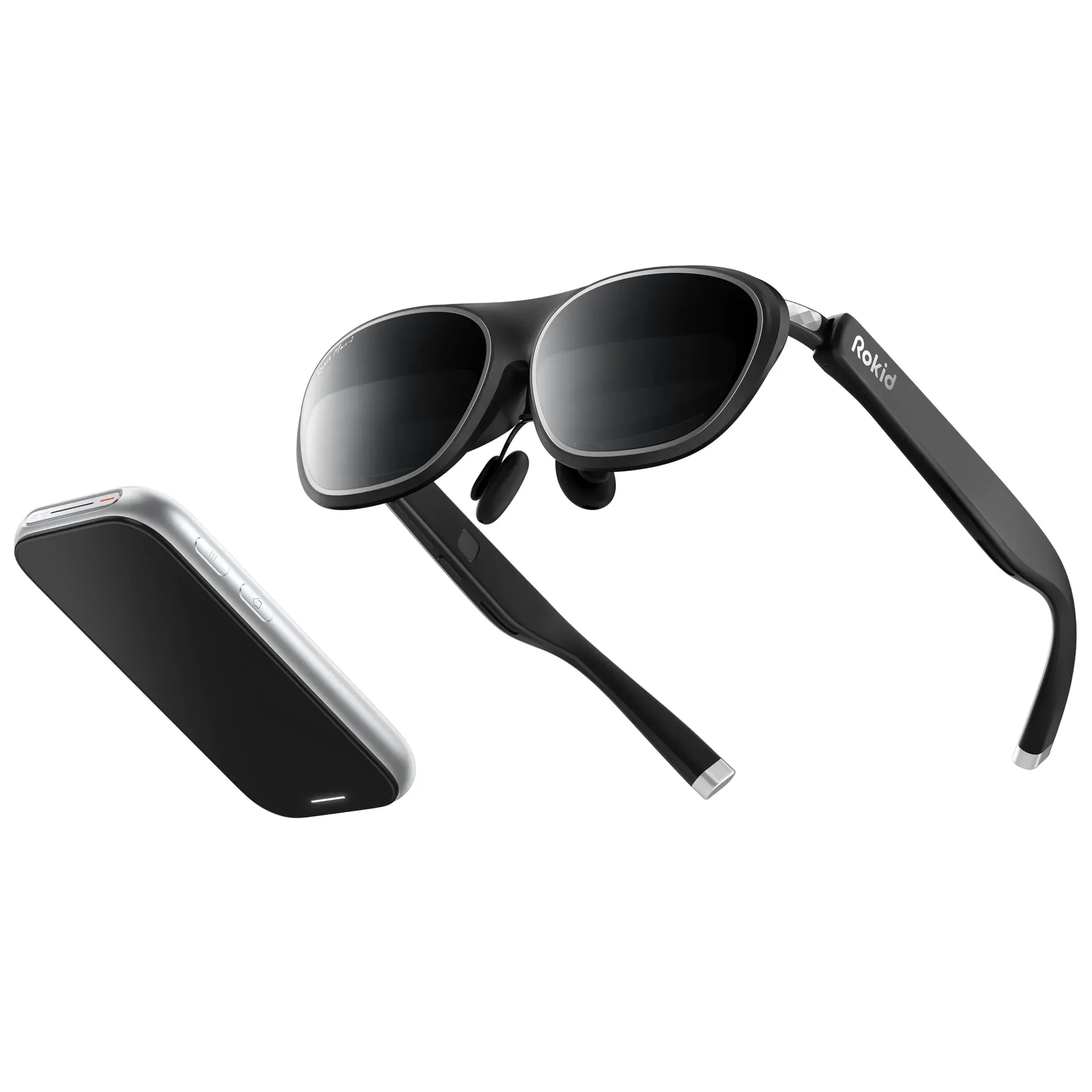
Price: $538.00 Rating: 4.0/5 Best For: Multi-Tasking Productivity Check Price on Amazon
Every other display glass on this list is a mirror. It shows whatever your phone or console feeds it. The Rokid Max2 with Station2 breaks that dependency completely. The Station2 puck runs Android apps natively across three virtual screens simultaneously. Netflix on the left, Slack in the center, a browser on the right. No laptop. No phone. No console. The 75-gram frame is the lightest among premium options here, and the myopia dial adjusts up to 600 degrees so most people skip prescription inserts entirely. It won't match the VITURE Beast (#3) on immersion or the XREAL One Pro (#5) on spatial tracking polish. But for getting real work done in AR, nothing else comes close.
Pros
- 3-screen multitasking with simultaneous app usage
- 4 smart modes: Reading, Giant Screen, Sports, Multi-Screen
- 50% larger Micro-OLED vs previous Max: 1920x1200 resolution
- 120Hz refresh rate with 108% sRGB color gamut
- Station2 spatial computer: 8GB RAM, 128GB storage, 5000mAh battery
- Myopia adjustment up to 600 degrees with auto IPD (55-72mm)
- 75g lightweight frame with cushioned nose pad and flexible temples
- Rokid ecosystem: Netflix, YouTube, Prime Video, 3D games built in
Cons
- 600 nits brightness trails competitors. RayNeo (#2) hits 1,200 nits
- Station2 battery lasts roughly 3.5 hours. Short for full workdays
- Narrower FOV than VITURE Beast (#3) at 58° and XREAL One Pro (#5) at 57°
Verdict: The productivity champion. Buy this if you want triple screens and standalone Android apps on the go. Skip if your main use case is immersive gaming or movie watching. Other glasses deliver bigger, brighter screens for less.
#5. XREAL One Pro AR Glasses with X1 Chip
A custom spatial chip and Bose-tuned audio make this the gamer's pick.
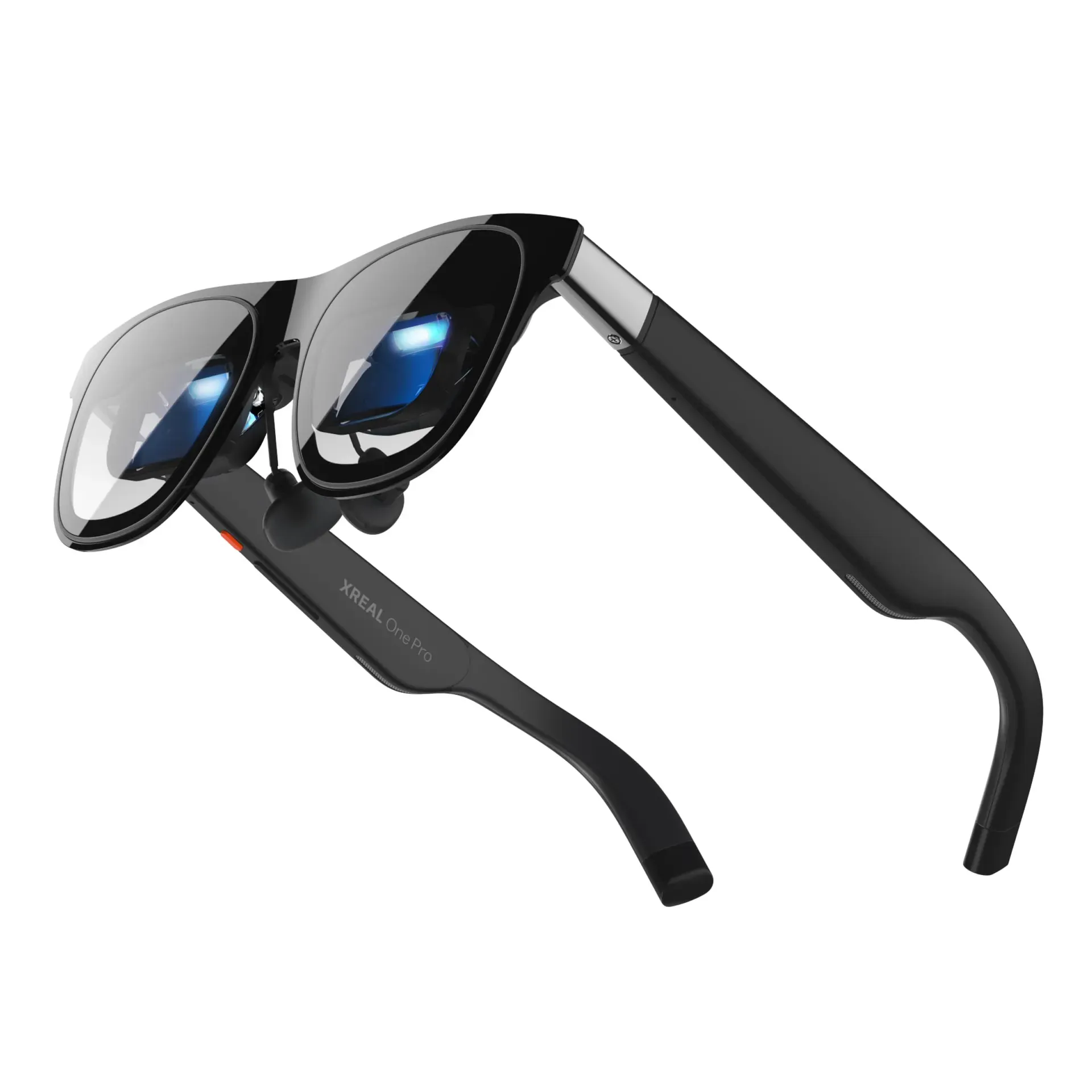
Price: $599.00 Rating: 3.9/5 Best For: Gaming & Entertainment Check Price on Amazon
Latency is the spec that separates usable AR gaming from a headache. The XREAL One Pro's custom X1 chip delivers 3DoF tracking at 3 milliseconds motion-to-photon. Anything slower and your virtual screen drifts when you turn your head. Annoying during a movie. Round-ending during competitive play. The Bose-tuned speakers produce the cleanest audio on this list, with tighter bass than the VITURE's Harman tuning and more detail than the Rokid's drivers. At $599 it's the most expensive single-unit purchase here, and the 6DoF upgrade requires buying the XREAL Eye separately. But if responsive, drift-free AR gaming is your priority, the 57-degree FOV through custom X-Prism optics and instant 3D conversion make a strong case for the premium.
Pros
- Self-developed X1 spatial computing chip: native 3DoF, 3ms M2P latency
- X-Prism Optics: best-in-class 57° FOV
- 171-inch virtual screen at 4m with 120Hz refresh rate
- Sony 0.55" Micro-OLED display technology
- Sound by Bose: tuned acoustics with wide soundstage
- 6DoF spatial anchoring with XREAL Eye accessory (sold separately)
- REAL 3D conversion for games, movies, apps, and photos
- 700 nits brightness with electrochromic dimming
- Dual IPD design (M: 57-66mm, L: 66-75mm) fitting over 95% of users
Cons
- $599 is the priciest single-unit option on this list
- Full 6DoF spatial anchoring requires separate $99 XREAL Eye purchase
- No built-in battery. Always tethered to a source device
Verdict: The gamer's choice. Lowest latency spatial tracking, Bose audio, and smooth 120Hz make it ideal for responsive gameplay. Skip if you need standalone operation or want the widest possible FOV. The VITURE Beast (#3) edges it out at 58°.
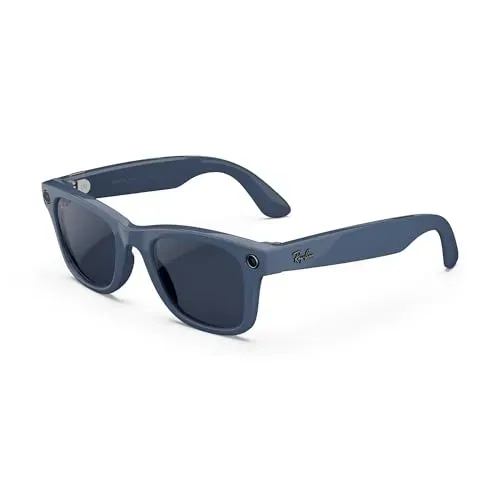
#6. Meta Ray-Ban (Gen 2) Wayfarer Smart AI Glasses
Smart glasses nobody will guess are smart. That's the whole point.
Price: $459.99 Rating: 3.9/5 Best For: Everyday AI Assistant Check Price on Amazon
Walk into a coffee shop wearing XREAL One Pros (#5) and people notice. Walk in wearing these and you're just someone with good taste in sunglasses. That's the entire value proposition: legitimate Wayfarer styling hiding a 12MP camera, open-ear speakers, and Meta's full AI assistant with live translation across six languages. You get zero virtual display. This is purely a camera-and-AI wearable, not a screen for your face. The trade-off is social acceptability, and for travelers, content creators, and anyone who finds chunky AR visors embarrassing, that trade is worth every penny of the $460 asking price. Just know what you're not getting.
Pros
- Iconic Wayfarer design. Indistinguishable from non-smart Ray-Bans
- 12MP ultra-wide camera with 3K Ultra HD video recording
- Up to 8 hours battery life + 48hr charging case
- Transitions adaptive lenses for indoor/outdoor use
- Meta AI: real-time translation (French, Italian, Spanish, English, German, Portuguese)
- 90% wind and street noise reduction on calls
- Privacy controls with voice command enable/disable
Cons
- No virtual display of any kind. Camera and AI only
- Open-ear audio lacks depth compared to Harman or Bose-tuned competitors
- $460 with Transitions approaches the XREAL One Pro (#5) price for far fewer display features
Verdict: Perfect for everyday users who want AI assistance, hands-free capture, and real-time translation in stylish, socially invisible glasses. Absolutely skip if you want any kind of virtual screen or display mirroring. That's not what these do.
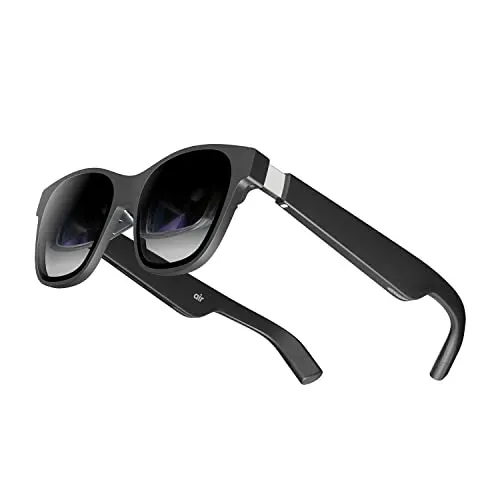
#7. XREAL Air AR Glasses
821 reviewers can't all be wrong about that 201-inch screen for $299.
Price: $299.00 Rating: 3.7/5 Best For: Mobile Productivity & Portable Theater Check Price on Amazon
The XREAL Air at $299 is the pragmatic entry point. A proven 201-inch virtual display in a 79-gram frame that plugs into practically everything: Steam Deck, Switch, iPhone 15, ROG Ally, any laptop with USB-C. No spatial computing chip like its One Pro (#5) sibling. No 120Hz. No AI assistant. What you get is a straightforward big-screen mirror that just works. The 3.7 rating from 821 reviews is the lowest average on this list. Some buyers report fussy compatibility with specific devices, and if yours is one of them, there's no workaround. But at this price with this much real-world mileage, it's still the safest first buy for anyone curious about AR displays who doesn't want to gamble $500 on an unknown.
Pros
- 201" virtual screen with dual Sony Micro-OLED panels
- 79g ultrathin frame. TUV Rheinland eye comfort certified
- Broad compatibility: iPhone 15, Android, Windows/Mac, Steam Deck, Switch, ROG Ally
- 100% UVA/UVB protection for outdoor use
- HDR support for vivid colors and contrast
- Most-reviewed AR glasses on the market (821 reviews)
Cons
- No spatial tracking without XREAL Beam accessory (sold separately)
- Capped at 60Hz. Half the refresh rate of the XREAL One Pro (#5)
- 3.7/5 is the lowest rating among ranked picks. Device compatibility can be hit-or-miss
Verdict: The no-brainer entry-level AR display for Steam Deck and Switch owners who want a big screen on the go. Skip if you need spatial anchoring, high refresh rates, or AI features. This is a pure plug-and-play monitor for your face.
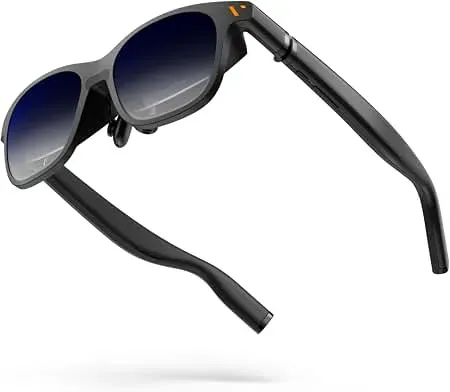
#8. VITURE Pro XR/AR Glasses
Premium build and 120Hz smoothness, but priced $200 above glasses with bigger screens.
Price: $699.00 Rating: 4.1/5 Best For: Versatile AR Users Check Price on Amazon
The VITURE Pro sits in a genuinely awkward position. At $699, it's the most expensive glasses on this list, yet its 135-inch virtual display is notably smaller than the RayNeo Air 3s Pro (#2) at 201 inches for $254. What are you paying for? A smooth 120Hz refresh rate, 1000 nits of peak brightness for outdoor visibility, Harman-tuned audio, electrochromic dimming, and built-in myopia correction. Across 585 reviews, buyers give it a solid 4.1 out of 5, and the experience is polished. But you need to genuinely require outdoor brightness and high refresh rates to pick this over the RayNeo at less than half the cost. For most people, the value math doesn't close.
Pros
- 135" virtual display at 120Hz refresh rate
- 1000 nits peak brightness. Usable outdoors
- Harman-tuned audio with deep bass and wide soundstage
- Electrochromic dimming film for adjustable immersion
- Myopia adjustment: -6.0D to +3.0D
- Premium build with high-quality materials
Cons
- $699 is the highest price on this list by a wide margin
- 135" display is smaller than the RayNeo (#2) at 201" and VITURE Beast (#3) at 174"
- No built-in 3DoF spatial tracking. The cheaper VITURE Beast (#3) includes it
Verdict: Consider only if 120Hz smoothness and outdoor brightness are dealbreakers for you. Most users will get objectively better screen real estate and value from the RayNeo Air 3s Pro (#2) at $254.
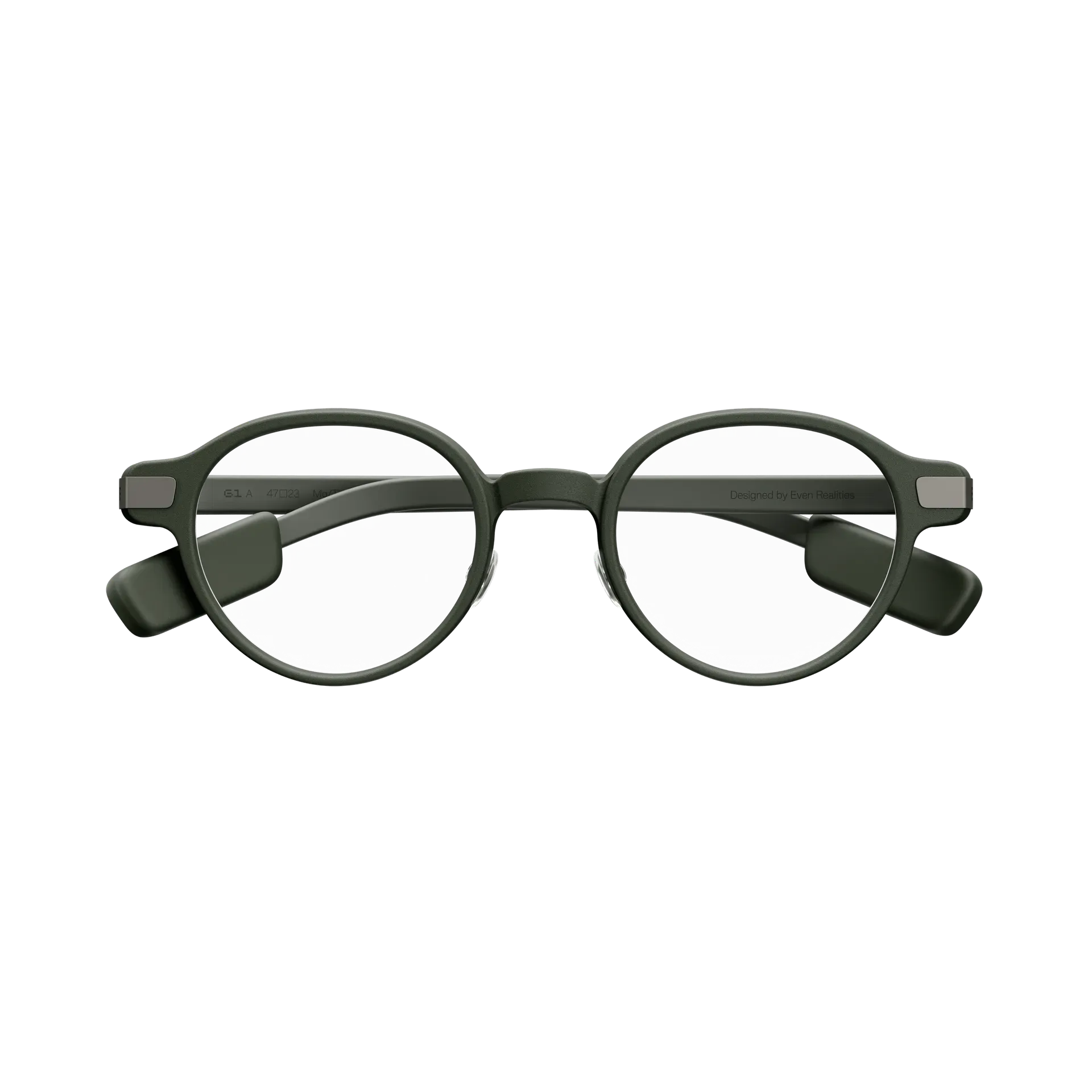
#9. Even Realities G1 A Smart Glasses
Titanium frames that translate 15 languages into your field of view. No one will know.
Price: $299.00 Rating: 4.0/5 Best For: Discreet AR Translation Check Price on Amazon
The Even Realities G1 A does something genuinely different from every other pair on this list. It uses transparent waveguide optics to project subtle AR information onto a 38-gram titanium frame that most people would mistake for designer eyewear. No chunky visor. No obvious cameras. Just thin titanium arms housing a display that whispers translations, notifications, and navigation cues into your peripheral vision. Bone-conduction audio keeps your ears fully open. Private enough for calls, safe enough for city streets. This is a notification-and-translation device, not a virtual cinema. Fifteen languages of real-time translation displayed discreetly in your field of view make it uniquely compelling for frequent travelers. Just don't expect to watch movies on it. That's not what it's built for.
Pros
- 38g ultra-light titanium frame. Lightest on this list
- Transparent waveguide display for subtle AR overlay
- Bone-conduction open-ear audio for private listening
- Real-time translation in 15 languages
- 8MP 1080p rear camera for photo and video capture
Cons
- Limited display. Not a full virtual screen experience
- Waveguide display washes out in bright direct sunlight
- Smaller app ecosystem than Meta, XREAL, or VITURE platforms
Verdict: The traveler's pick. Buy for discreet translation and subtle AR notifications in a frame that doesn't scream wearable tech. Skip entirely if you want immersive gaming, movies, or a large virtual display. These are built for subtlety, not spectacle.
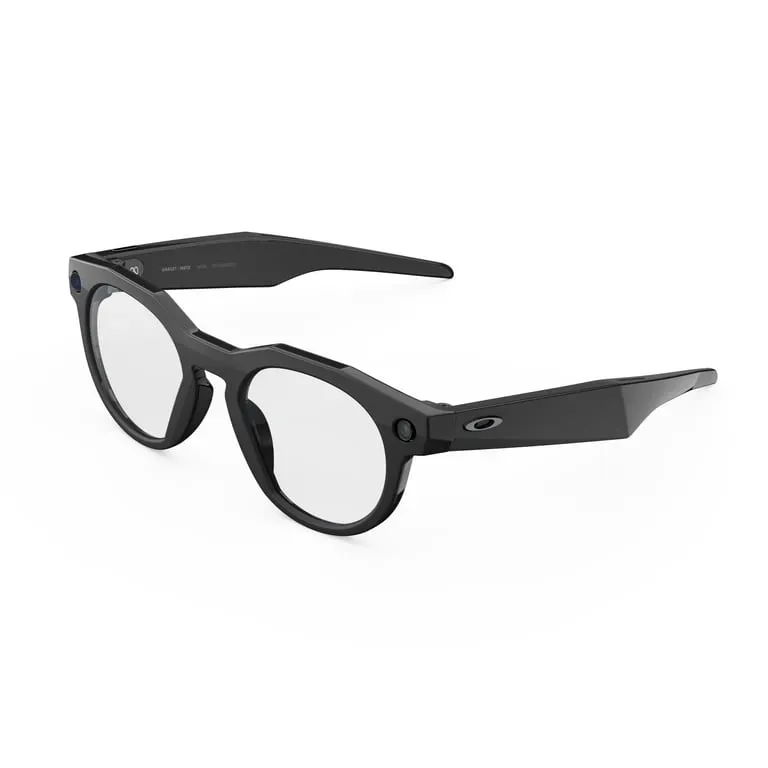
#10. Oakley Meta HSTN Smart AI Glasses
Meta AI in an Oakley sport frame for $299. The cheapest ticket into Meta's ecosystem.
Price: $299.00 Rating: 4.1/5 Best For: Sports & Performance Check Price on Amazon
The Oakley Meta HSTN is the Vanguard (#1) stripped down to its essentials. Same 12MP ultra-wide camera. Same Meta AI platform. $200 less at $299. You get 4K 30fps anti-shake video, open-ear audio with dual microphones, and roughly 8 hours of battery from a 170mAh cell charged via USB-C. What you lose versus the Vanguard: the Transitions adaptive lenses, the marathon-ready 48-hour charging case, and some of the weather sealing. The 4.1 rating across verified reviews suggests buyers aren't complaining about those omissions at this price. For runners, cyclists, and gym-goers who want POV capture and AI assistance in a dedicated sport frame without the premium Vanguard tax, this is the smart buy.
Pros
- 12MP ultra-wide camera with 4K 30fps anti-shake video recording
- Open-ear audio with dual microphones for calls and music
- 170mAh battery delivering up to 8 hours of typical use
- USB-C charging for convenient power
- Sport-optimized Oakley lens technology
- Most affordable Meta AI glasses at $299
Cons
- No Transitions adaptive lenses. Fixed tint only
- No 48-hour charging case like the Vanguard (#1)
- Fixed-tint lenses make indoor use impractical
Verdict: The budget-friendly Meta AI sports pick. Great for runners and cyclists who want hands-free POV capture and AI assistance at a fair price. Stretch to the Vanguard (#1) if you need adaptive lenses and multi-day battery life.
How to choose the best AR smart glasses in 2026
Display-first vs. AI-first: the choice that changes everything
The single most important decision has nothing to do with specs. It's whether you want a virtual display or an AI companion, and the two categories barely overlap. Display-first glasses like the RayNeo Air 3s Pro (#2), VITURE Beast (#3), and XREAL One Pro (#5) project a massive screen in front of your eyes. Perfect for movies, gaming, and productivity. AI-first glasses like the Meta Oakley Vanguard (#1) and Meta Ray-Ban Gen 2 (#6) focus on cameras, voice assistants, and real-time information. Trying to get both in one device usually means compromising on both. Pick your tribe first, then compare within it.
Key specs that actually matter
Brightness, measured in nits, determines whether you can see your virtual display in a room with windows. The RayNeo Air 3s Pro (#2) leads at 1,200 nits. Enough for daytime use. Field of view controls immersion: the VITURE Beast (#3) tops the list at 58 degrees. Refresh rate matters for gaming. Look for 120Hz on the XREAL One Pro (#5) or Rokid Max2 (#4). For camera-equipped models, prioritize video resolution (3K or 4K) and stabilization quality. And don't overlook weight. The difference between a 75g frame and an 88g one becomes very real after hour three.
Price vs. value: where to spend and save
The AR glasses market in 2026 spans from $254 to $699, and the sweet spot depends entirely on your use case. Pure entertainment buyers should look hard at the RayNeo Air 3s Pro (#2) at $254. It delivers a bigger, brighter screen than glasses costing twice as much. Spatial computing enthusiasts who want 3DoF tracking and 3D conversion should budget $500 to $600 for the VITURE Beast (#3) or XREAL One Pro (#5). The $699 VITURE Pro (#8) is harder to justify unless you specifically need 120Hz and outdoor brightness. At that price, the value math gets shaky. For AI-first glasses, $299 to $499 is the range, with the Oakley Meta HSTN (#10) offering the cheapest entry at $299.
Brand reliability: who makes quality AR glasses
Meta dominates the AI-first category through partnerships with Ray-Ban and Oakley. Both brands bring decades of optical manufacturing credibility that generic tech companies can't match. XREAL and VITURE lead the display-first space with proprietary optics and custom silicon, and both have shipped enough units to prove their reliability. Rokid offers the most complete standalone ecosystem with the Station2, though its smaller market presence means fewer long-term durability reports. RayNeo delivers extraordinary display brightness at budget pricing, backed by TUV certifications that signal real engineering investment. Even Realities is the wildcard: innovative waveguide tech in a gorgeous titanium frame, but a smaller track record. Stick with the brands that have hundreds of verified reviews and you'll avoid the beta-tester experience that plagues smaller AR startups.
Frequently asked questions
What are the best AR smart glasses overall?
The Meta Oakley Vanguard (#1) takes the top spot for its unmatched combination of sports-grade optics, Meta's most advanced AI platform, and premium build quality. For pure display performance at half the price, the RayNeo Air 3s Pro (#2) delivers the brightest screen on the market. The right answer depends on whether you need a virtual display or an AI companion.
Which AR smart glasses are best for gaming?
The XREAL One Pro (#5) is the top pick for gamers, thanks to its custom X1 spatial computing chip delivering just 3ms of latency and Bose-tuned audio. The VITURE Beast (#3) is a close second with a wider 58-degree FOV and real-time 2D-to-3D conversion for any game. Both run at 120Hz, the minimum for competitive play.
Are smart glasses worth it in 2026?
For the right user, absolutely. Display-first glasses like the RayNeo Air 3s Pro (#2) replace portable monitors and projectors at a fraction of the size and cost. AI-first glasses like the Meta Ray-Ban Gen 2 (#6) replace the need to pull out your phone for quick captures, translations, and lookups. The key is matching the glasses to your actual daily habits. Buying display glasses when you really wanted AI features is the most common source of buyer's remorse in this category.
Smart glasses vs. AR glasses: what's the difference?
Smart glasses (like the Meta Ray-Ban Gen 2 #6 and Meta Oakley Vanguard #1) pack cameras, speakers, and AI assistants into traditional eyewear frames with no visual display. AR glasses (like the RayNeo Air 3s Pro #2 and VITURE Beast #3) project a virtual screen or overlay into your field of view. Some products blur the line, but the core distinction is simple: smart glasses capture and assist, AR glasses display.
Do AR smart glasses work with prescription lenses?
Several models on this list support prescription use. The Rokid Max2 (#4) and VITURE Pro (#8) include built-in myopia adjustment dials (up to 600 degrees and -6.0D to +3.0D respectively). The RayNeo Air 3s Pro (#2) supports prescription lens inserts. If you have a strong prescription, confirm compatibility before buying. Not all AR glasses accommodate corrective lenses, and the ones that don't can be unusable without contacts.
Final verdict
The Meta Oakley Vanguard (#1) earns the crown for blending premium sports optics with Meta's sharpest AI platform in a package that performs brilliantly outdoors. The RayNeo Air 3s Pro (#2) is the value champion: a 201-inch, 1,200-nit display for $254 that makes pricier competitors look wasteful. And the VITURE Beast (#3) delivers the most immersive spatial computing experience with the widest FOV and that genuinely impressive real-time 3D engine. Every pair on this list earned its spot through verified user reviews and real performance data. There are no filler picks here. Prices shift, inventory moves, and deals come and go. If one of these fits your needs, check the current price before it changes.