Top 10 Best Premium Blenders of 2026: Ranked & Reviewed
A $750 Vitamix, a whisper-quiet Breville, and a three-horsepower underdog at $185. The 10 premium blenders actually worth your money in 2026.
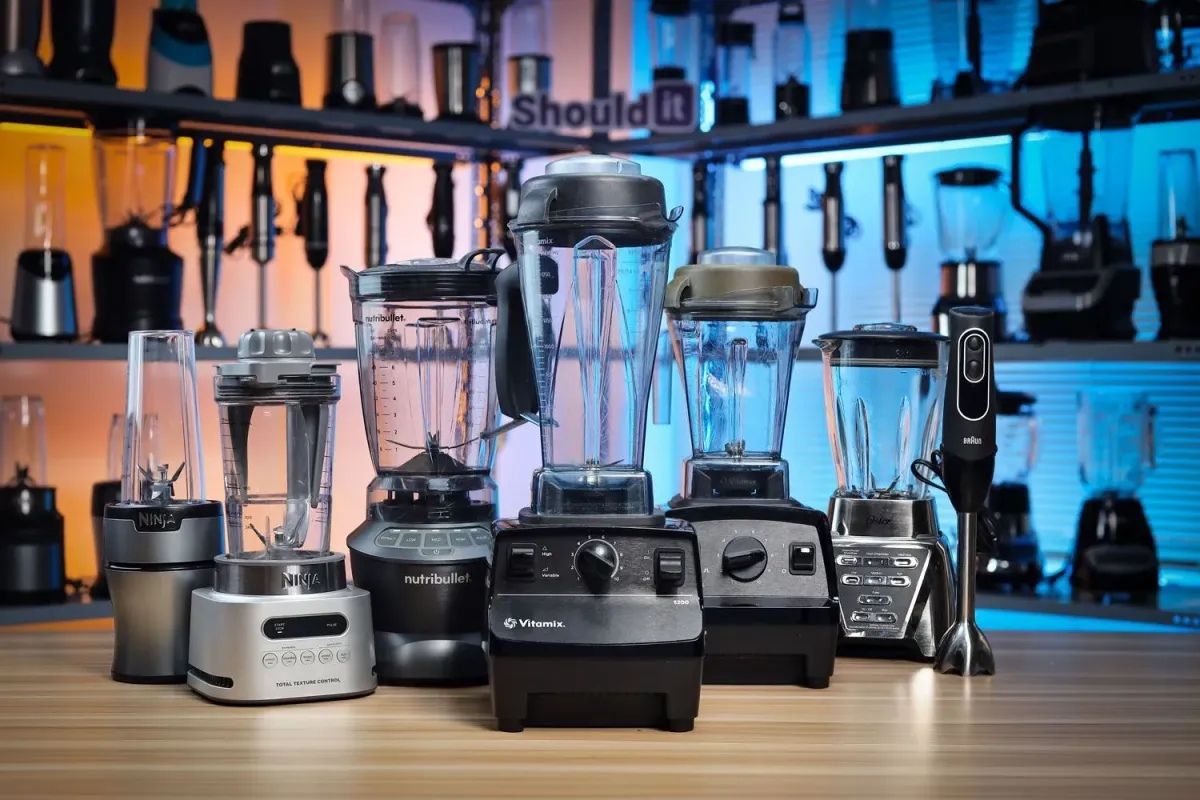
A $40 blender and a $750 blender will both turn kale into liquid. One will do it in 20 seconds and you won't taste the kale. The other needs a 5-minute break halfway through and leaves you with warm, chunky disappointment. Premium blenders aren't about doing what cheap ones can't. They're about doing it so well you actually use them daily. The best premium blenders of 2026 eliminate the friction that keeps budget appliances gathering dust. This list covers everything from the $750 Vitamix Ascent X5, the top pick, to sub-$200 powerhouses that deliver remarkable value without sacrificing the performance that defines this category.
| # | Product | Price | Rating | |
|---|---|---|---|---|
| #1 | Vitamix Ascent X5 | $749.95 | 4.6/5 | View Deal |
| #2 | Breville Super Q | $499.00 | 4.4/5 | View Deal |
| #3 | Vitamix A2300 Ascent | $549.95 | 4.6/5 | View Deal |
| #4 | Blendtec Professional 800 | $699.00 | 4.1/5 | View Deal |
| #5 | Ninja Detect Kitchen System | $249.95 | 4.6/5 | View Deal |
| #6 | Ninja Foodi Cold & Hot | $199.00 | 4.6/5 | View Deal |
| #7 | Beast Mega 1200 Plus | $219.00 | 4.6/5 | View Deal |
| #8 | Cleanblend Commercial | $184.97 | 4.4/5 | View Deal |
| #9 | KitchenAid K150 | $199.95 | 4.4/5 | View Deal |
| #10 | Wolf Gourmet High Performance | Check Price | 4.5/5 | View Deal |
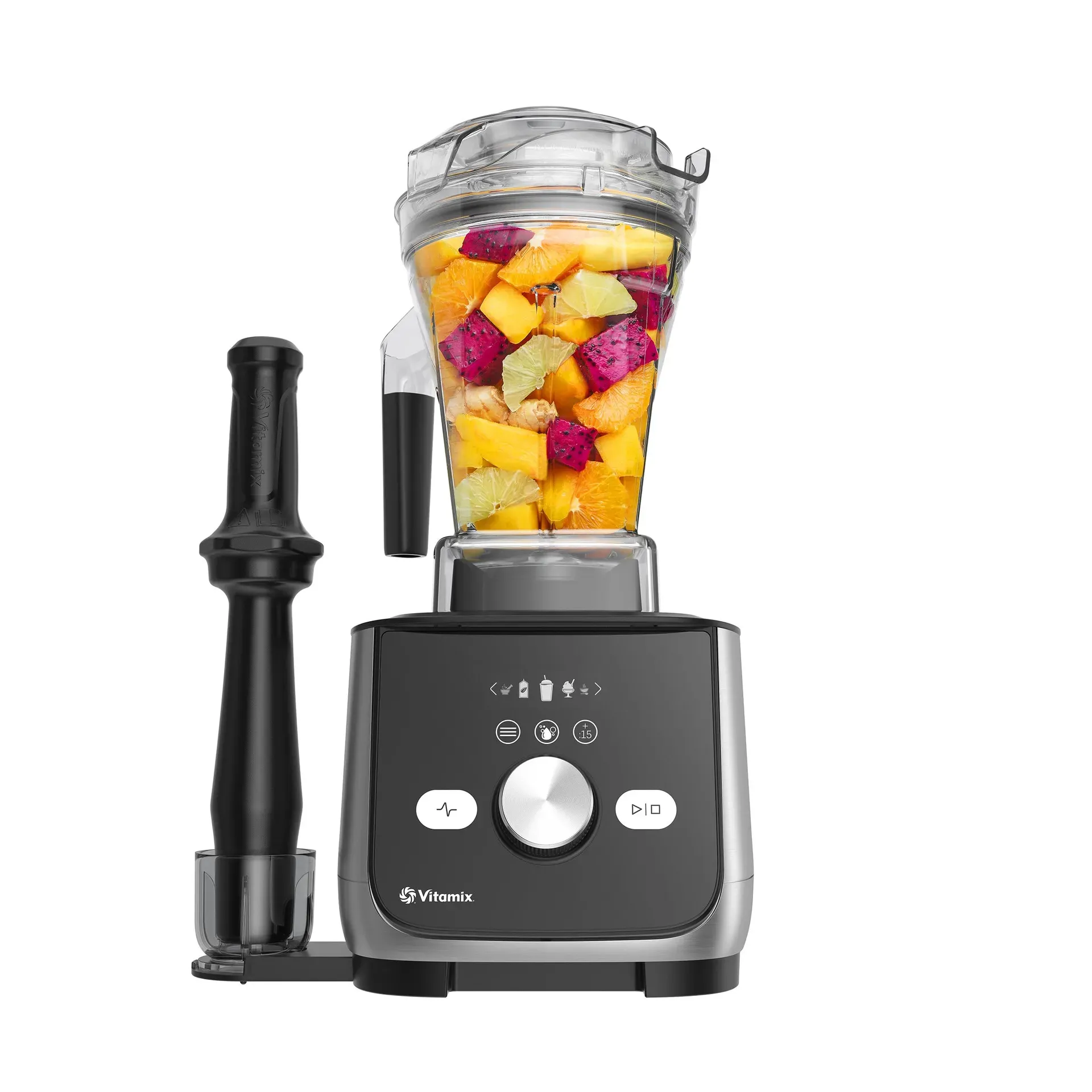
#1. Vitamix Ascent X5 Blender with 10 Blending Programs, Self-Cleaning Program, Professional-Grade Blender
Vitamix's most advanced blender ever: ten programs, self-cleaning, and a touchscreen that eliminates blending guesswork.
Price: $749.95 Rating: 4.6/5 Best For: Professional Home Chefs Check Price on Amazon
If the Vitamix Ascent X5 had a flaw, it'd be that you might stop using half your other kitchen appliances. The touchscreen transforms blending from a guessing game into a precise science. The tamper indicator alone is worth the upgrade if you've ever stood over a blender poking at stubborn frozen fruit. At $750, it demands a serious commitment, but amortize that over a decade and it works out to about twenty cents a day. Less than the cost of the smoothie you're making. The X5 is excellent. The harder question: will you use all ten programs enough to justify spending $200 more than the A2300 (#3), which runs the same core motor?
Pros
- 10 blending programs: Smoothies, Frozen Desserts, Soups, Cocktails, Dips, Smoothie Bowls, Frappés, Nut Butters, Non-Dairy Milks, Spice Grinding
- Self-cleaning program finishes in under 60 seconds
- Touchscreen with digital timer, variable speed control, and tamper indicator
- Self-Detect containers with wireless technology: auto-adjusts for vessel size
- Laser-cut stainless-steel blades
- 10-Year Limited Warranty
Cons
- $750: steepest price on this list by a wide margin
- 48-oz container is smaller than the Blendtec's 90-oz and the A2300's 64-oz
- Touchscreen overkill if all you make is morning smoothies
Verdict: Buy it if you want the most advanced Vitamix ever made and will actually use all ten programs. Skip it if you just want smoothies. The A2300 (#3) delivers the same core blending engine for $200 less.
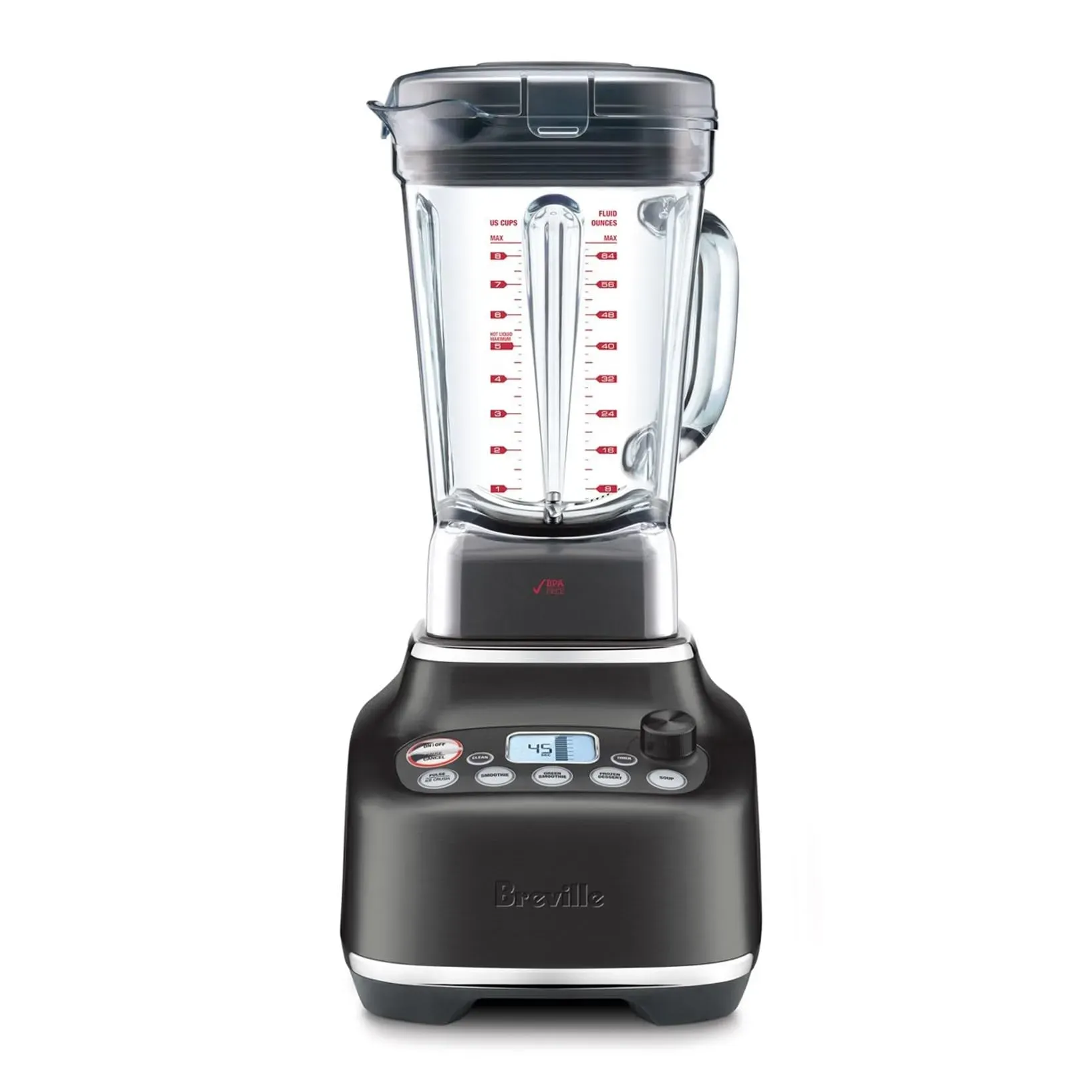
#2. Breville BBL920BST Super Q Home Blender, Black Stainless Steel
Commercial-grade 1800W power with noise suppression that actually lets you blend without waking the house.
Price: $499.00 Rating: 4.4/5 Best For: Commercial-Grade Home Use Check Price on Amazon
Blenders this powerful usually sound like a jet taking off. The Breville Super Q is the exception: you can actually have a conversation while it pulverizes ice. That alone justifies its spot at #2. The Assist Lid with ring-pull design stays sealed during operation, solving a problem that's plagued blender lids since the invention of the blender. The intelligent base recognition switches seamlessly between the full-size jug and the personal cup. Where it trails the Vitamix X5 (#1) is programmability: five one-touch presets versus ten. But if noise is your dealbreaker, no other blender on this list beats it.
Pros
- 1800W commercial-grade motor with 186 mph blade tip speed
- Noise Suppression Technology: dramatically quieter than competitors at this power level
- 12 speed settings with advanced texture optimization
- 5 One Touch Programs: Smoothie, Frozen Dessert, Soup, Ice Crush, Auto Clean
- Includes 68-oz jug and 24-oz personal blending cup with intelligent base recognition
- 10 Year Limited Warranty
Cons
- Vac Q vacuum pump system sold separately: not included
- Heavier and bulkier than most competitors at this price
- Five presets feel limited next to the Vitamix X5's ten
Verdict: Buy it if noise matters as much as power. This is the quietest high-performance blender that doesn't compromise on results. Skip it if you want maximum programmability; go with the Vitamix X5 (#1) instead.
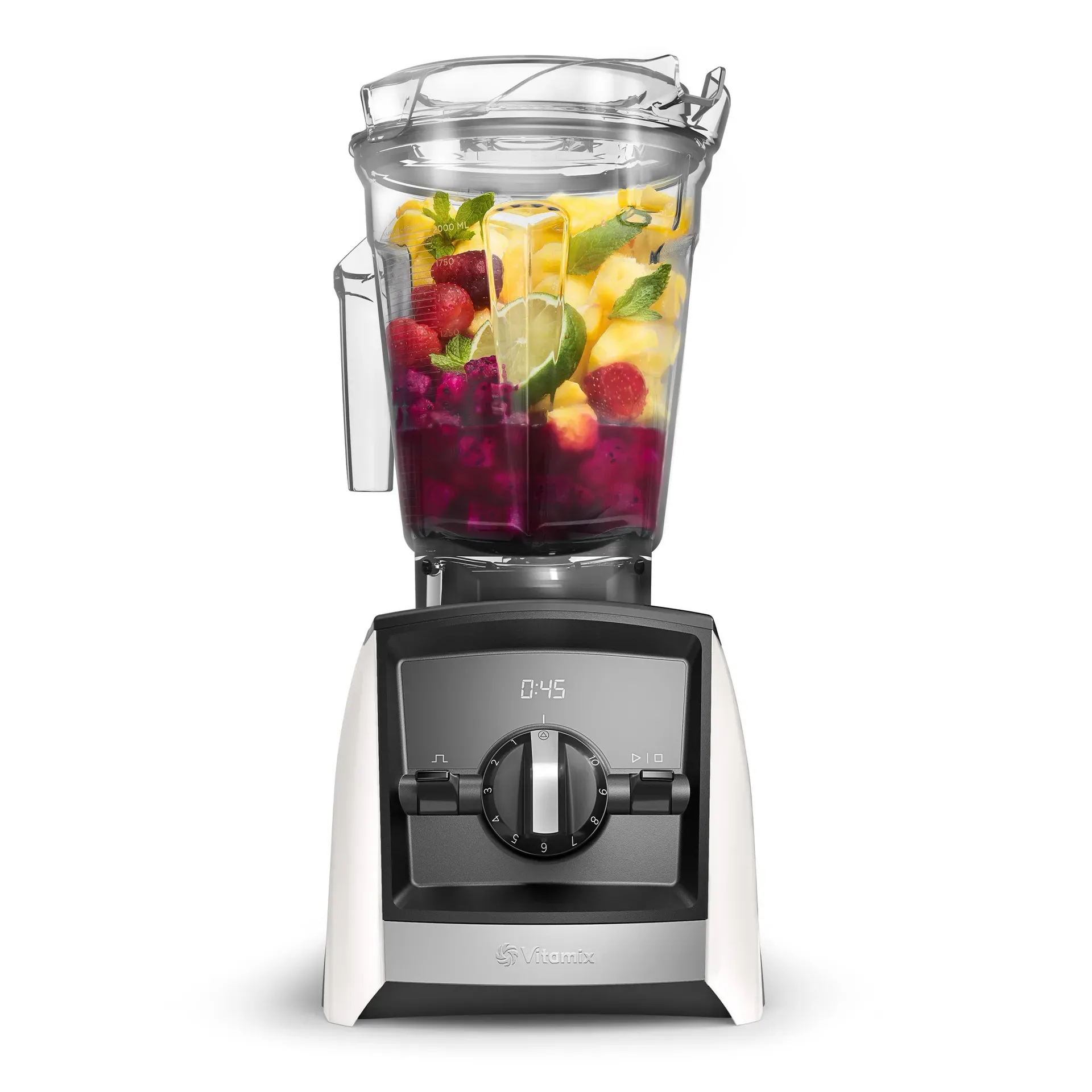
#3. Vitamix A2300 Ascent Series Smart Blender, Professional-Grade
The smartest way into the Vitamix ecosystem: same legendary motor, fewer frills, cabinet-friendly design.
Price: $549.95 Rating: 4.6/5 Best For: Versatile Home Blending Check Price on Amazon
Here's the uncomfortable truth about the Vitamix lineup: for most home cooks, the A2300 does everything you actually need. The X5 (#1) is undeniably more advanced, but how many of those ten programs will you use after the first month? The A2300 gives you Vitamix's core blending engine, the same relentless vortex, the same stainless-steel blades, and lets you drive it manually. That means more involvement in the process, sure. It also means more control over textures from chunky salsa to velvet soup. If you're the type who enjoys cooking rather than delegating it to a touchscreen, this is the better Vitamix.
Pros
- Variable speed control and pulse for complete manual texture precision
- Built-in Wireless Connectivity with Self-Detect container recognition
- Low-profile 64-oz container fits under standard kitchen cabinets
- Digital timer for recipe repeatability
- Compatible with all Self-Detect container sizes and accessories
- Includes motor base, 64-oz container, tamper, and recipe book
Cons
- No preset programs: fully manual operation
- Lacks the X5's self-cleaning program and tamper indicator
- At $550, still expensive for a blender with zero automation
Verdict: Buy it if you want Vitamix quality with manual control and a container that fits under cabinets. Skip it if you prefer walk-away automation. The X5 (#1) or Ninja Detect (#5) are better matches.
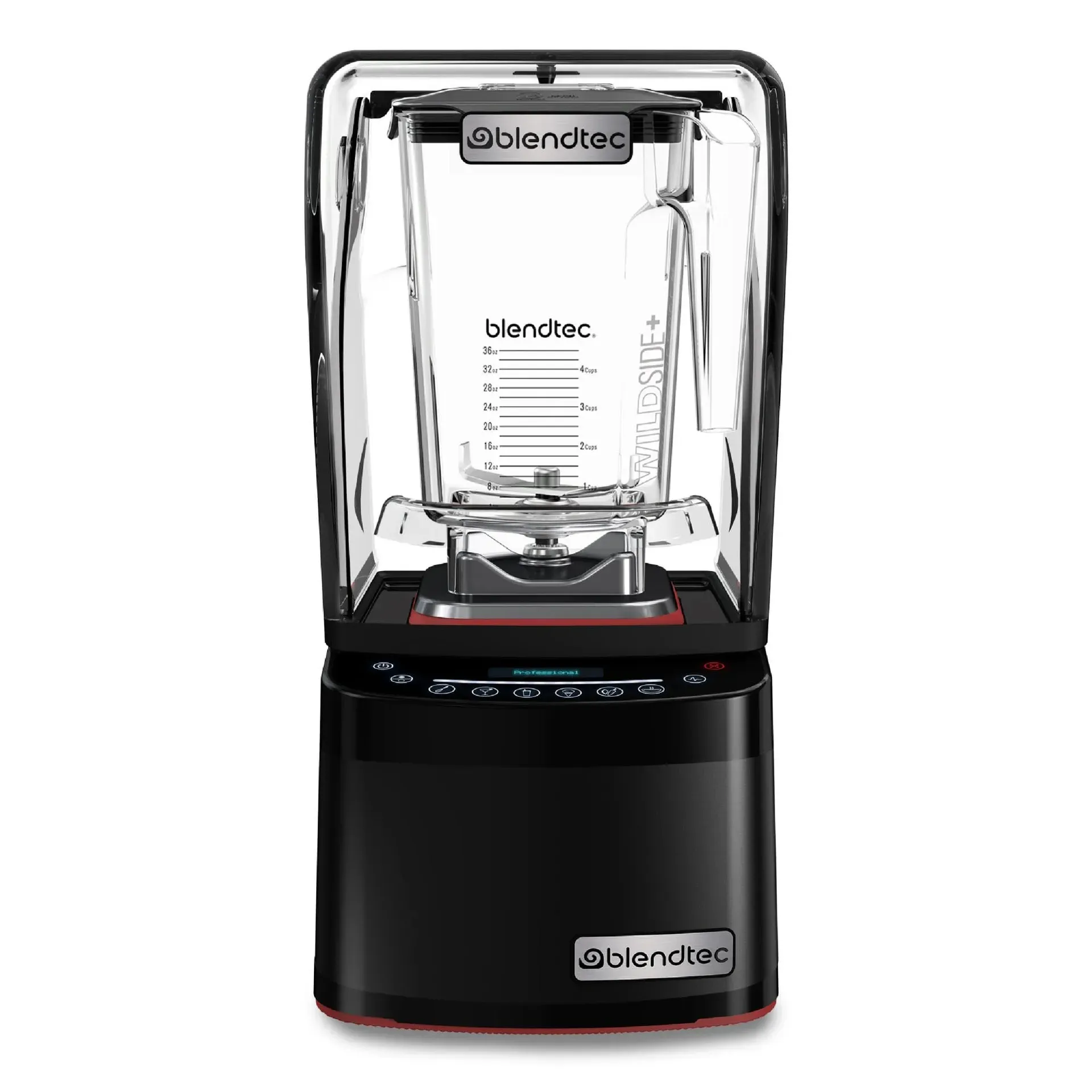
#4. Blendtec Professional 800 Blender with WildSide+ Jar
The world's quietest high-performance blender with a massive 90-ounce jar for serious batch blending.
Price: $699.00 Rating: 4.1/5 Best For: Power Users Check Price on Amazon
The Blendtec Professional 800 pulls off a neat trick: it makes the Vitamix sound loud. If you've ever avoided making a morning smoothie because you didn't want to wake the household, this is your blender. The counterintuitive blunt blade design (think of it as pulverizing through impact rather than slicing) is also safer when you're cleaning it, which happens fast thanks to the self-cleaning cycle. The 4.1/5 rating is the lowest on this list, and there's a reason: very fibrous greens don't break down as thoroughly as they do in a Vitamix. But for ice, frozen fruit, and large batches, the Blendtec holds its own.
Pros
- World's quietest blender: proprietary sound dampening and airflow engineering
- 1800W motor with patented blunt blade technology: 80% thicker and 10x stronger than standard blades
- 90-oz WildSide+ BPA-free jar: largest on this list
- 6 preprogrammed cycles: batters, drinks, smoothies, frozen treats, whole juices, hot soup
- Self-cleaning cycle: just add hot water and soap
- Capacitive touch interface with illuminated controls
Cons
- 4.1/5: lowest user rating among all ten blenders here
- Blunt blades struggle with very fibrous greens compared to Vitamix's laser-cut blades
- No variable speed dial: relies entirely on preprogrammed cycles
Verdict: Buy it if quiet operation and large-batch capacity are your top priorities. Skip it if you need surgical texture precision for green smoothies. The Vitamix A2300 (#3) gives you more manual control.
#5. Ninja Detect Kitchen System TB401 with BlendSense Technology
A blender, food processor, and personal blender in one, with smart auto-detection that builds custom programs.
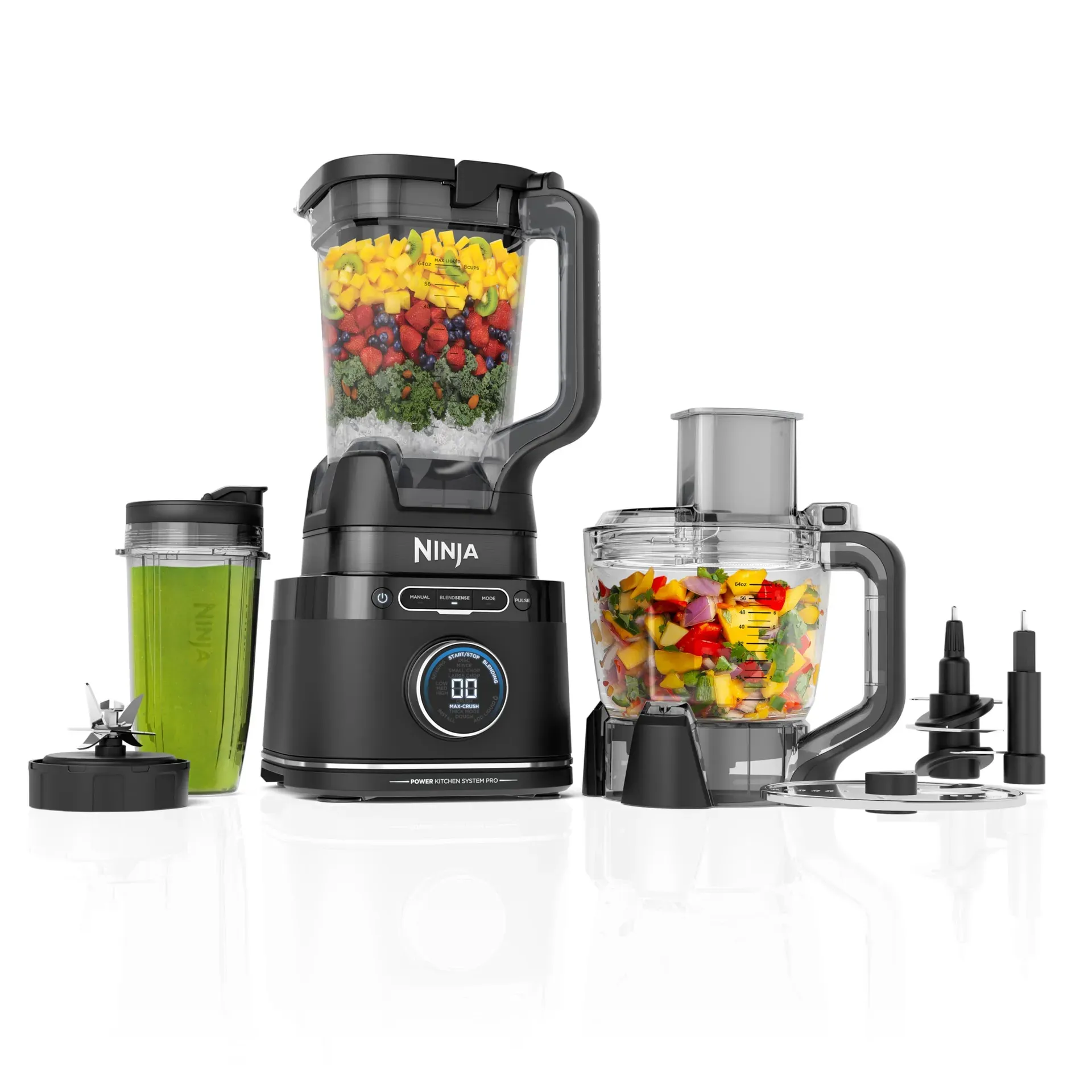
Price: $249.95 Rating: 4.6/5 Best For: All-in-One Meal Prep Check Price on Amazon
Ninja's pitch with the Detect Kitchen System is disarmingly simple: one motor base, three appliances, zero guesswork. It's the only blender on this list that also functions as a full food processor with slicing and shredding discs, which makes its $250 price tag feel almost aggressive compared to the $750 Vitamix X5. The catch is longevity. Peak wattage isn't the same as sustained horsepower. In a commercial kitchen, a Vitamix or Blendtec will outlast it by years. But for a home kitchen where it's used a few times a week rather than hours a day, the value proposition is hard to argue with.
Pros
- BlendSense Technology automatically detects contents and creates a custom blending program on the fly
- 72-oz XL pitcher, 24-oz single-serve cup with spout lid, and 8-cup food processor bowl with chopping, dough, and slicing/shredding discs
- 1800-peak-watt motor
- 10 variable speed settings for manual control
- Liquid detect feature alerts when your blend needs more liquid
- All containers and blades are top-rack dishwasher safe
Cons
- Peak wattage does not equal sustained power: won't match Vitamix or Blendtec in long-term durability
- Plastic pitcher feels less premium than glass or Tritan competitors
- Food processor attachment requires storage space for multiple discs and blades
Verdict: Buy it if you want a blender, food processor, and personal blender in one machine. It replaces multiple countertop appliances. Skip it if you already own a food processor; you're paying for capability overlap you don't need.
#6. Ninja Foodi Cold & Hot Blender HB150C/HB152
The only blender here that cooks: simmer soup, melt cheese, then blend frozen margaritas in the same pitcher.
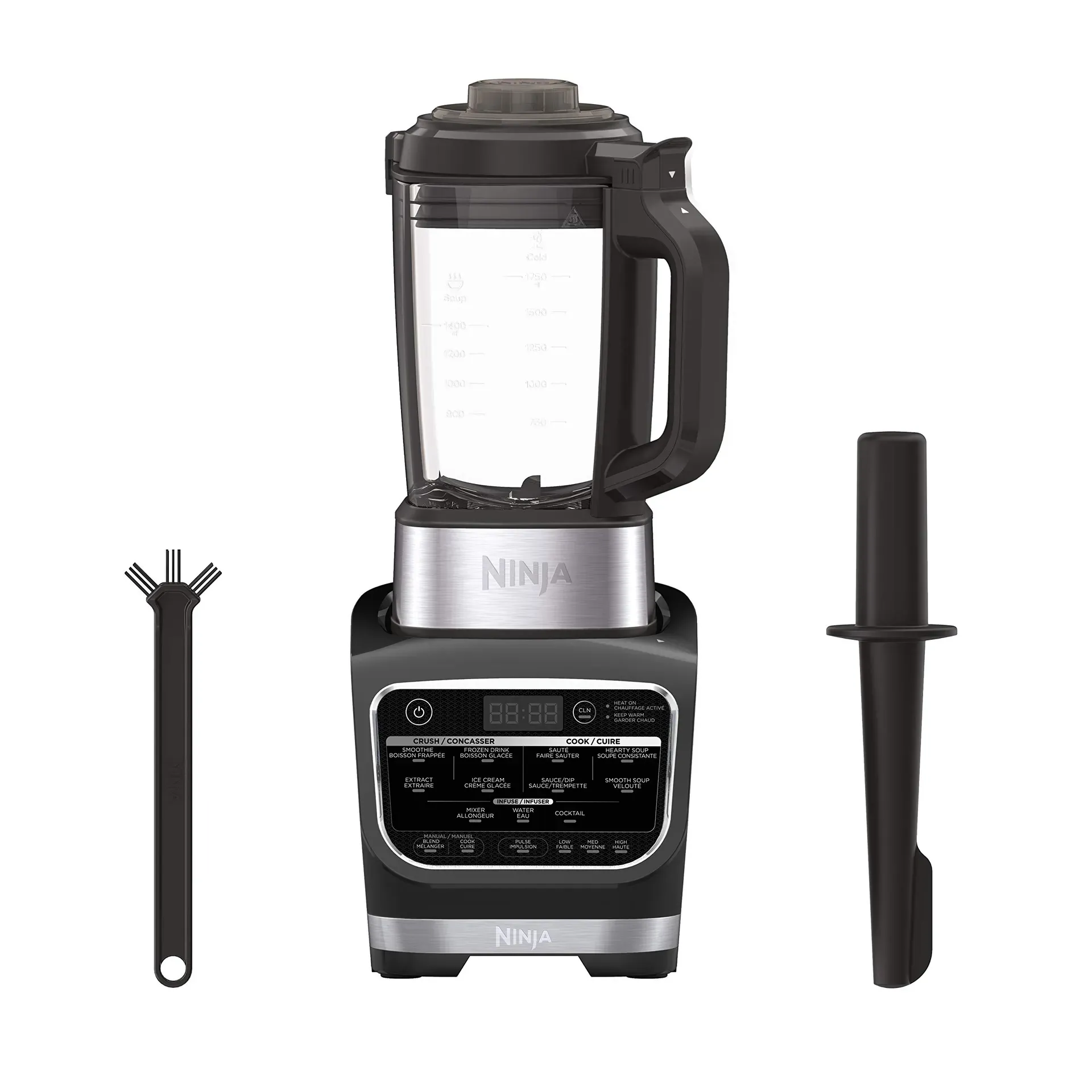
Price: $199.00 Rating: 4.6/5 Best For: Hot & Cold Blending Check Price on Amazon
Most blenders can't handle heat. The Ninja Foodi Cold & Hot doesn't just handle it. It cooks your soup while you do something else. That heating element opens up a category of recipes no Vitamix or Blendtec can touch: simmered sauces, boiled soups, melted cheese fondue, all made in the same vessel you'll blend in. At $199, it undercuts every Vitamix and Blendtec on this list while adding a capability they can't match. The trade-off: the glass pitcher is noticeably heavy, and the heating element is one more component that could eventually fail.
Pros
- 800W precision heating element boils ingredients for hot soups and sauces directly in the pitcher
- 1400-peak-watt motor for crushing and extraction
- 12 pre-set Auto-iQ smart programs for both hot and cold recipes
- 64-oz glass pitcher with nonstick coating
- Heated Clean program for easy cleanup
- Includes tamper, cleaning brush, and recipe guide
Cons
- Heating element adds a potential failure point not present in standard blenders
- Glass pitcher is heavy: noticeably heavier than Tritan or plastic competitors
- Raw blending power trails dedicated Vitamix and Blendtec machines
Verdict: Buy it if you want soup-to-smoothie versatility in one appliance and love the idea of cooking and blending in the same pitcher. Skip it if you already have a good stovetop setup. A dedicated Vitamix or Blendtec will deliver better raw blending performance.
#7. Beast Mega 1200 Plus Premium Countertop Blender
Design-forward smoothie specialist with an insulated jar and blend-and-go Straw Cap System.
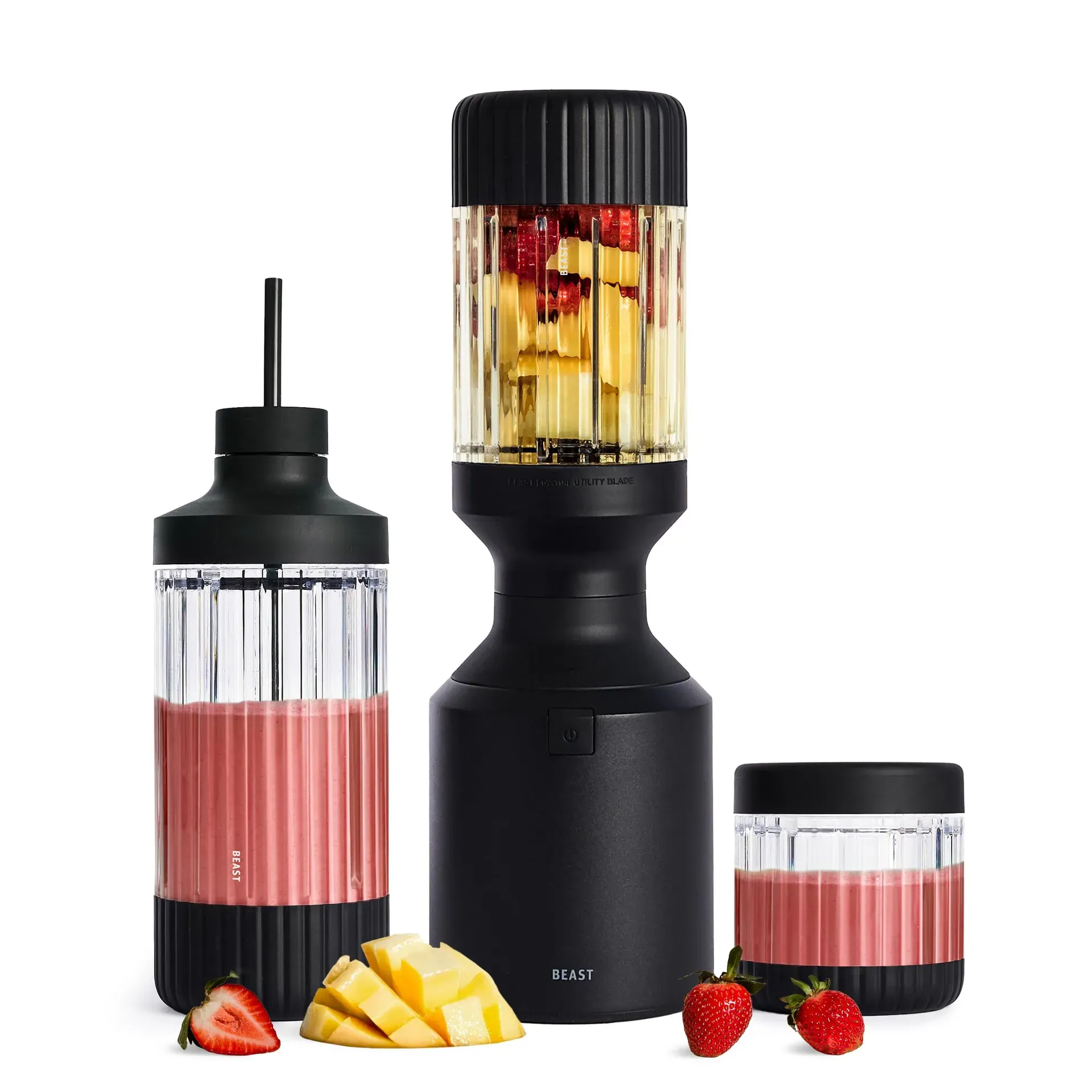
Price: $219.00 Rating: 4.6/5 Best For: Smoothie Enthusiasts Check Price on Amazon
Beast approached blender design differently: start with how it looks on your counter, then engineer the performance to match. The Mega 1200 Plus is stunning on the countertop in a way that makes the industrial-looking Vitamix seem almost apologetic about its appearance. But the looks aren't a cover for mediocre performance. The brushless motor is tuned specifically for smoothie textures, and the insulated jar means your blend stays cold from start to finish. Where it falls short of the Ninja Detect (#5): no food processing, no heating, no versatility tricks. This is a smoothie specialist, and it's brilliant at that one thing.
Pros
- 1200W brushless motor fine-tuned for smoothie-specific textures
- XL 2.5-liter double-wall insulated Tritan jar keeps contents cold during blending
- Straw Cap System and spill-proof lids for blend-and-go convenience
- 8 preset speeds plus variable-speed dial and digital timer
- Space-saving design: compact footprint for modern kitchens
- Dishwasher-safe components (except base)
Cons
- Smoothie-focused: no food processing, no heating, no versatility beyond blending
- Single-button operation limits manual control compared to dial-based competitors
- 2.5L jar is smaller than full-size options from Vitamix and Blendtec
Verdict: Buy it if smoothies are 90% of what you blend and you want best-in-class texture and design. Skip it if you need multi-function versatility. The Ninja Detect (#5) is far more flexible at a similar price.
#8. Cleanblend Commercial Blender with 5-Year Full Warranty
Three horsepower for under $200: the raw power champ that proves premium doesn't always mean expensive.
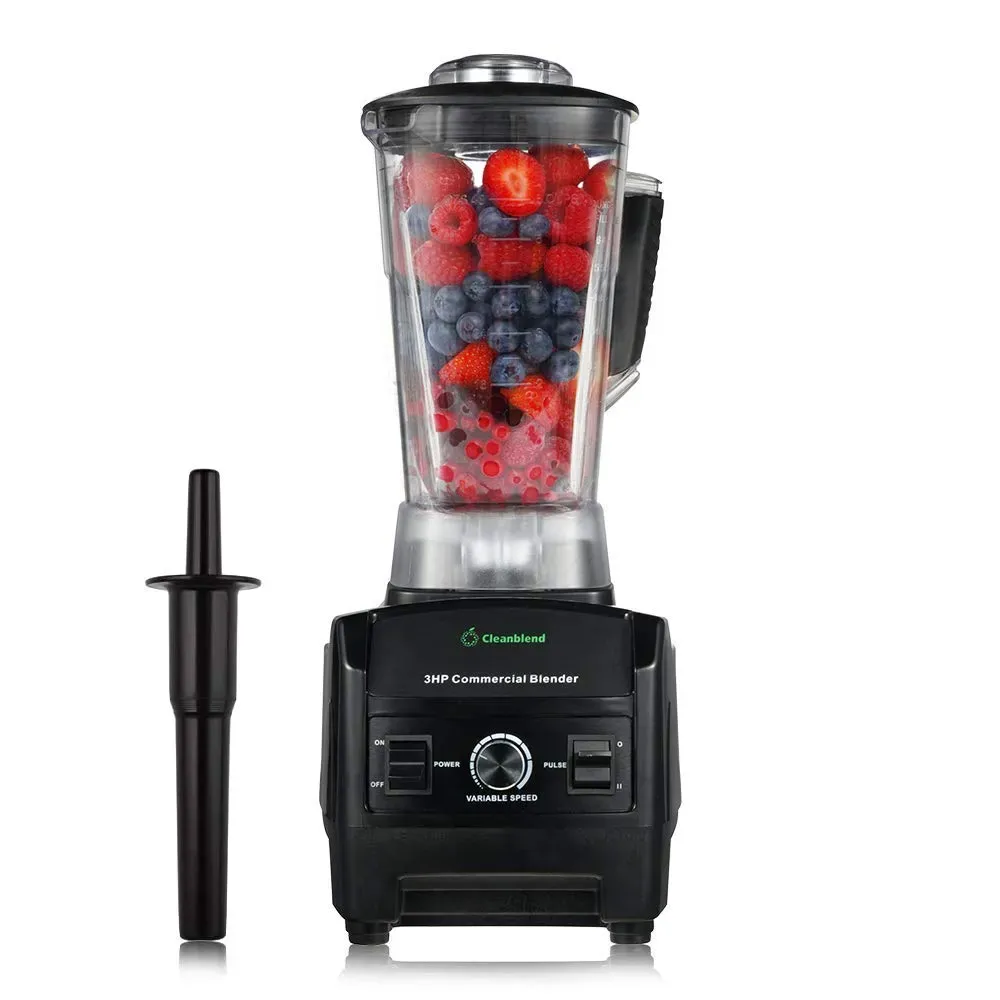
Price: $184.97 Rating: 4.4/5 Best For: Budget-Minded Power Users Check Price on Amazon
Three horsepower. Under $200. That combination shouldn't exist in 2026, yet here's the Cleanblend, matching the Blendtec Pro 800 (#4) on raw motor specs at roughly a quarter of the cost. There's nothing polished about it: no presets, no noise dampening, no digital display, no brand cachet. What you get is brute force and a motor that powers through nut butters and frozen cocktails without flinching. The 5-year warranty suggests the manufacturer is confident it'll last, which matters when you're buying a budget-priced powerhouse from a lesser-known brand.
Pros
- 3 HP, 1800W motor: matches the Blendtec Pro 800 and Breville Super Q on raw power
- 64-oz BPA-free pitcher: virtually unbreakable
- Food-grade hardened stainless-steel 8-blade sealed ball bearing system
- Replaces up to 9 appliances: crush, blend, chop, grind, heat, process, puree, liquify
- 5-Year Full Warranty
- Under $200: best power-to-price ratio on this list
Cons
- No preset programs: fully manual operation only
- No noise dampening: this blender is loud, especially at high speeds
- Basic variable speed dial: no digital display or smart features
Verdict: Buy it if raw blending power at the lowest possible price is your priority. It's hard to beat 3 HP for $185. Skip it if you want quiet operation or automated programs; spend more on the Breville Super Q (#2) instead.
#9. KitchenAid K150 3 Speed Ice Crushing Blender with 2 Personal Jars
Compact, ice-crushing, and KitchenAid-reliable: the best small-footprint blender for daily use.
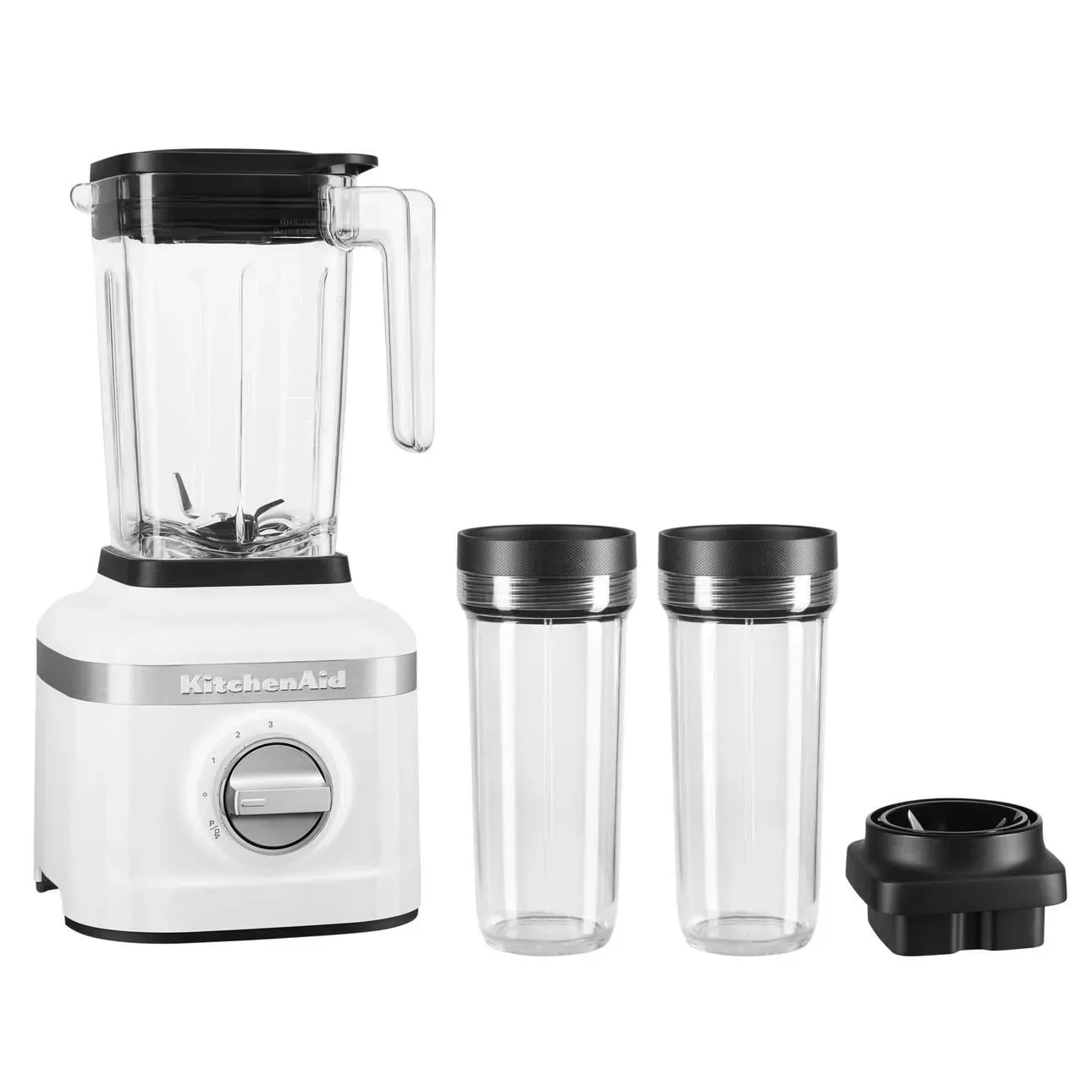
Price: $199.95 Rating: 4.4/5 Best For: Budget Buyers Check Price on Amazon
KitchenAid's K150 is the blender for people who've been burned by bulky countertop appliances. It takes up a fraction of the real estate a Vitamix demands while still crushing ice in under 10 seconds, a claim most compact blenders can't touch. The Intelli-Speed motor control is the unsung hero here, automatically sensing resistance and adjusting power so you don't end up with an under-blended smoothie or an over-blended soup. It won't make nut butter or grind spices. But for daily smoothies, frozen drinks, and light prep work, it's the most refined compact option on this list.
Pros
- Unique asymmetric blade blends at four distinct angles: crushes ice in under 10 seconds
- Soft Start feature prevents splatter by ramping speed gradually
- 2 dual-purpose blend-and-go personal jars with drink lids included
- Intelli-Speed motor control automatically maintains optimal speed under load
- 3 speeds plus dedicated Ice-Crush setting
- Compact countertop design
Cons
- Only 3 speeds: the most limited speed range on this list
- Small batch capacity: not suitable for family-sized meals or entertaining
- Cannot handle heavy tasks like nut butter, dough, or spice grinding
Verdict: Buy it if counter space is tight and you want KitchenAid reliability for daily smoothies and light blending. Skip it if you need family-sized batches or heavy-duty processing. The Cleanblend (#8) offers far more power for the same money.
#10. Wolf Gourmet High Performance Blender
Wolf's countertop debut brings the brand's legendary kitchen prestige to high-performance blending.
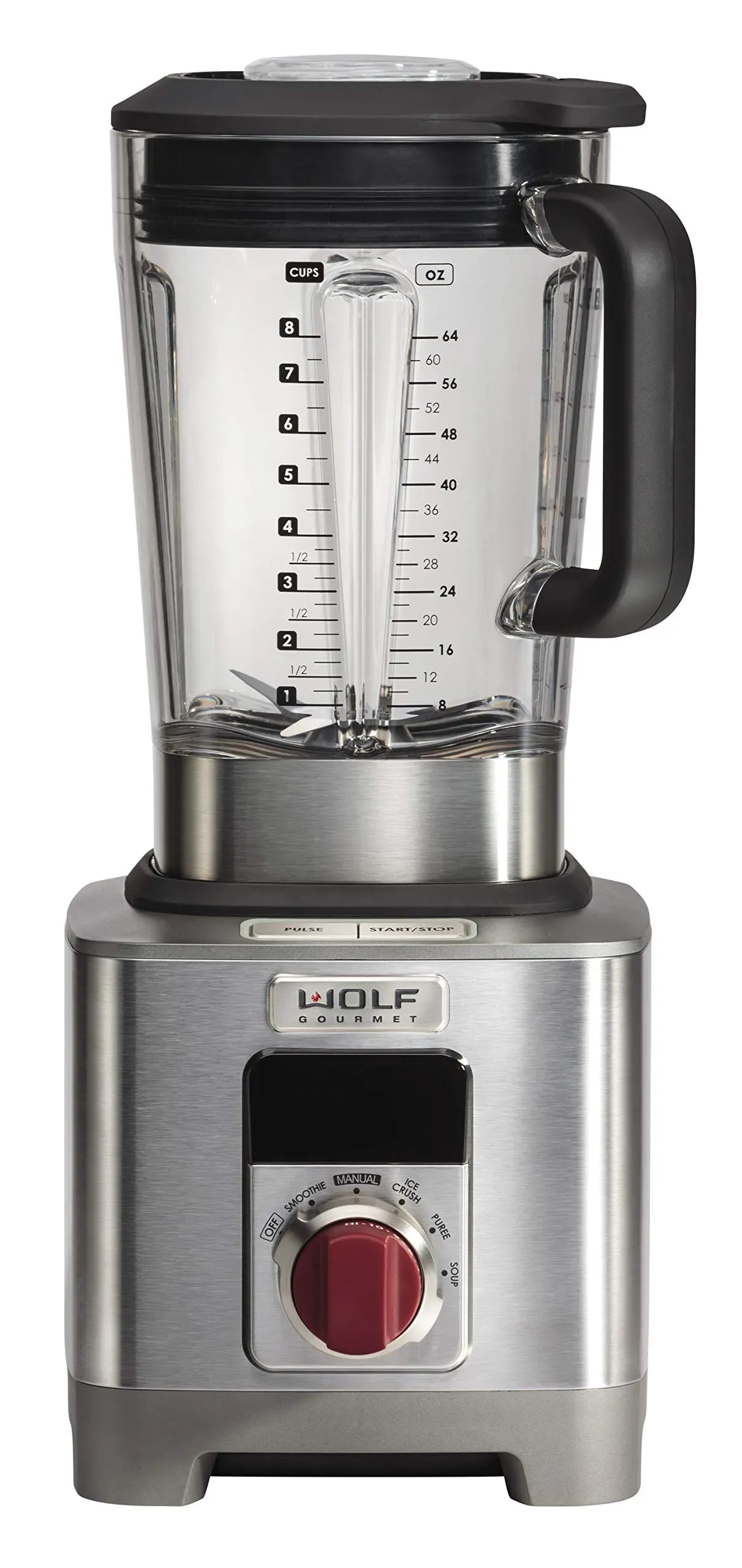
Price: Check Price Rating: 4.5/5 Best For: Premium Kitchen Enthusiasts Check Price on Amazon
Wolf staked its reputation on ranges and cooktops that professional chefs swear by. Its blender brings that same obsessive engineering to the countertop. The 2.4 peak HP motor puts this machine in serious territory, the kind of blender that feels at home next to a Wolf range. The LCD panel provides real-time feedback on blending time and program status, a thoughtful touch that most blender displays miss. It's the prestige pick for kitchens already stocked with Wolf appliances. For everyone else, the Vitamix and Blendtec ecosystems offer more accessories, more user feedback, and more established track records in the blender category specifically.
Pros
- 2.4 peak HP motor with blade speeds over 210 mph
- Infinitely variable manual speed setting for complete texture control
- 4 pre-programmed settings: Smoothie, Puree, Soup, Ice Crush
- Intuitive LCD control panel with blending time display
- 5 Year Limited Warranty
- Wolf Gourmet brand heritage and prestige
Cons
- Price not readily available: likely in premium territory
- Only 4 presets: fewer than competitors at similar or lower price points
- Limited user reviews compared to established blender brands like Vitamix and Blendtec
Verdict: Buy it if you're building a Wolf kitchen and want brand consistency across your appliances. Skip it if you want the most blender for your dollar. Vitamix (#1, #3) and Blendtec (#4) offer more established track records and broader accessory ecosystems.
How to choose the best premium blender
Buying a premium blender means sorting through horsepower claims, container materials, and feature lists that all sound impressive on paper. Here's what separates marketing from meaningful specs.
Motor power: watts vs. horsepower
Premium blender brands love to flex motor specs, but the number that matters isn't always the biggest one on the box. Peak wattage, like the 1800W rating on the Ninja Detect (#5), measures maximum draw, not sustained output. A Vitamix or Blendtec with a lower peak number will often outperform a higher-wattage competitor in continuous use because their motors are built to maintain speed under load rather than spike and sag. For daily smoothies, anything above 1200W is plenty. For nut butters, dough, and grinding, look for 2+ horsepower with a reputation for sustained performance. The Cleanblend (#8) delivers 3 HP for under $200, which is remarkable if you don't mind the noise.
Container size and material
Container choice matters more than most buyers realize. Tritan (used by Beast and Vitamix) is lightweight, shatterproof, and BPA-free, ideal for daily use. Glass (Ninja Foodi, #6) feels premium and resists scratching but adds significant weight. The 90-oz Blendtec jar (#4) handles family-sized batches; the 48-oz Vitamix X5 (#1) is tighter but creates a better vortex for small batches. If cabinet clearance is an issue, the low-profile 64-oz Vitamix A2300 (#3) is the smartest pick. It slides under standard upper cabinets where taller jars won't fit.
Programs vs. manual control
This is the biggest philosophical divide among premium blenders. The Vitamix X5 (#1) automates everything with ten presets. The A2300 (#3) makes you drive manually. Neither is wrong. It depends entirely on how you cook. Preset-heavy blenders shine for repeatability and walk-away convenience. Manual blenders reward cooks who enjoy dialing in textures by feel. The Ninja Detect (#5) splits the difference with BlendSense, which auto-creates a custom program for whatever you've loaded. Clever, but less proven than either approach.
Noise, warranty, and the intangibles
Two blenders on this list, the Breville Super Q (#2) and Blendtec Professional 800 (#4), have invested heavily in noise reduction, and the difference is dramatic. If you blend early mornings or have open-plan living, this feature alone is worth the premium. Warranty length is a reliable proxy for expected lifespan: Vitamix and Breville offer 10 years, Cleanblend and Wolf offer 5. Anything less than 5 years on a premium blender is a red flag. Finally, consider the accessory ecosystem. Vitamix's Self-Detect containers (multiple sizes, dry grains, personal cups) give you the most room to grow.
Frequently asked questions
What are the best blenders on the market in 2026?
The Vitamix Ascent X5 (#1) leads the pack for programmability and all-around performance. The Breville Super Q (#2) matches its power while running significantly quieter, and the Vitamix A2300 (#3) offers the same core engine with manual controls at a lower price. For value hunters, the Cleanblend (#8) delivers 3 HP for under $200.
What's the best premium blender for smoothies?
For dedicated smoothie drinkers, the Beast Mega 1200 Plus (#7) is purpose-built for the task. Its brushless motor is tuned specifically for smoothie textures, and the insulated jar keeps everything cold. If you want more versatility alongside smoothie prowess, the Vitamix Ascent X5 (#1) and A2300 (#3) both produce exceptionally silky green smoothies, breaking down fibrous greens more thoroughly than any competitor.
Are blenders and food processors the same?
No. Blenders use high-speed blades and a vortex to liquefy ingredients, perfect for smoothies, soups, and purees. Food processors use slower, wider blades and interchangeable discs for chopping, slicing, shredding, and dough work. The Ninja Detect Kitchen System (#5) is the only product on this list that genuinely does both, with a dedicated 8-cup food processor bowl and slicing/shredding discs alongside its blending pitcher.
What types of blenders are available?
Countertop blenders dominate the premium category and fall into three camps: traditional high-performance blenders (Vitamix, Blendtec, Cleanblend), multi-function systems that combine blending with food processing or cooking (Ninja Detect, Ninja Foodi), and design-focused specialists optimized for specific tasks like smoothies (Beast). Personal blenders that use single-serve cups exist at lower price points but rarely crack the premium tier. The KitchenAid K150 (#9) is the closest compromise, offering personal jars alongside a full pitcher in a compact body.
Are luxury blenders worth the investment?
If you blend more than twice a week, yes, absolutely. The jump from a $60 blender to even the Cleanblend (#8) at $185 is night and day: faster blending, smoother textures, and motors that don't burn out after a year of frozen fruit. Luxury blenders in the $400 to $750 range add longevity (10-year warranties), noise reduction, and automation that make daily use frictionless. The real waste isn't spending $500 on a Vitamix you'll use for a decade. It's spending $80 every two years on blenders that leave you chewing your smoothie.
Final verdict
The best premium blender for most people in 2026 is the Vitamix Ascent X5 (#1). It's the most advanced, most programmable, and most versatile blender Vitamix has ever made, backed by a 10-year warranty that makes the $750 price easier to justify. If noise is your dealbreaker, the Breville Super Q (#2) delivers comparable power at significantly lower volume. And if you want Vitamix quality without the touchscreen premium, the A2300 (#3) gives you the same core engine for $200 less. Any blender on this list will outperform anything in the budget aisle. The question is which trade-offs (price, noise, size, versatility) matter least to you.