Top 10 Best Smart TVs of 2026: Ranked & Reviewed
A $500 Mini-LED that shouldn't exist. A $250 Roku that embarrasses TVs costing 4x more. And a #1 pick that finally solves OLED's biggest weakness. These are the 10 best smart TVs of 2026.
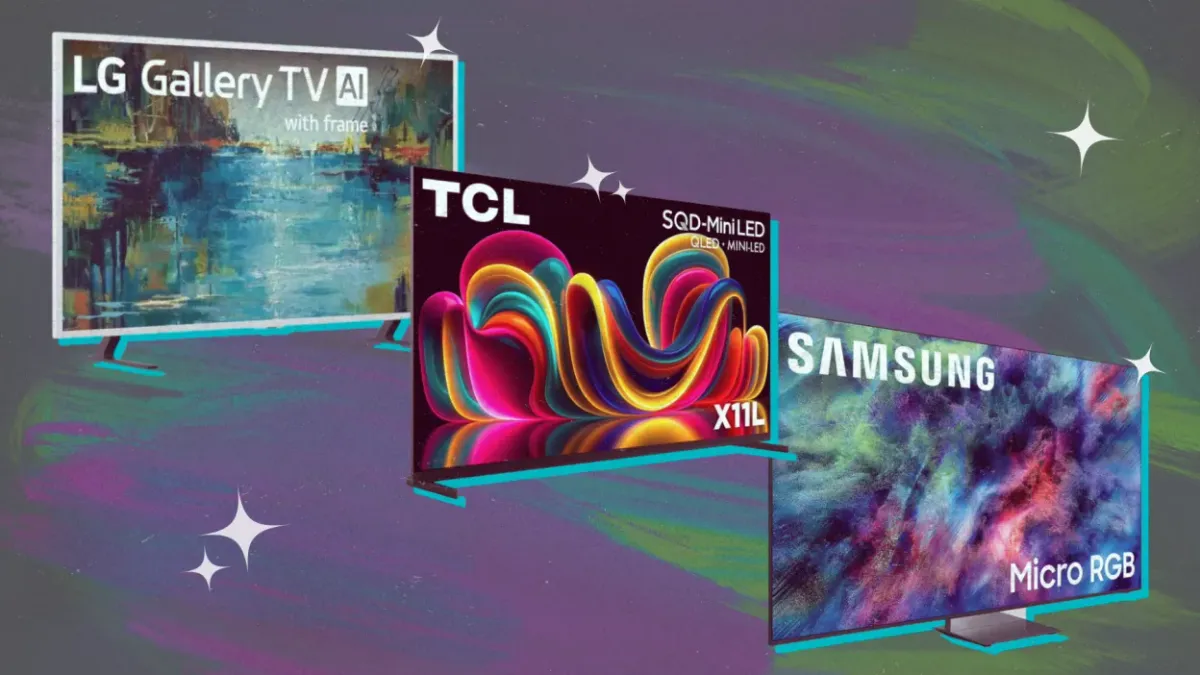
Five years ago, nobody saw this coming: in 2026, you can grab a genuinely excellent Mini-LED TV for $500 and a spectacular OLED for under $1,000. The smart TV market hasn't just gotten better. It's collapsed the price to performance curve so hard that every purchase feels faintly criminal. OLED isn't a luxury tax anymore. Mini-LED isn't a compromise. And the gap between a $250 Roku and a $5,000 Sony has never been narrower.
The best smart TVs of 2026 cover every price point, screen size, and use case. A 42-inch OLED that doubles as a desktop gaming monitor. An 85-inch Mini-LED behemoth bright enough to fight direct sunlight. At the top, the LG G5 OLED claims the crown by solving OLED's last real weakness. But depending on what you value most, any of the next four picks could be your personal number one.
| # | Product | Price | Rating | |
|---|---|---|---|---|
| #1 | LG 65" OLED evo G5 | $1,799.99 | 4.6/5 | View Deal |
| #2 | Hisense 65" U7 Mini-LED | $1,698.00 | 4.6/5 | View Deal |
| #3 | LG 42" OLED evo C5 | $999.99 | 4.5/5 | View Deal |
| #4 | Samsung 85" Neo QLED QN90F | $3,199.99 | 4.5/5 | View Deal |
| #5 | TCL 85" QM8L Mini-LED | $2,799.99 | 4.5/5 | View Deal |
| #6 | TCL 65" QM6K Mini-LED | $499.99 | 4.4/5 | View Deal |
| #7 | Roku 55" Pro Series QLED | $249.99 | 4.4/5 | View Deal |
| #8 | Sony 85" BRAVIA 9 | $4,999.99 | 4.4/5 | View Deal |
| #9 | Hisense 85" U8 Mini-LED | $2,799.99 | 4.3/5 | View Deal |
| #10 | VIZIO 55" M55Q6L4 QLED | $649.99 | 4.1/5 | View Deal |
#1. LG 65-Inch Class OLED evo AI 4K G5 Series Smart TV (OLED65G5WUA)
OLED's brightness problem is officially solved, and the result is the best TV of 2026.
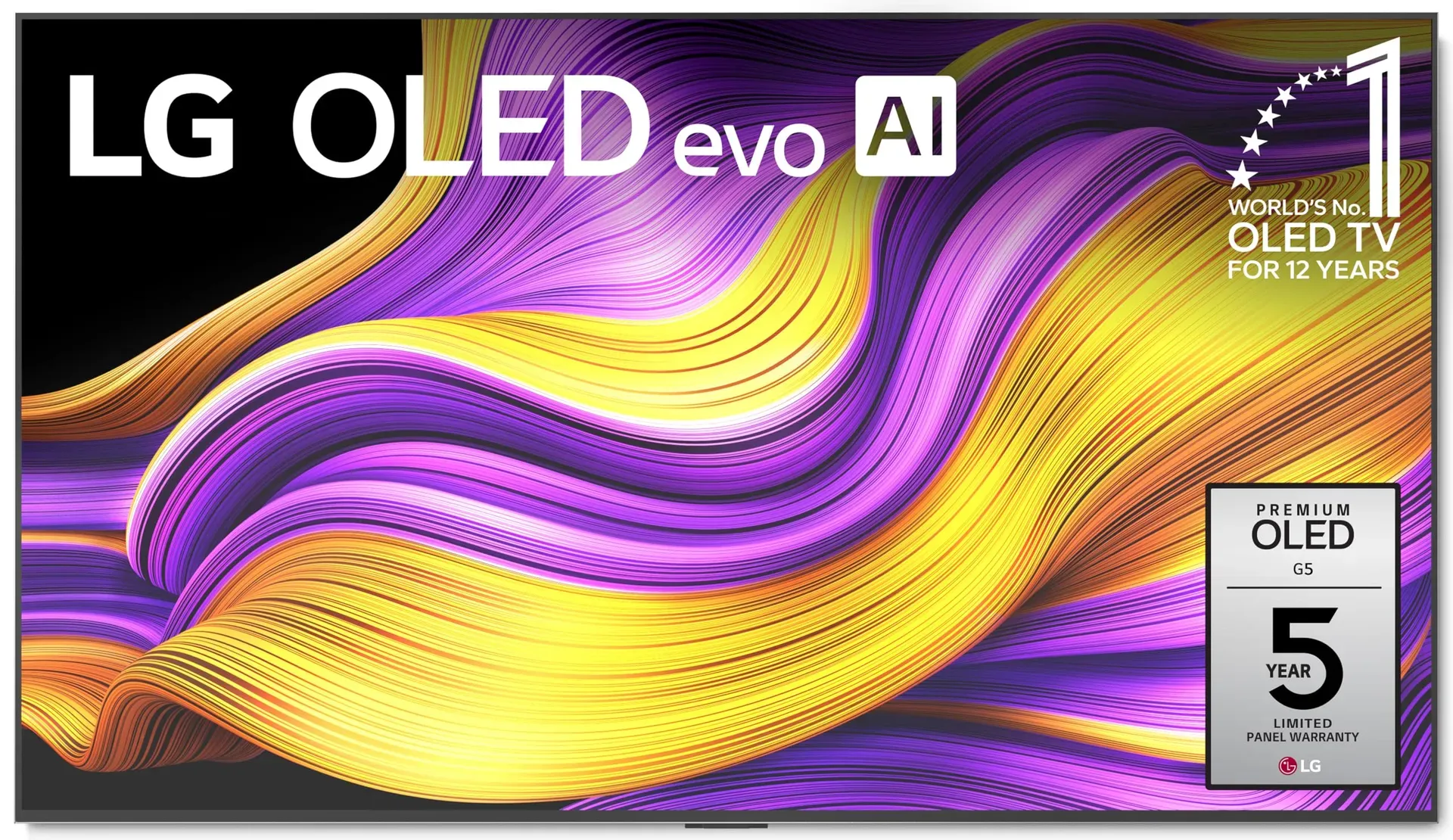
Price: $1,799.99 Rating: 4.6/5 Best For: Premium Home Theater Check Price on Amazon
The G5 resets expectations for what OLED can do. For years, the knock on OLED was brightness. Stunning in a dark room, underwhelming with the curtains open. Brightness Booster Max changes that calculus. It's the reason this TV unseats every Mini-LED competitor on raw picture quality alone. At $1,799.99, it undercuts the Sony BRAVIA 9 (#8) by over $3,000 while delivering better contrast. The One Wall Design isn't marketing fluff. Mounted flush, it genuinely disappears into your living space. If you're cross-shopping the Hisense U7 (#2), know this: that TV gets brighter on paper, but the G5's pixel level control creates an image no Mini-LED can replicate. This is the TV you buy when you're done compromising.
Pros
- Brightness Booster Max eliminates OLED's traditional brightness weakness
- Alpha 11 AI Processor Gen2 for superior upscaling and motion handling
- 0.1ms response time with 120Hz refresh rate and full HDMI 2.1
- Perfect Black and Perfect Color with UL-certified Discomfort Glare Free display
- Dolby Vision, Dolby Atmos, and Filmmaker Mode for cinematic accuracy
- One Wall Design for flush, gallery style mounting
Cons
- Capped at 120Hz: the LG C5 (#3) and Hisense U7 (#2) offer higher refresh rates
- webOS interface is less intuitive than Roku OS or Google TV
- No 85-inch option for buyers building large dedicated home theaters
Verdict: The G5 is the reference point every other TV on this list is measured against. Buy it if picture quality is your only priority and you're willing to pay for perfection. Skip it only if you need 85 inches or a higher refresh rate for competitive gaming.
#2. Hisense 65" U7 Mini-LED ULED 4K UHD Best Premium Gaming Smart Google TV (65U7SG, 2026 NEW)
Same rating as the #1 pick, with a higher refresh rate and near-OLED contrast at a lower price.
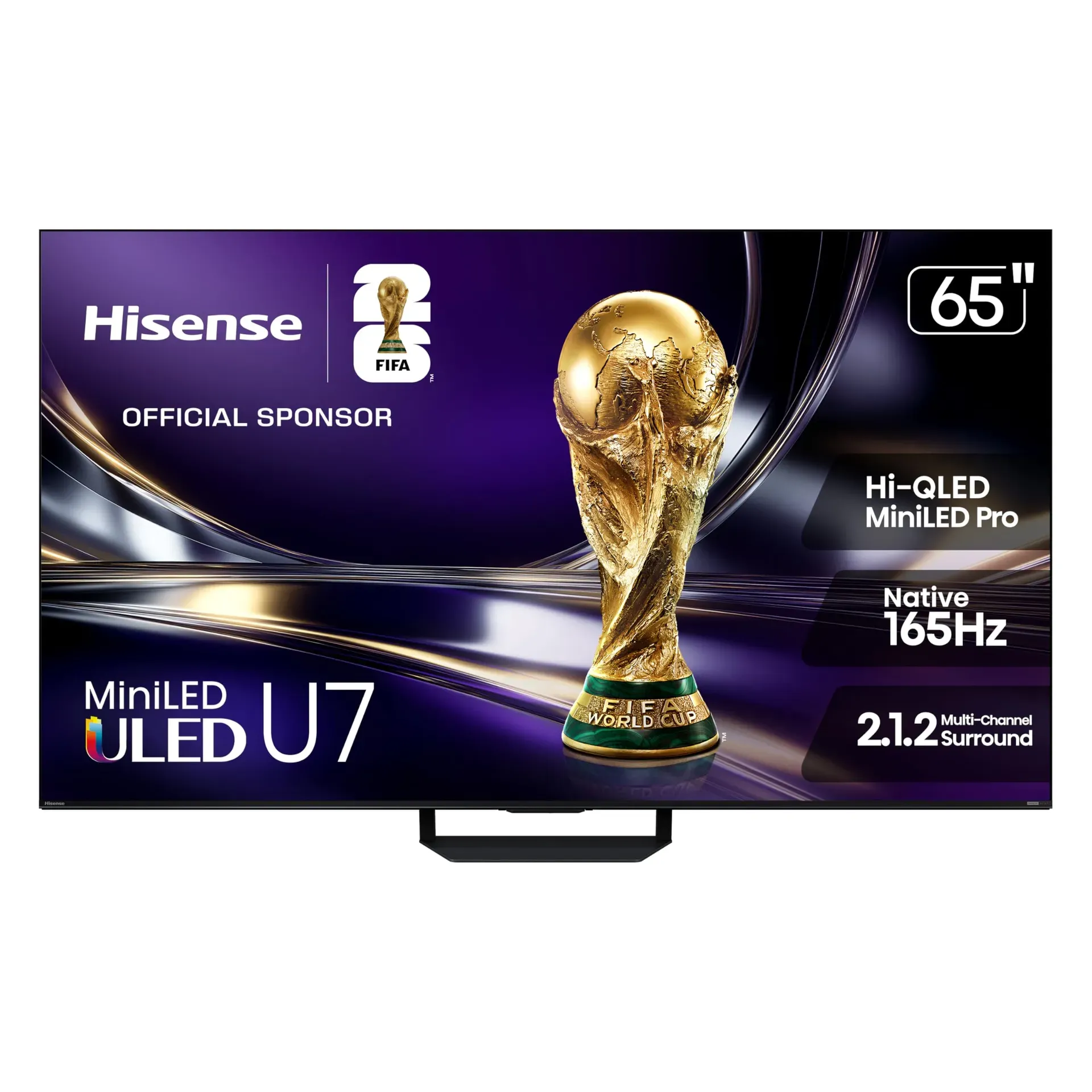
Price: $1,698.00 Rating: 4.6/5 Best For: Premium Gaming Check Price on Amazon
Same 4.6 rating as the number one pick. A faster panel. And a lower price. The Hisense U7 doesn't just compete with the G5. In some categories, it flat out wins. A native 165Hz panel smokes the G5's 120Hz for gaming. And 3,000 nits of peak brightness puts it in a different league for HDR pop. The tradeoff? It's Mini-LED, not OLED. That means 3,000 dimming zones, not 8.3 million self-lit pixels. Occasional blooming around bright objects on dark backgrounds is the price you pay. But at $1,698.00, it's $100 less than the G5 while matching it on features gamers care about most. If your split is 70% gaming and 30% movies, the U7 makes a stronger case than anything else on this list. The Devialet-tuned audio is genuinely good enough to skip a soundbar.
Pros
- Native 165Hz refresh rate with Game Booster 330 VRR
- Hi-QLED MiniLED Pro with up to 3,000 nits peak brightness and 3,000 dimming zones
- Anti-Reflection and Glare-Free coating
- 2.1.2 Multi-Channel Surround sound tuned by Devialet with Dolby Atmos
- Google TV with Gemini Interactive AI for personalized recommendations
- Hi-View AI Engine Pro with AI Smooth Motion and Motion Rate 660
Cons
- Mini-LED blooming can't match OLED's pixel perfect black levels
- Hisense brand doesn't carry the same cachet as LG, Sony, or Samsung
- Viewing angles narrow compared to OLED or Sony's X-Wide Angle tech
Verdict: The U7 is the smartest buy for gamers who want flagship performance without the flagship tax. If competitive gaming speed matters more to you than absolute black levels, it's arguably a better pick than the G5. Movie purists should stick with OLED.
#3. LG 42-Inch Class OLED evo AI 4K C5 Series Smart TV (OLED42C5PUA, 2025)
The most-reviewed TV on this list brings genuine OLED to a desk friendly 42 inches for under $1,000.
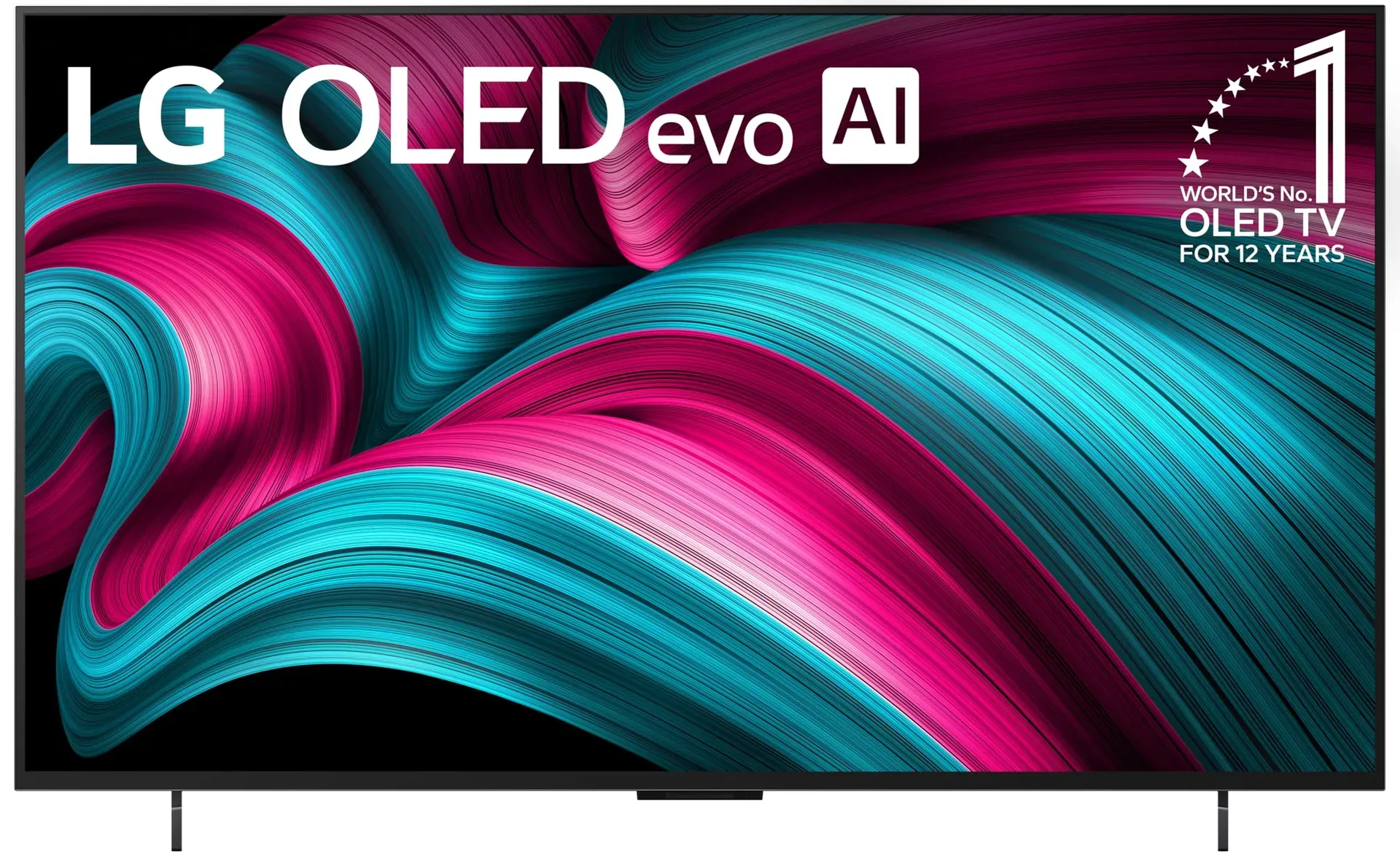
Price: $999.99 Rating: 4.5/5 Best For: Compact Spaces Check Price on Amazon
With over 1,400 reviews, more than any TV on this list, the 42-inch C5 has struck a nerve. It's not just a small OLED. It's the answer to a question nobody asked but everyone needed: what if your gaming monitor was also a world class TV? At $999.99, it brings OLED's perfect blacks and infinite contrast to a desk friendly size the G5 (#1) doesn't offer. Gamers get 144Hz. That's 24Hz faster than the G5. Plus the same 0.1ms response time. The catch is the Alpha 9 Gen8 processor, a generation behind the Alpha 11 in the G5. Upscaling lower-resolution content isn't quite as crisp. But for a bedroom or desktop setup, nothing else on this list fits the space and delivers this level of picture quality.
Pros
- 144Hz refresh rate, faster than the flagship G5
- 0.1ms response time with NVIDIA G-Sync and AMD FreeSync Premium
- OLED evo panel with Perfect Black and Perfect Color
- Alpha 9 AI Processor Gen8 with Personalized Picture and Sound Wizard
- webOS with Re:New Program for long-term software support
- Compact 42-inch size ideal for desk or bedroom use
Cons
- Only 42 inches, too small for a primary living room setup
- Alpha 9 Gen8 processor lags behind the Alpha 11 found in the G5
- Lower peak brightness than the G5 or any Mini-LED competitor on this list
Verdict: The C5 is the perfect second-screen OLED. Buy it for your desk, bedroom, or gaming cave. If this is meant to be your only TV and you sit more than six feet away, step up to the 65-inch G5 or consider the Hisense U7 instead.
#4. Samsung 85-Inch Class Neo QLED 4K QN90F Series Vision AI Mini LED Smart TV (2025 Model)
Samsung's 128-neural-network AI engine powers the smartest upscaling on an 85-inch canvas.
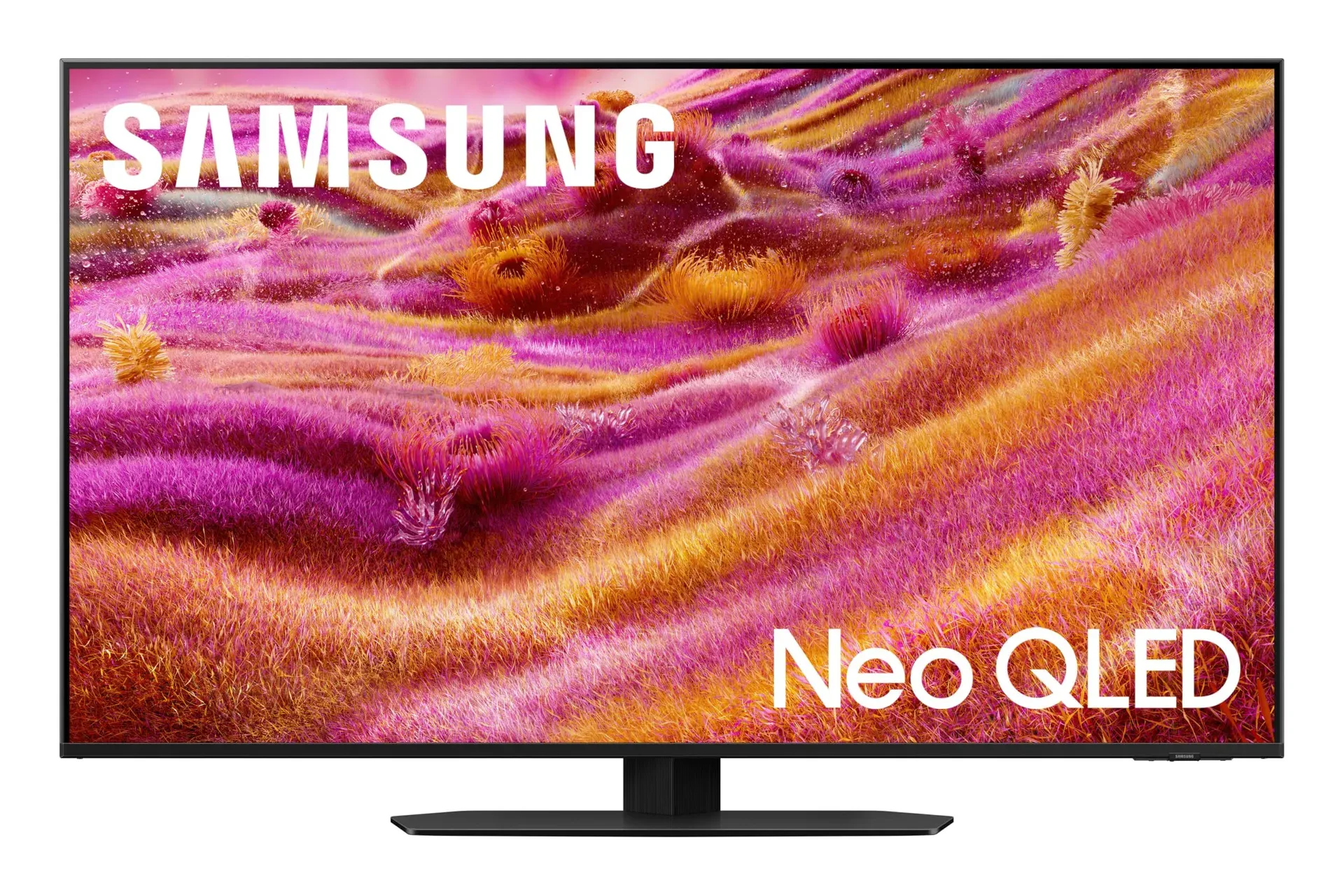
Price: $3,199.99 Rating: 4.5/5 Best For: Premium TV Buyers Check Price on Amazon
Samsung packed 128 neural networks into the QN90F, then aimed them at a problem most people don't think about: making cable TV look watchable on an 85-inch screen. The NQ4 AI Gen2 Processor upscales grainy broadcasts to near 4K clarity with results that are genuinely surprising. This is the TV for people who refuse to close the blinds, thanks to anti-reflection tech that actually works. Compared to the TCL QM8L (#5) at a similar size, the Samsung costs $400 more but delivers more refined motion handling for sports. Stacked against the Sony BRAVIA 9 (#8), it saves you $1,800. One annoyance: Samsung stubbornly refuses to support Dolby Vision, sticking with HDR10+. If your streaming library skews Dolby Vision-heavy, factor that in before clicking buy.
Pros
- 128-neural-network NQ4 AI Gen2 Processor for best in class upscaling
- Anti-Reflection technology for bright room viewing
- 4K 165Hz VRR for high-end gaming
- AI Motion smoothing keeps sports crisp and blur-free
- Quantum Mini LED with superb brightness and vivid colors
Cons
- No Dolby Vision support, HDR10+ only
- $3,199.99 is steep given the TCL QM8L (#5) offers comparable specs for $400 less
- Availability is uncertain, may be harder to find than competitors at retail
Verdict: Buy the QN90F if you want Samsung's best AI processing on a massive 85-inch screen and you watch a lot of sports. Skip it if Dolby Vision matters to you. Samsung's ongoing refusal to support it is genuinely annoying at this price.
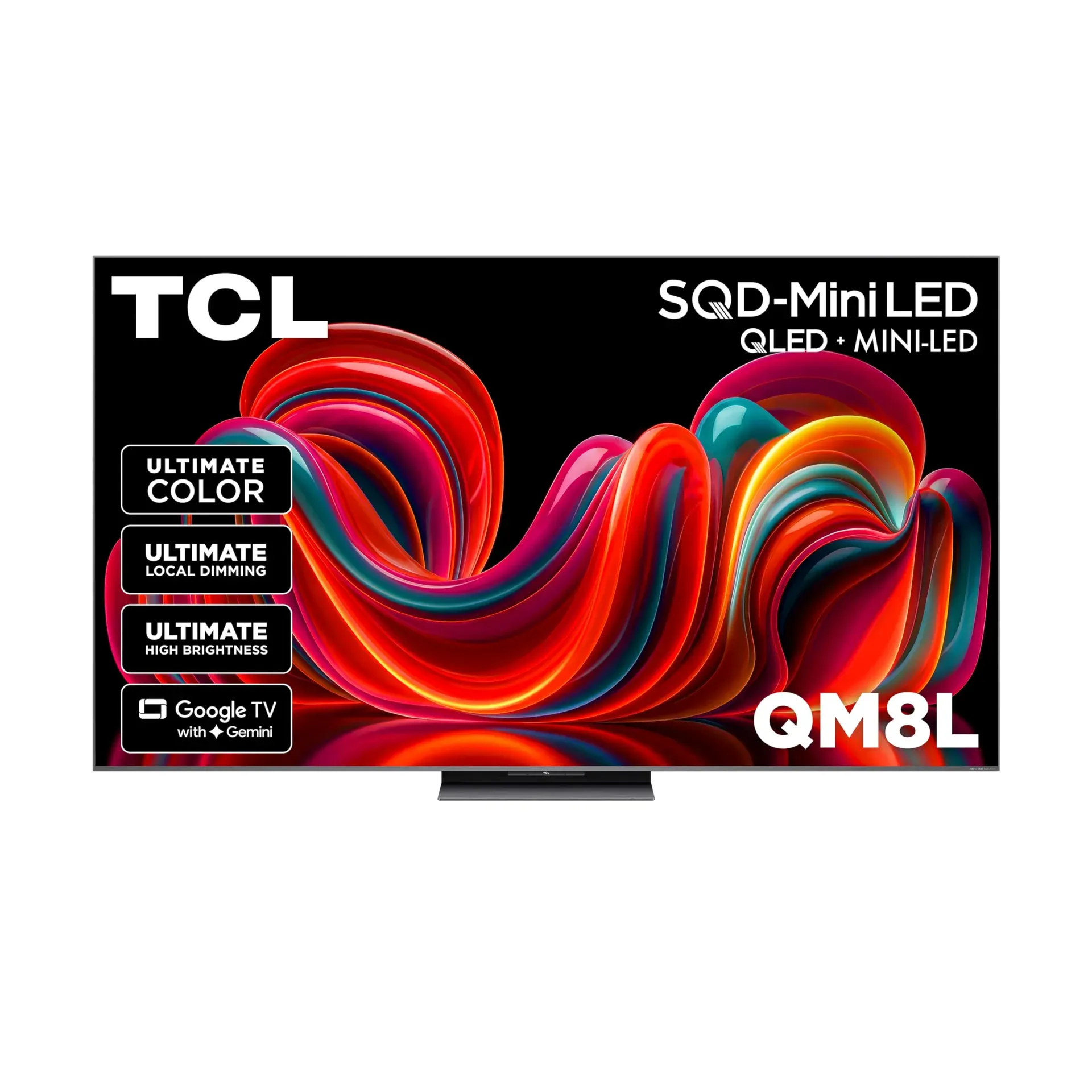
#5. TCL 85 Inch Class QM8L Series SQD-Mini-LED QLED Smart TV (85QM8L, 2026 Model)
Six thousand nits of peak brightness make this TCL the HDR champion of 2026.
Price: $2,799.99 Rating: 4.5/5 Best For: Home Theater Enthusiasts Check Price on Amazon
Six thousand nits. The QM8L hits peak brightness levels that were science fiction three years ago, and it does it across 4,000+ dimming zones that keep blooming tightly controlled. TCL didn't just chase a brightness number. They brought in Bang and Olufsen for the audio, which immediately separates this TV from the tinny speakers found on most large panels. At $2,799.99, it squares off directly with the Hisense U8 (#9) at the same price. The TCL wins on raw brightness and audio pedigree; the Hisense counters with more dimming zones and a better anti-reflection coating. For dedicated home theater rooms where light control isn't perfect, the QM8L's sheer luminance gives HDR content a physical presence that most OLEDs, including the G5 (#1), can't match in bright scenes.
Pros
- Up to 6,000 nits peak brightness with 4,000+ discrete dimming zones
- Audio by Bang and Olufsen for premium built-in sound
- Game Accelerator 288 VRR for ultra-smooth gaming
- TCL Ultra Color Filter with nanometer-scale particles for pinpoint accuracy
- Google Gemini Interactive AI for smart content discovery
- Complete HDR format support including Dolby Vision and HDR10+
Cons
- At $2,799.99, TCL brand cachet may not satisfy buyers expecting a premium nameplate
- Google TV interface can feel ad heavy compared to the cleaner Roku OS
- Slightly fewer dimming zones than the Hisense U8 (#9) at an identical price
Verdict: The QM8L is the home theater enthusiast's Mini-LED dream. Ridiculous brightness, serious audio, and a massive 85-inch canvas. Buy it over the Hisense U8 if audio quality and peak HDR impact are your top concerns.
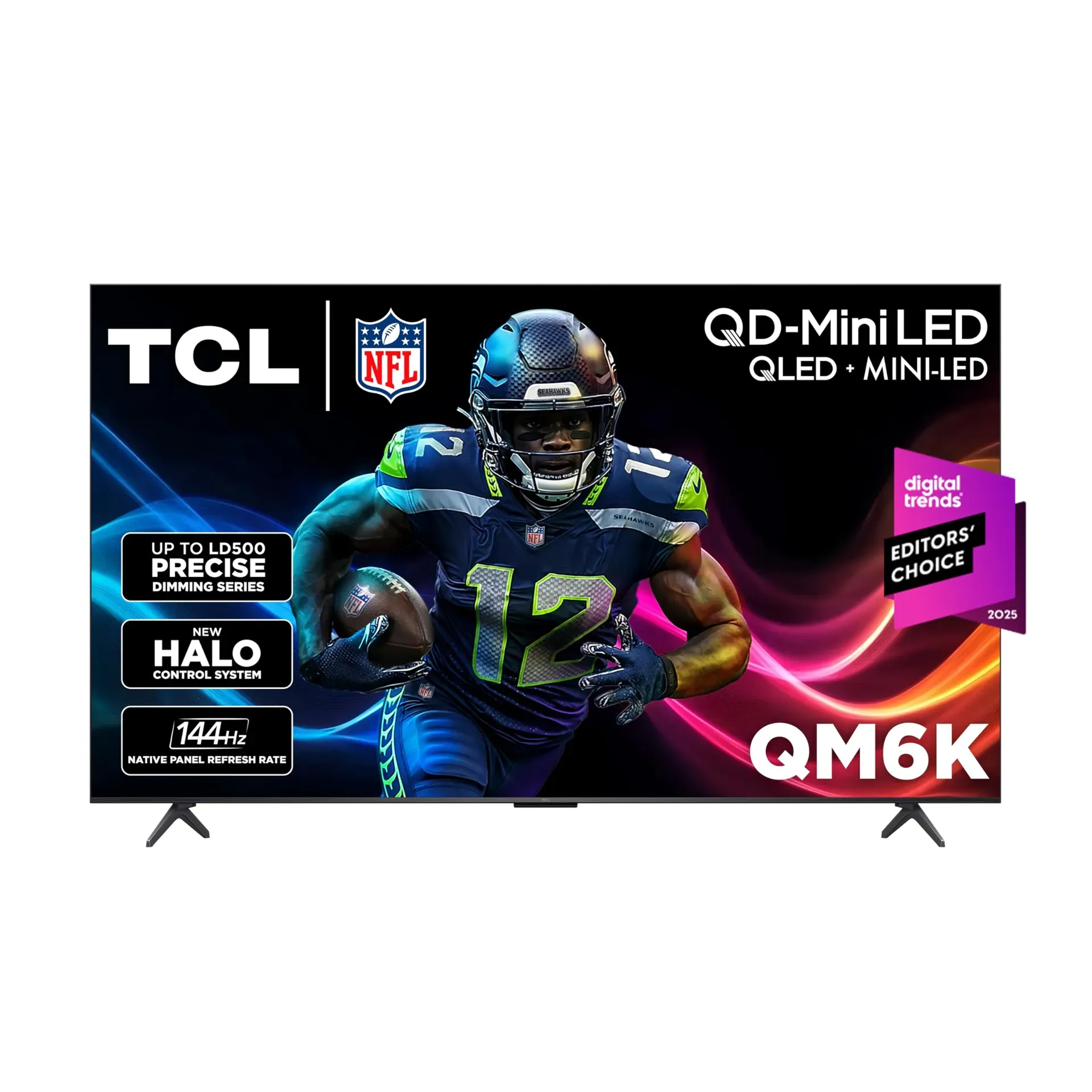
#6. TCL 65 Inch Class QM6K Series Mini LED QLED 4K HDR Smart TV (65QM6K, 2026 Model)
Mini-LED at $500. The value proposition that reshapes what budget buyers should expect.
Price: $499.99 Rating: 4.4/5 Best For: Budget-Conscious Buyers Check Price on Amazon
With 1,825 reviews and a 4.4 rating, the QM6K is the people's champion. And arguably the best affordable smart TV of 2026. At $499.99, it brings QD-Mini LED to a price where most brands are still pushing basic edge lit panels. That matters. Mini-LED means real local dimming, not the edge lit fakery that passes for HDR on cheap TVs. Compare it to the VIZIO M55Q6L4 (#10): the TCL costs $150 less, has a faster 144Hz panel, and uses Mini-LED instead of standard QLED. The VIZIO has WiFi 6, but that doesn't close the gap. What you sacrifice is peak brightness. The QM6K can't touch the 3,000-nit firepower of the Hisense U7 (#2). But at this price, expecting that would be absurd. For budget conscious buyers who refuse to compromise on core picture technology, nothing else comes close.
Pros
- QD-Mini LED technology at an unprecedented $499.99 price
- 144Hz native refresh rate with Motion Rate 480
- TCL Halo Control System eliminates blooming
- Dolby Vision, HDR10+, HDR10, and HLG support
- 1,825 verified reviews with a strong 4.4-star average
Cons
- Peak brightness can't match the 3,000+ nit Mini-LED competitors on this list
- Built-in audio is basic, a soundbar is strongly recommended for movies
- Only available in 65-inch at this spec tier, no 55-inch or 75-inch alternatives
Verdict: The QM6K is the undisputed value king of 2026. Buy it if you want genuine Mini-LED picture quality for under $500. The only reason to spend more is if you need a larger screen or crave the eye-searing brightness of premium Mini-LED models.
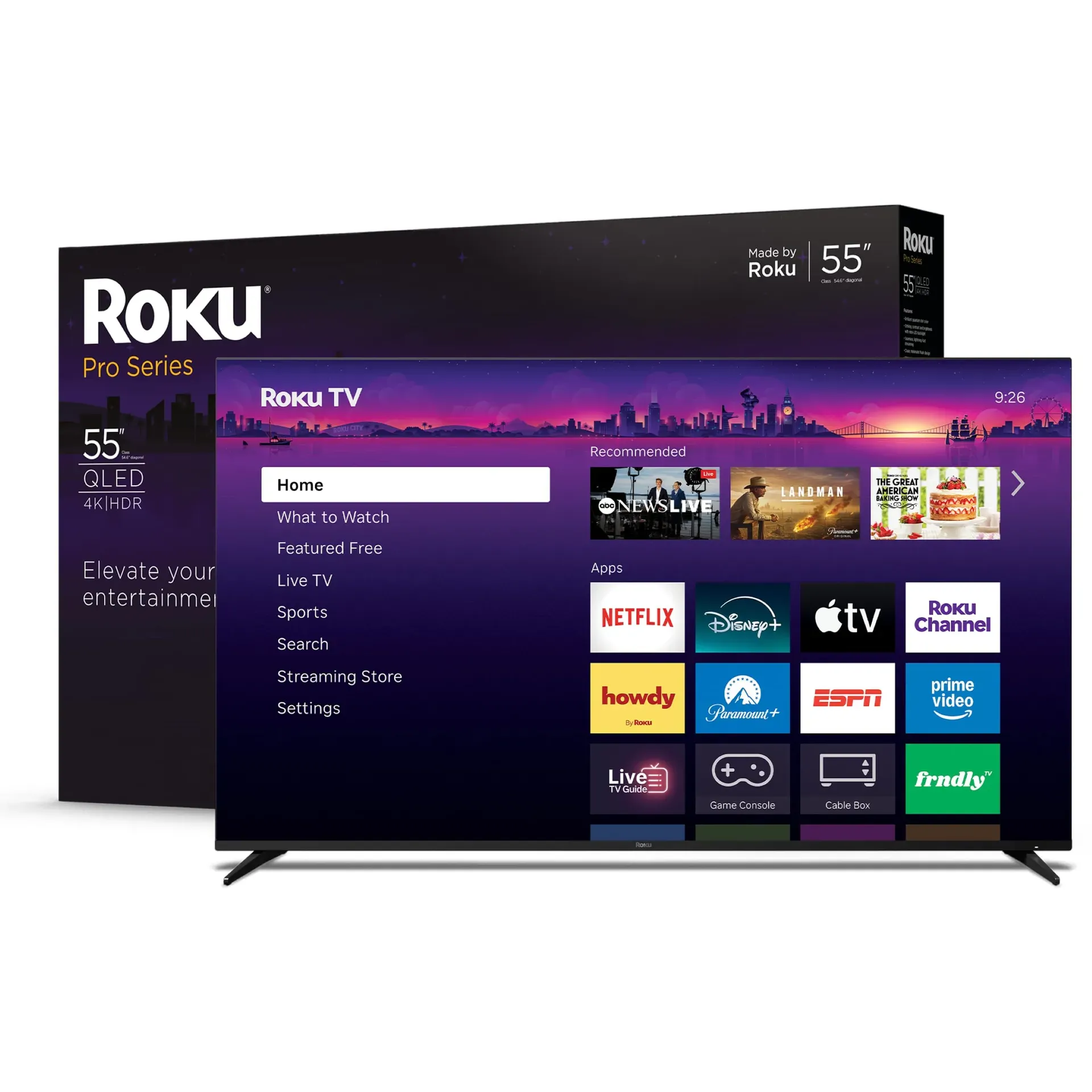
#7. Roku Smart TV 55-Inch Pro Series 4K QLED RokuTV with Backlit Roku Voice Remote Pro
Roku's flawless smart platform meets genuine QLED hardware, all for just $249.99.
Price: $249.99 Rating: 4.4/5 Best For: Streaming Fans Check Price on Amazon
At $249.99, the Roku Pro Series is the cheapest TV on this list. And the smartest argument against spending more. Roku's OS remains the best smart TV platform you can buy: fast, uncluttered, and refreshingly free of the ad bloated carousels that plague Google TV and webOS. The hardware holds up too. Mini-LED backlighting with Dolby Vision IQ and a 120Hz panel make it a legitimate 4K QLED contender, not just a great OS attached to a mediocre screen. The side-firing Dolby Atmos speakers are better than they have any right to be at this price. If your primary use case is streaming, the Roku Pro gives you 90% of the experience of TVs costing four times as much. Stack it against the TCL QM6K (#6): the TCL delivers better pure picture quality, but the Roku wins on software and price.
Pros
- Roku OS, the simplest, fastest, and least cluttered smart TV platform
- $249.99 makes it the most affordable TV on this entire list
- Mini-LED backlighting with Dolby Vision IQ
- 120Hz refresh rate with FreeSync Premium Pro, ALLM, and VRR
- Side-firing Dolby Atmos speakers with surprisingly rich audio
- Backlit Roku Voice Remote Pro with hands-free controls and rechargeable battery
Cons
- 120Hz panel trails the 144Hz and 165Hz options on this list for competitive gaming
- Lower peak brightness than dedicated Mini-LED competitors like the TCL QM6K
- Only 55 inches, no larger size option in the Pro Series lineup
Verdict: The best smart TV for streaming doesn't need to cost a fortune. Buy the Roku Pro if you want the cleanest smart TV experience available and don't need a screen larger than 55 inches. Competitive gamers should look at the Hisense U7 or TCL QM6K instead.
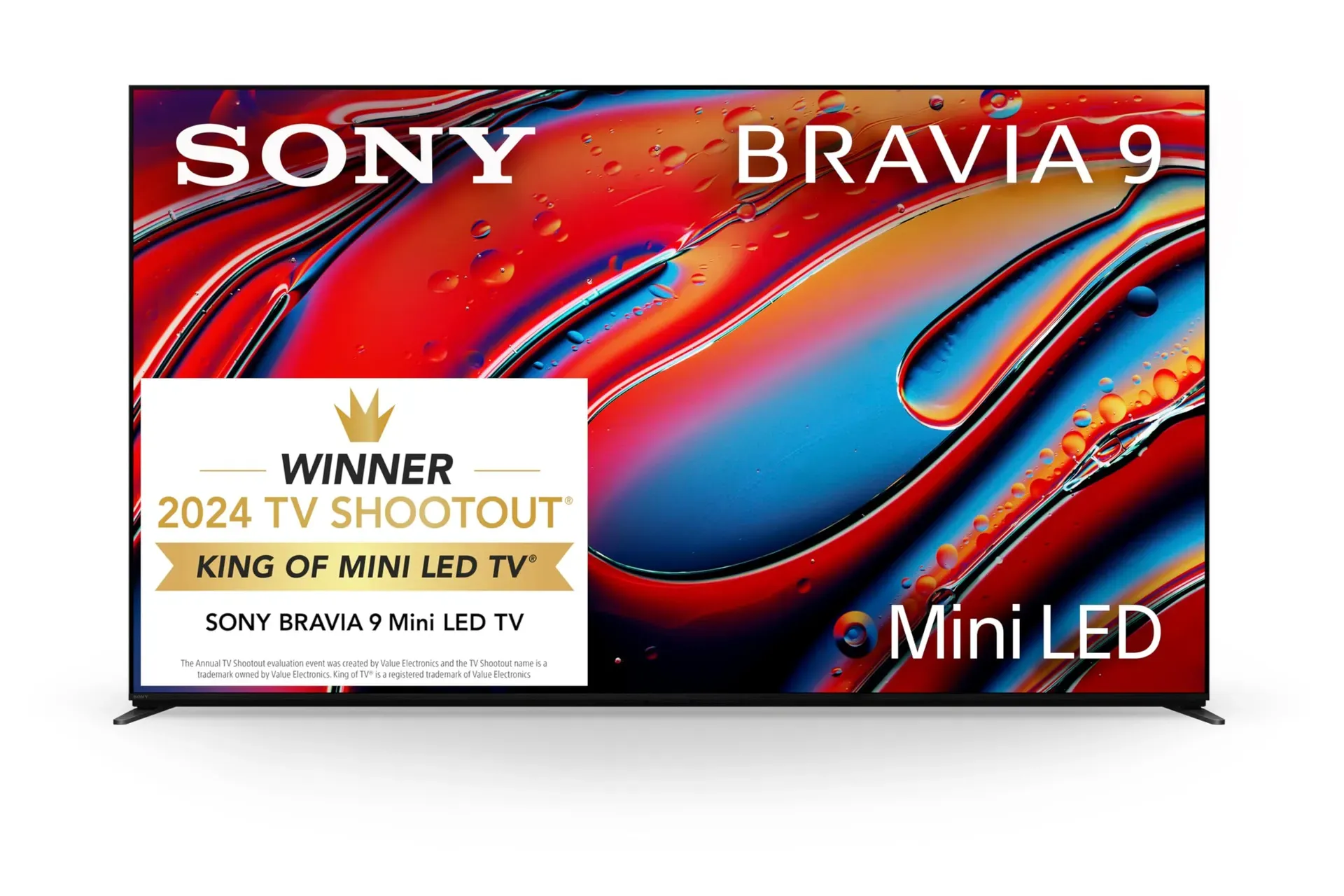
#8. Sony 85 Inch BRAVIA 9 Mini LED QLED 4K HDR Smart Google TV (K-85XR90)
The ultimate PS5 companion TV, with Sony's brightest-ever 4K picture and exclusive gaming integration.
Price: $4,999.99 Rating: 4.4/5 Best For: PS5 Gamers Check Price on Amazon
Five thousand dollars is a lot of money for a TV. The BRAVIA 9 justifies it with Sony's XR Backlight Master Drive, a Mini-LED system so precisely controlled that it approaches OLED level blacks without sacrificing brightness. This is Sony's brightest-ever 4K TV, and the difference is immediately visible. The real differentiator is PlayStation 5 integration. Auto HDR Tone Mapping and Auto Genre Picture Mode mean the TV and console communicate in ways no third party brand can replicate. You also get 10 free movie credits on SONY PICTURES CORE, which softens the sticker shock slightly. Stack it against the Samsung QN90F (#4): the Sony costs $1,800 more but delivers better processing, Dolby Vision support, and that exclusive PS5 synergy. For non-gamers, the premium is harder to justify. For PlayStation owners building an endgame setup, it's peerless.
Pros
- XR Backlight Master Drive for near-OLED black levels on a Mini-LED panel
- Exclusive PS5 Auto HDR Tone Mapping and Auto Genre Picture Mode
- X-Wide Angle and X-Anti Reflection for consistent viewing from any seat
- SONY PICTURES CORE with 10 free movie credits included
- Dolby Vision, Dolby Atmos, IMAX Enhanced, and DTS:X support
- Google TV with AirPlay 2 and Chromecast built-in
Cons
- $4,999.99, nearly three times the price of the LG G5 (#1)
- Overkill for anyone who doesn't own a PlayStation 5
- XR processor, while excellent for picture, doesn't prevent occasional Google TV interface stutter when multitasking
Verdict: The BRAVIA 9 is a no compromise flagship built for PS5 owners who want the deepest possible integration between console and display. If you don't own a PlayStation 5, buy the LG G5 (#1) instead. You'll save $3,200 and get better contrast.
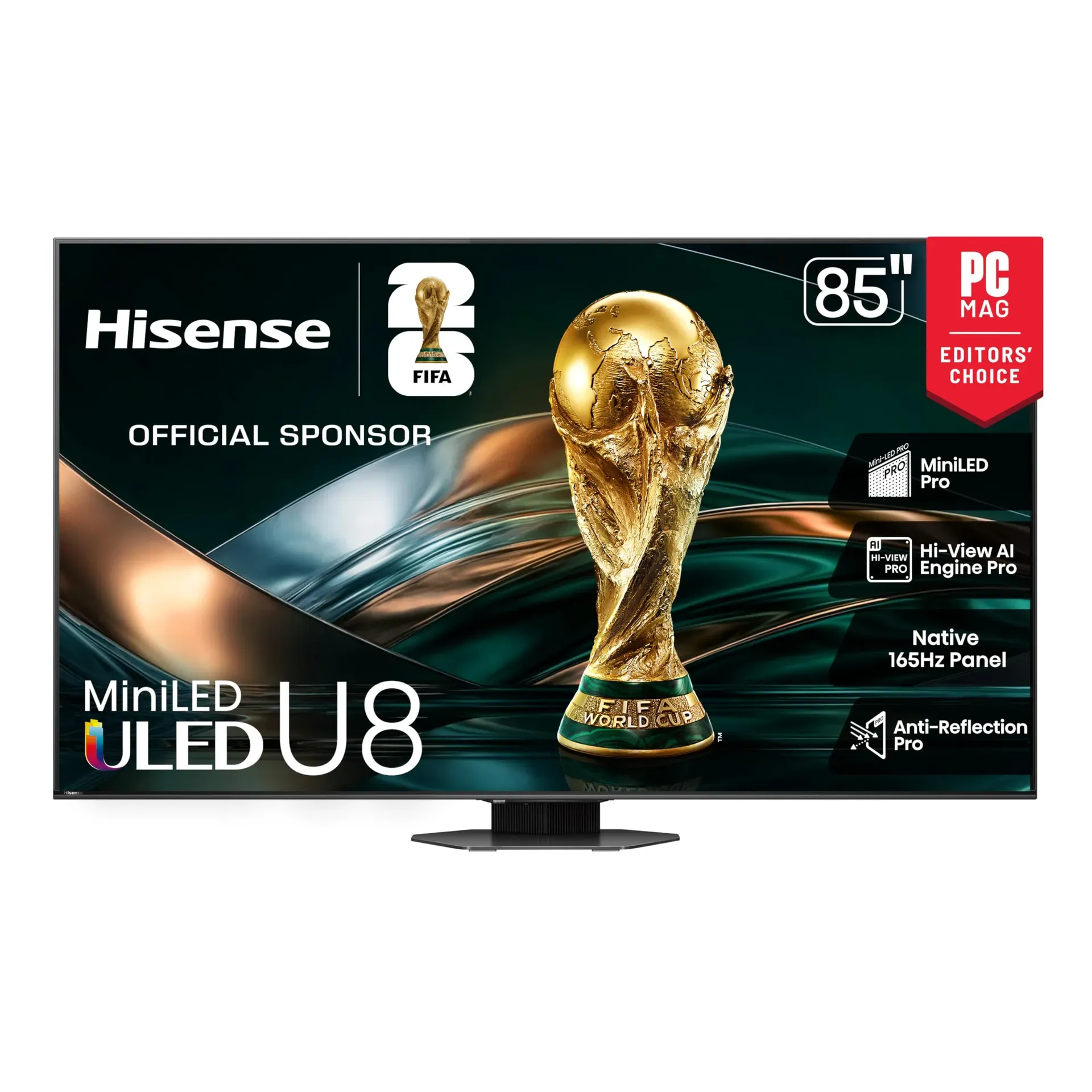
#9. Hisense 85" U8 Series ULED Mini-LED 4K UHD Smart Google TV (85U8QG)
Built for sun drenched living rooms, 5,000 nits and Anti-Reflection Pro defeat any glare.
Price: $2,799.99 Rating: 4.3/5 Best For: Bright Room Viewing Check Price on Amazon
The U8 exists for one scenario: you have a bright room and you refuse to close the blinds. With 5,000 nits and 5,600 dimming zones, it's the brightest TV on this list by a comfortable margin, and the Anti-Reflection Pro coating actually delivers on its promise. Compared to the TCL QM8L (#5) at the exact same $2,799.99 price, the Hisense gives you more dimming zones and a superior anti-reflection layer, while the TCL counters with higher peak brightness and better audio. It's a genuine toss-up between these two 85-inch titans. The 4.1.2 channel audio with Dolby Atmos is solid, though not at the Bang and Olufsen level of the TCL. At 4.3 stars from 660 reviewers, the lowest rating among the premium picks, some owners report occasional inconsistency in the Hi-View AI processing. For sun drenched living rooms, nothing on this list fights glare as effectively.
Pros
- 5,000 nits peak brightness with 5,600 local dimming zones
- Anti-Reflection Pro for superior bright room performance
- Native 165Hz panel with Game Booster 288
- 4.1.2 channel audio with Dolby Atmos
- Pantone-validated QLED color accuracy
- IMAX Enhanced, Dolby Vision IQ, and HDR10+ support
Cons
- 4.3 rating is the lowest among all premium-tier picks on this list
- Hi-View AI processing can be inconsistent with lower-quality content
- 85-inch size only, no 65-inch or 75-inch alternatives at this spec level
Verdict: The U8 is the definitive bright-room TV of 2026. Buy it if your living room gets blasted with sunlight and you refuse to compromise on screen size. If your room has decent light control, the TCL QM8L (#5) offers better audio and higher peak brightness for the same price.
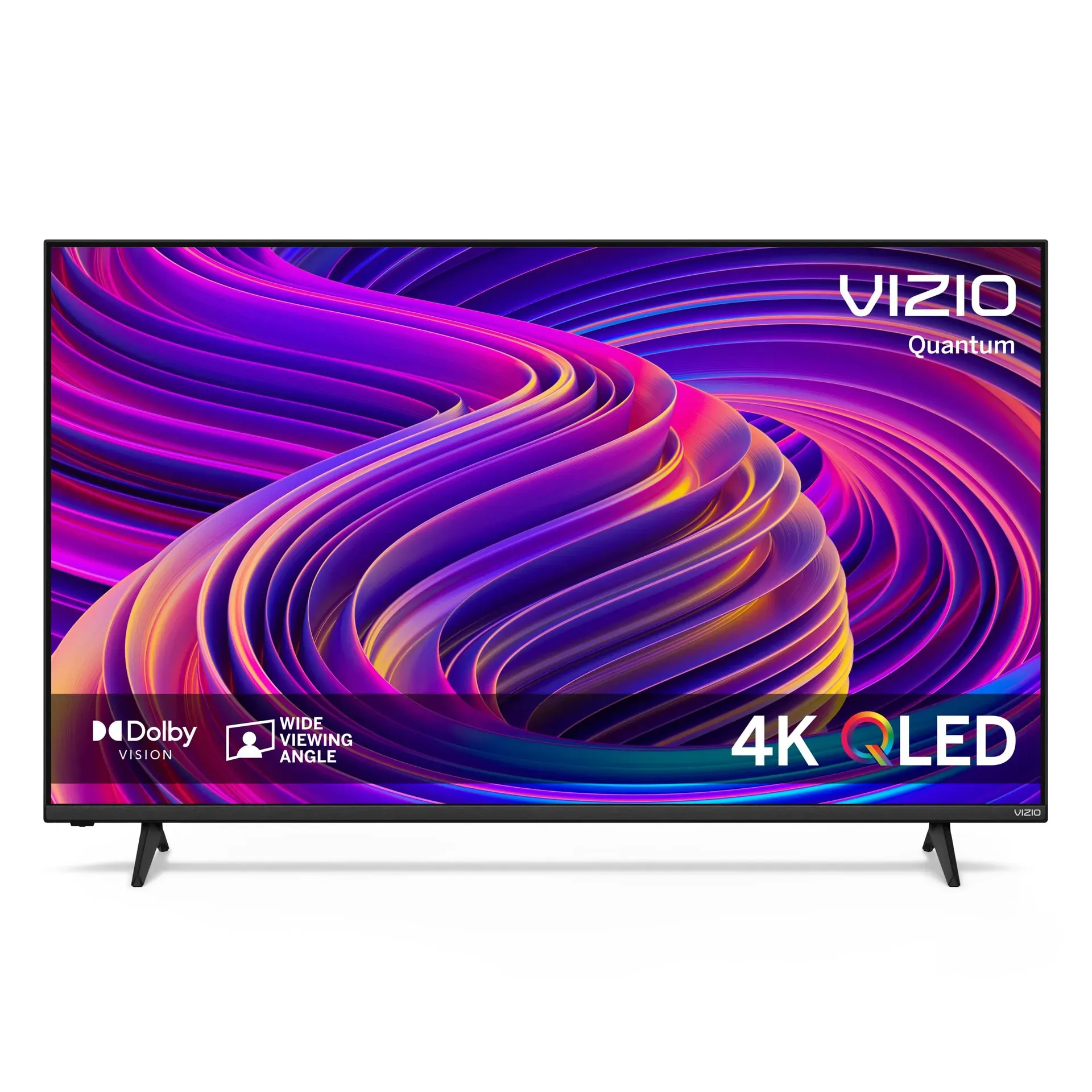
#10. VIZIO M55Q6L4 55 Inch Class Quantum 4K QLED HDR Smart TV
A solid QLED with WiFi 6 and FreeSync Premium, though sharper value exists elsewhere on this list.
Price: $649.99 Rating: 4.1/5 Best For: Budget-Conscious Buyers Check Price on Amazon
The VIZIO M55Q6L4 earns its spot as a capable budget QLED with a few tricks its competitors miss. WiFi 6 is genuinely useful if your router supports it. Smoother 4K streaming with less buffering, especially in homes with dozens of connected devices. AMD FreeSync Premium and 120fps at 1080p make it a respectable budget gaming display too. But at $649.99, it's in an awkward position: $150 more than the TCL QM6K (#6), which packs Mini-LED and a faster 144Hz panel. The VIZIO counters with a wide viewing angle that helps in family rooms where not everyone sits dead center. With a 4.1 rating, the lowest on this list by a margin, and only 58 reviews backing it, expectations should be calibrated. It's a fine TV. It's just not the best value in a market where TCL is doing extraordinary things at lower prices.
Pros
- QLED with over a billion colors and Dolby Vision HDR
- WiFi 6 for faster, more stable streaming in congested smart homes
- AMD FreeSync Premium with up to 120fps at 1080p
- Wide viewing angle for family room setups
- Integrated gaming menu for quick setting adjustments
Cons
- 4.1 rating, lowest overall score in this Top 10 by a significant margin
- Only 58 reviews, the smallest sample size on this list
- Costs $150 more than the superior TCL QM6K (#6) with no Mini-LED backlighting
Verdict: The VIZIO M55Q6L4 is a perfectly competent QLED TV that's been undercut by aggressive TCL pricing. Buy it if you specifically need WiFi 6 or prefer VIZIO's interface. Everyone else should save $150 and grab the TCL QM6K (#6) instead.
How to Choose the Best Smart TV in 2026
The top rated smart TVs of 2026 span a massive range, from $250 streaming-focused sets to $5,000 home theater flagships. The right pick depends less on budget than on knowing which features actually matter for how you watch. Here's what to prioritize.
OLED, Mini-LED, or QLED: What Actually Matters in 2026
Panel technology is the single biggest factor in picture quality, and 2026 has made the choice harder than ever. OLED (found on the LG G5 (#1) and LG C5 (#3)) delivers perfect blacks and infinite contrast because each pixel is self-lit and can turn completely off. The tradeoff is peak brightness, though the G5's Brightness Booster Max has dramatically narrowed that gap. Mini-LED, used by the Hisense U7 (#2), Samsung QN90F (#4), TCL QM8L (#5), and TCL QM6K (#6), uses thousands of tiny LEDs behind the screen for brightness that OLED can't touch, with local dimming zones that approximate deep blacks. Standard QLED, like the VIZIO M55Q6L4 (#10), uses quantum dots for color but lacks the precision dimming of Mini-LED. For dark-room movie watching, OLED wins. For bright rooms or HDR impact, Mini-LED dominates.
Price vs. Value: Where the Smart Money Goes in 2026
The best smart TVs to buy in 2026 aren't necessarily the most expensive ones. The price to performance curve has a clear sweet spot. At $500, the TCL QM6K (#6) delivers Mini-LED, a technology that cost $1,500 two years ago. At $1,000, the LG C5 (#3) brings genuine OLED. Above $1,800, you're paying for refinements: better processing, higher brightness, premium audio, and larger screens. The jump from a $500 TCL to a $1,800 LG G5 is transformative. The jump from the G5 to a $5,000 Sony BRAVIA 9 (#8) is incremental unless you own a PS5. For most buyers, the $500 to $1,800 range captures 95% of what makes a great TV in 2026.
Brand Reliability: Who Delivers Year After Year
LG, Samsung, and Sony remain the established tier-one brands with the longest track records for panel quality and software support. LG's Re:New Program on the C5 promises long-term webOS updates, which matters for a device you'll likely keep for five plus years. TCL and Hisense have closed the gap dramatically in hardware. Both now produce Mini-LED TVs that rival flagship models at half the price. But their software support timelines aren't as well established. Roku's Pro Series leverages the company's decade of streaming platform expertise, and Roku OS receives updates faster than any competitor. VIZIO rounds out the field with solid hardware at competitive prices, though its review volumes and ratings suggest more variability in user satisfaction.
Gaming Features Worth Paying For
If you game, refresh rate and VRR support should be near the top of your checklist. The Hisense U7 (#2) and LG C5 (#3) lead with 165Hz and 144Hz respectively. The LG G5 (#1) caps at 120Hz, still excellent, but not class leading. HDMI 2.1 bandwidth matters for 4K at high frame rates, and all top picks here support it. PS5 owners get exclusive benefits from the Sony BRAVIA 9 (#8) with Auto HDR Tone Mapping. For Xbox and PC gamers, FreeSync Premium Pro and G-Sync compatibility on the LG OLEDs provide tear free gaming no matter your platform.
Frequently Asked Questions About Smart TVs
Are smart TVs worth it in 2026?
Absolutely. Modern smart TVs integrate streaming, gaming, and smart home controls into a single device with interfaces that have matured significantly. The cheapest pick on this list, the Roku Pro Series (#7) at $249.99, delivers 4K QLED picture quality with Dolby Vision and a voice remote. Even budget models now include features like WiFi 6, AI upscaling, and gaming VRR that were exclusive to $2,000+ TVs just a few years ago. A good smart TV replaces your streaming box, gaming hub, and display in one package.
What's the best smart TV for streaming?
The Roku 55-inch Pro Series (#7) is purpose built for streaming, with the cleanest, fastest smart TV platform available and a backlit voice remote with hands-free controls. If you want a larger screen, the TCL 65-inch QM6K (#6) runs Google TV, which offers similarly broad app support with more personalized recommendations via Gemini AI. Both support Dolby Vision and Dolby Atmos for the best streaming quality from Netflix, Disney+, and Apple TV+.
Are smart TVs easy to set up?
Yes. Modern smart TVs are designed for near instant setup. Most models on this list guide you through a phone based setup process where you scan a QR code, sign into your Google or Roku account on your phone, and the TV automatically configures itself. Physically, all you need is to attach the stand or wall mount, plug in power and HDMI cables, and follow the on screen prompts. Expect 10 to 15 minutes from unboxing to streaming. The LG G5's One Wall Design adds some complexity if you're mounting it flush, but the included template makes it manageable.
Which smart TVs have Bluetooth?
Every TV on this list includes Bluetooth connectivity. This is standard across all major smart TV platforms in 2026, including webOS (LG), Google TV (Sony, TCL, Hisense), Roku OS, and Samsung's Tizen. Bluetooth lets you pair wireless headphones for private listening, connect game controllers directly to the TV, and link soundbars without running HDMI cables. The LG G5 (#1) and LG C5 (#3) support Bluetooth 5.1 with multi device pairing for simultaneous headphone and controller connections.
How long do smart TVs typically last?
A well maintained modern smart TV should last 7 to 10 years before hardware failure, though the smart platform may feel sluggish after 5 to 7 years as software updates become more demanding. OLED panels have a theoretical lifespan of 100,000 hours, roughly 10 years of heavy daily use, before reaching half brightness. Mini-LED and QLED TVs have no organic degradation concern and can easily outlast their smart platforms. LG's Re:New Program on the C5 series promises multi year software support. For any TV on this list, you can extend its smart functionality indefinitely by adding an external streaming stick if the built-in platform eventually slows down.
Final Verdict
The LG G5 OLED (#1) is the best smart TV of 2026. No qualifications, no asterisks. It solves OLED's brightness limitation and delivers a picture no Mini-LED can match. The Hisense U7 (#2) runs it shockingly close for gamers, with a faster panel and near-flagship performance at $100 less. And the TCL QM6K (#6) at $499.99 proves that great TV technology no longer requires a great TV budget.
Every TV on this list earned its spot through strong ratings and real-world performance. The right pick depends on your room, your viewing habits, and whether you game. Prices on Amazon shift regularly. Click through to check current pricing on any model that catches your eye.