
Top 10 Best Portable Generators of 2026: Ranked & Reviewed
One of these generators weighs 47 pounds and barely whispers. Another runs on natural gas, propane, and gasoline. Which one tops our 2026 rankings? The answer might surprise you.
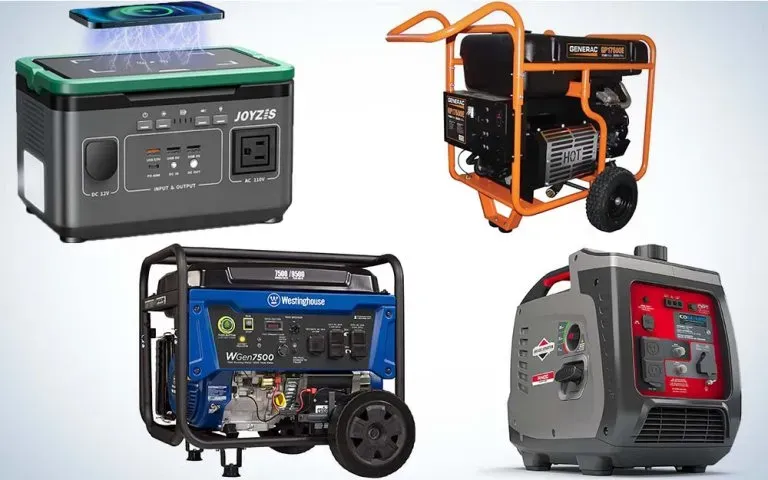
Buying a portable generator feels like gambling. Too small and your fridge goes warm during the next blackout. Too big and you've dropped two grand on a machine that rattles your fillings loose twice a year. This list cuts through the noise. Below are the 10 best portable generators of 2026: from a 47-pound Honda that barely whispers to a 12,000-watt Westinghouse that'll run your entire house. Every pick is ranked by what actually matters: reliability, noise, fuel flexibility, and the kind of real-world performance that keeps your food cold and your sump pump running when it counts. Spoiler: the top spot goes to a generator that hasn't meaningfully changed in years. There's a reason for that.
| # | Product | Price | Rating | |
|---|---|---|---|---|
| #1 | Honda EU2200i Companion | $1,199.00 | 4.8/5 | View Deal |
| #2 | Honda EU2200i | $1,199.00 | 4.7/5 | View Deal |
| #3 | Westinghouse iGen12000DFc | $1,300.00 | 4.6/5 | View Deal |
| #4 | DuroMax XP13000EH | $1,250.00 | 4.5/5 | View Deal |
| #5 | Westinghouse iGen5000DFc | $680.00 | 4.5/5 | View Deal |
| #6 | WEN DF360iX | $444.00 | 4.5/5 | View Deal |
| #7 | Champion 4500W Inverter | $585.00 | 4.5/5 | View Deal |
| #8 | Champion 11000W Tri-Fuel | $2,300.00 | 4.3/5 | View Deal |
| #9 | Generac iQ5200 DF | $1,099.00 | 4.2/5 | View Deal |
| #10 | Pulsar 7250W Inverter | $1,099.00 | 3.8/5 | View Deal |
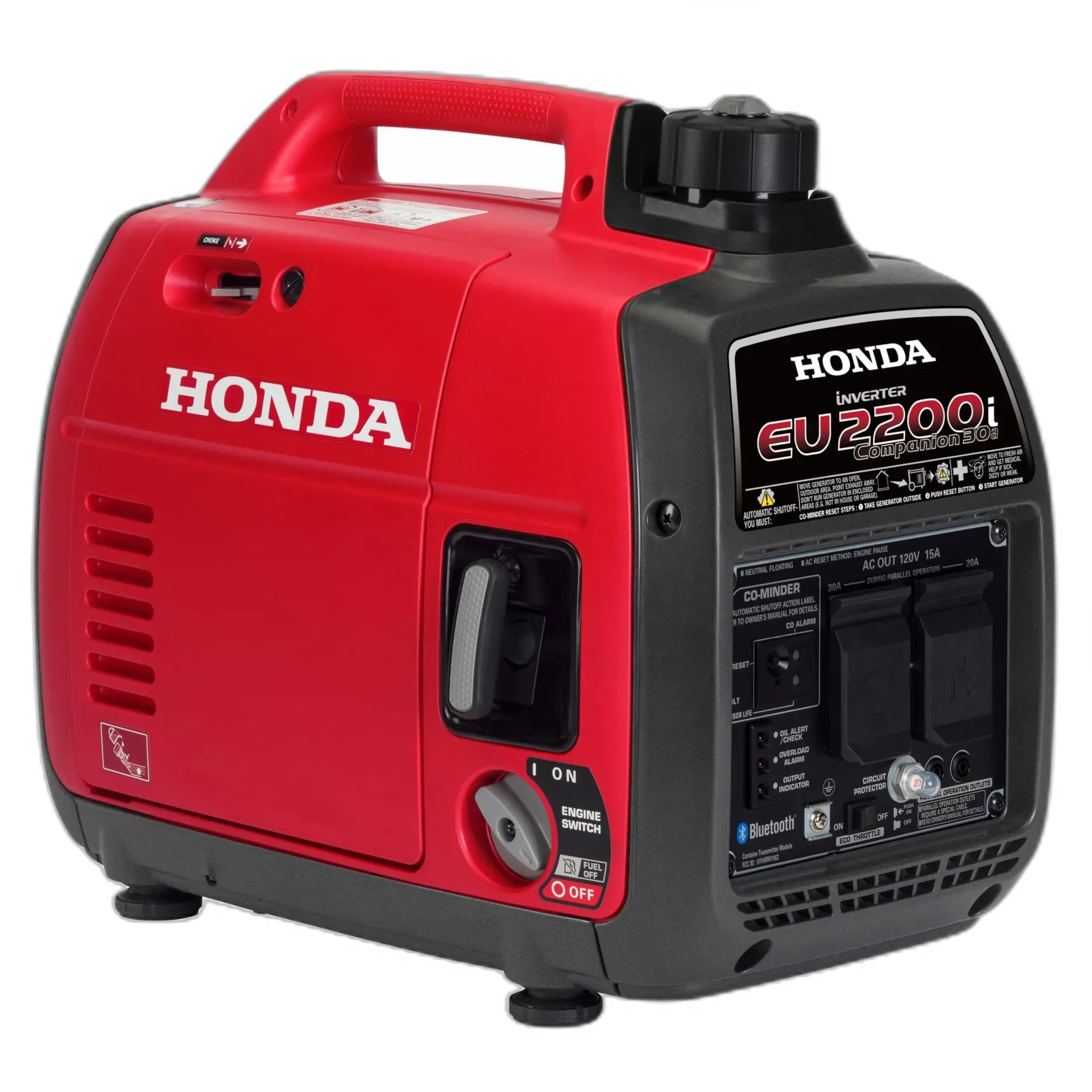
#1. Honda EU2200i Companion 2200 Watt Inverter Generator
The campground gold standard: 30A RV outlet, Bluetooth monitoring, and Honda reliability in 47 quiet pounds.
Price: $1,199.00 Rating: 4.8/5 Best For: Camping & RV Check Price on Amazon
Pick any campground in America and you'll hear it: the apologetic hum of a Honda. The EU2200i Companion takes the top spot not because it's powerful (at 2,200 watts, it's the weakest unit here) but because it's the generator that never lets you down. RV owners get a dedicated 30A outlet that the standard EU2200i (#2) lacks, same $1,199 price. The Honda tax is real. But ask anyone who's watched a cheaper generator sputter out mid-trip while the Honda kept humming. That's when $1,199 starts looking like a bargain. For camping and RV trips where failure isn't an option, nothing else comes close.
Pros
- Built-in 30A RV outlet: no adapters needed for travel trailers
- Bluetooth monitoring via Honda My Generator smartphone app
- CO-MINDER carbon monoxide detection with automatic shutdown
- 48 to 57 dB(A) noise level: quieter than normal conversation
- Only 47 pounds: one of the lightest inverter generators available
Cons
- 2,200 watts won't power a well pump, water heater, or central AC
- 0.95-gallon tank means refueling every few hours under heavy load
- $1,199 is steep: you're paying for the Honda badge
Verdict: If you camp or RV regularly and refuse to compromise on reliability, the Companion is the best portable generator on the market. Skip it only if you need whole-home backup wattage.
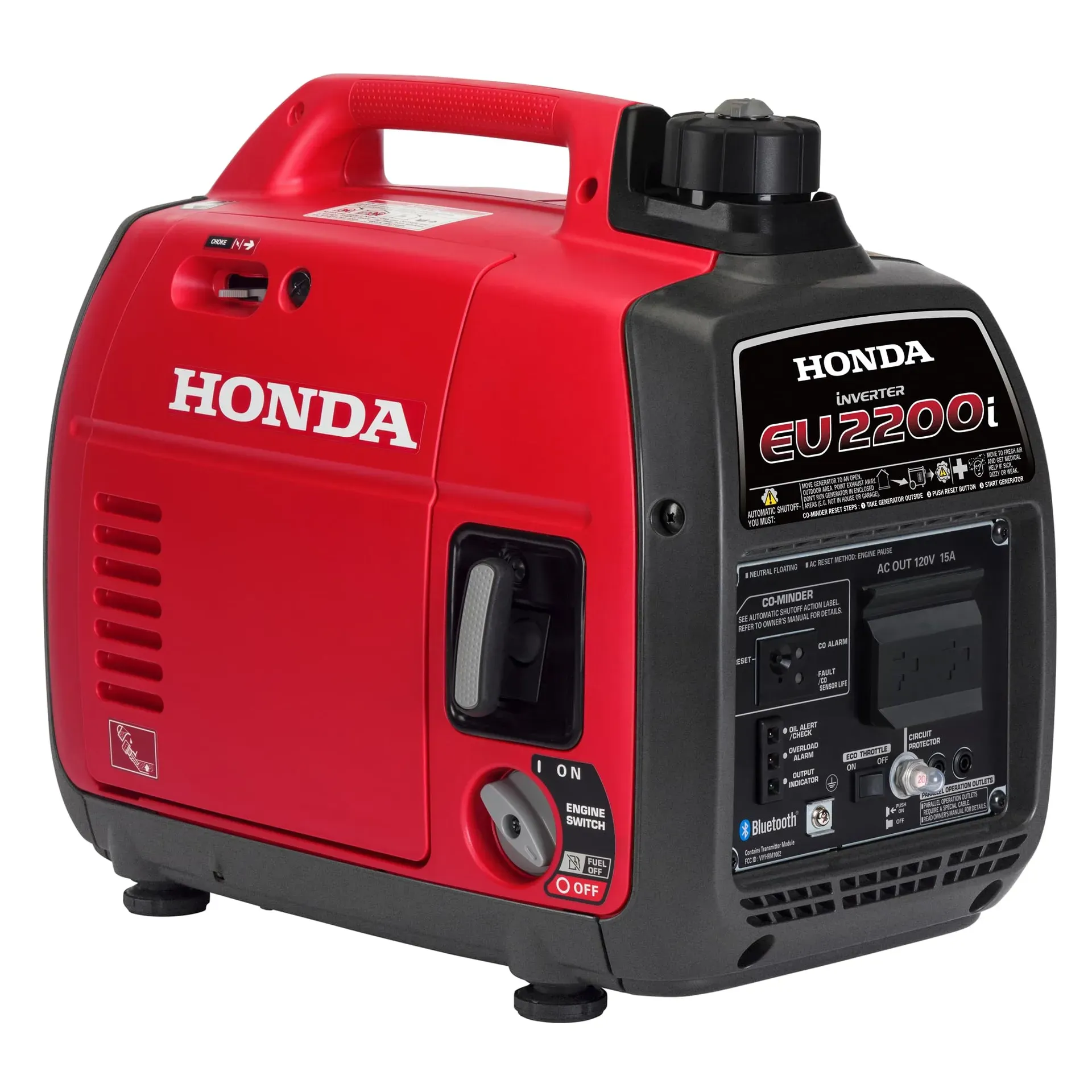
#2. Honda EU2200i 2200 Watt Inverter Generator
The most-reviewed portable generator for a reason: 3,200 owners can't be wrong about Honda's reliability.
Price: $1,199.00 Rating: 4.7/5 Best For: Camping & Light Backup Check Price on Amazon
Three thousand two hundred reviews. A 4.7 average. Those numbers don't lie: the standard EU2200i is the most trusted portable generator on the market, period. It's mechanically identical to the Companion (#1) but trades the 30A RV outlet for the same $1,199. Why buy it instead? You don't own an RV and don't need that outlet. For tent campers running a coffee maker, tailgaters powering a TV, or homeowners keeping a fridge cold during a blackout, this is the same Honda reliability minus one feature you won't miss. One dealbreaker: Honda won't sell this model in California. If you're in the Golden State, look elsewhere.
Pros
- 3,200+ reviews at 4.7/5: the most trusted generator on the market
- 48 to 57 dB(A): as quiet as the Companion (#1)
- Eco-Throttle delivers up to 8.1 hours on 0.95 gallons
- Clean inverter power under 3% THD: safe for sensitive electronics
- 3-year residential warranty
Cons
- No 30A RV outlet: RV owners should buy the Companion (#1) instead
- Not available for sale in California
- Identical $1,199 price to the Companion with fewer features
Verdict: Buy the EU2200i if you want the most proven generator money can buy for camping and light backup. If you have an RV, buy the Companion (#1) instead: same price, better connectivity.
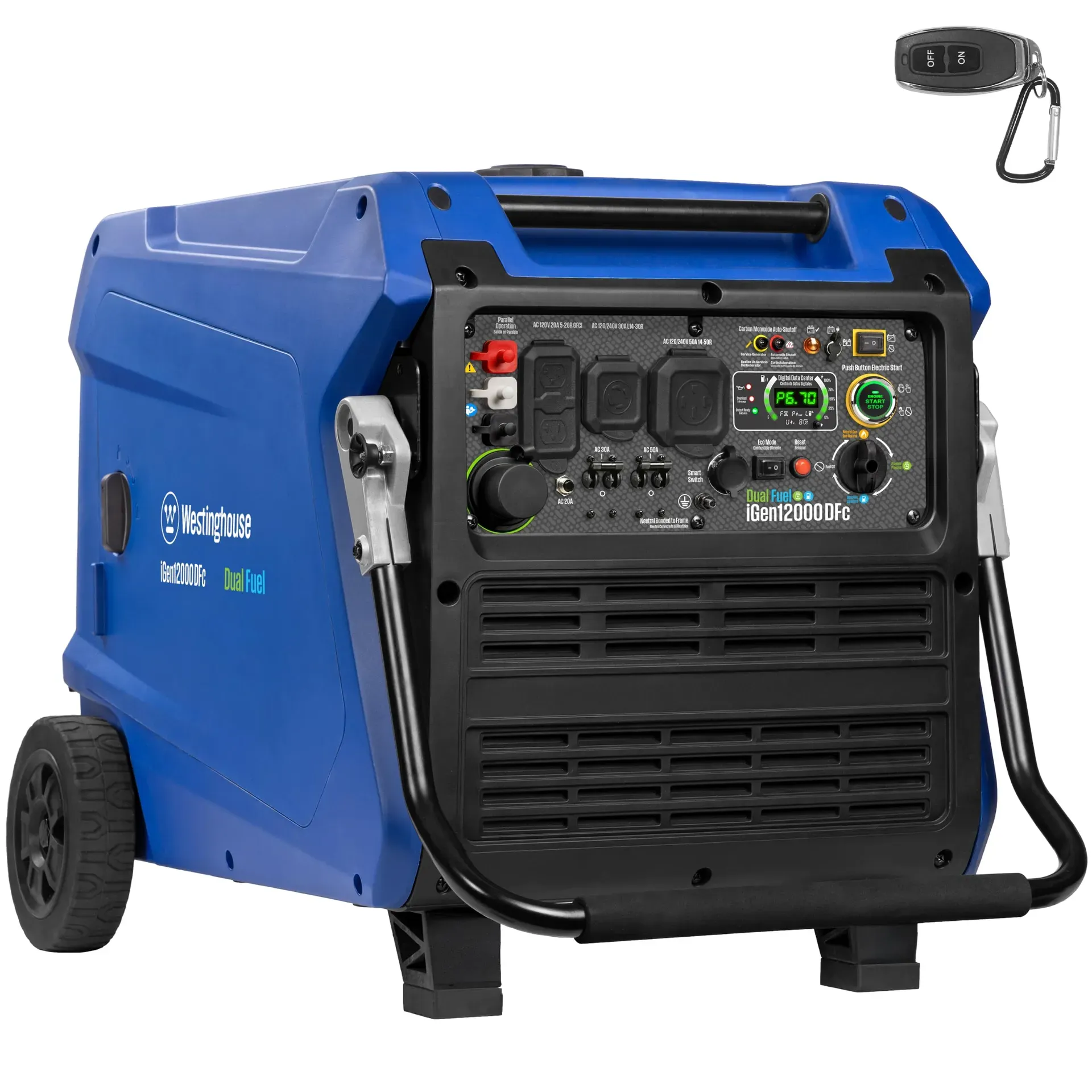
#3. Westinghouse 12000 Peak Watt Dual Fuel Portable Inverter Generator
Whole-house backup with clean inverter power: 12,000 watts and dual-fuel flexibility for extended outages.
Price: $1,300.00 Rating: 4.6/5 Best For: Whole-Home Backup Check Price on Amazon
The Honda will save your fridge. It won't save your well pump, furnace, and water heater during a January ice storm. The Westinghouse iGen12000DFc exists for that scenario. At #3, it's the first generator on this list capable of running an entire house, and it does it with clean inverter power that won't fry your electronics. The conventional DuroMax (#4) delivers more raw wattage for less money, but the Westinghouse's inverter tech is the difference between safely powering a smart TV and rolling the dice. For anyone who wants one generator that handles both RV trips and genuine home backup, this is the pick. It's not Honda-quiet, but for this much output, the noise level is remarkably civilized.
Pros
- 12,000 peak / 9,000 running watts on gas: whole-home capable
- Dual fuel: 11,000 peak / 8,100 running watts on propane
- Clean inverter power under 3% THD
- 7.9-gallon tank: up to 19 hours runtime at 25% load
- LED data center: fuel level, power output, remaining runtime, voltage
- 50A transfer-switch-ready outlet plus L14-30R
Cons
- Heavy: lifting it into a truck bed solo isn't realistic
- 64 dBA is noticeably louder than smaller inverter generators
- Inverter technology premium: conventional units offer more watts for less
Verdict: The best all-around whole-home backup generator with clean inverter power. Choose this if you need to run sensitive electronics alongside major appliances during an outage.
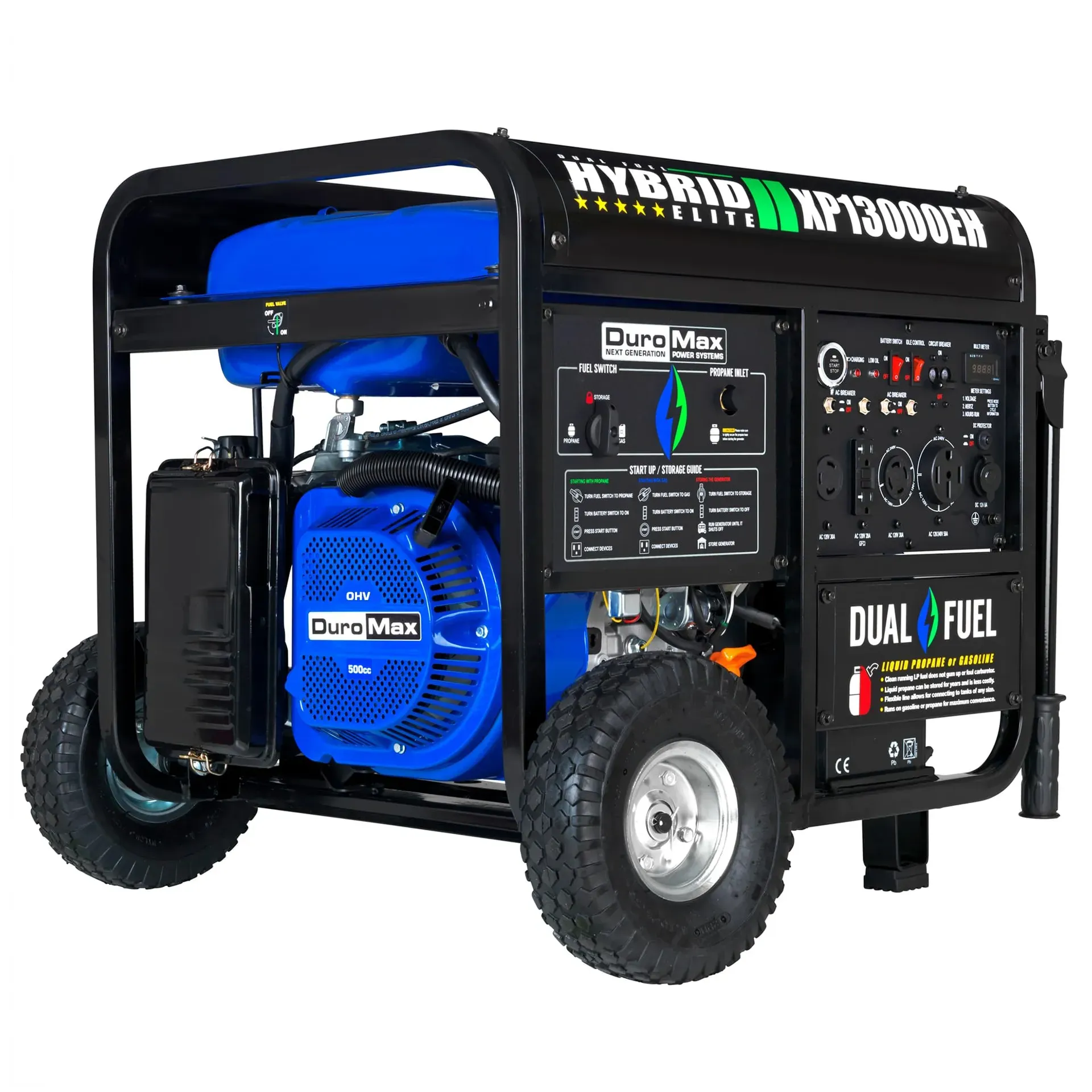
#4. DuroMax XP13000EH 13000-Watt Dual Fuel Portable Generator
Raw 13,000-watt muscle with nearly 4,000 reviews backing it up: the workhorse that won't quit.
Price: $1,250.00 Rating: 4.5/5 Best For: Whole-Home Backup Check Price on Amazon
If the Westinghouse (#3) is the surgeon, the DuroMax XP13000EH is the lumberjack. More peak watts. More running watts. Lower price. The catch? Conventional alternator power that's fine for lights and power tools but risky for anything with a microprocessor. Nearly 4,000 reviews at 4.5 stars tell you this thing fires up when the grid goes down. It's the generator you buy when you don't care about clean sine waves and just need every appliance running. Compared to the Westinghouse (#3), you're trading inverter safety and a digital display for raw output and a fifty-dollar discount. For pure outage survival where brute force matters more than finesse, that's a trade plenty of people will take.
Pros
- 13,000 peak / 10,500 running watts: highest running wattage on this list
- Dual fuel with front-facing quick-switch interface
- 100% copper windings for superior heat dissipation and longevity
- Electric push-button start: no pull-cord wrestling
- Nearly 4,000 reviews at 4.5 stars: massive real-world track record
- All-metal frame and power panel: zero plastic components
Cons
- Conventional alternator: not safe for sensitive electronics without a line conditioner
- No hour meter: tracking maintenance intervals requires manual logging
- Open-frame conventional design: substantially louder than inverter models under load
Verdict: Buy the DuroMax if you need maximum running wattage for the money and don't need clean inverter power. Skip it if you plan to charge laptops or run medical equipment directly.
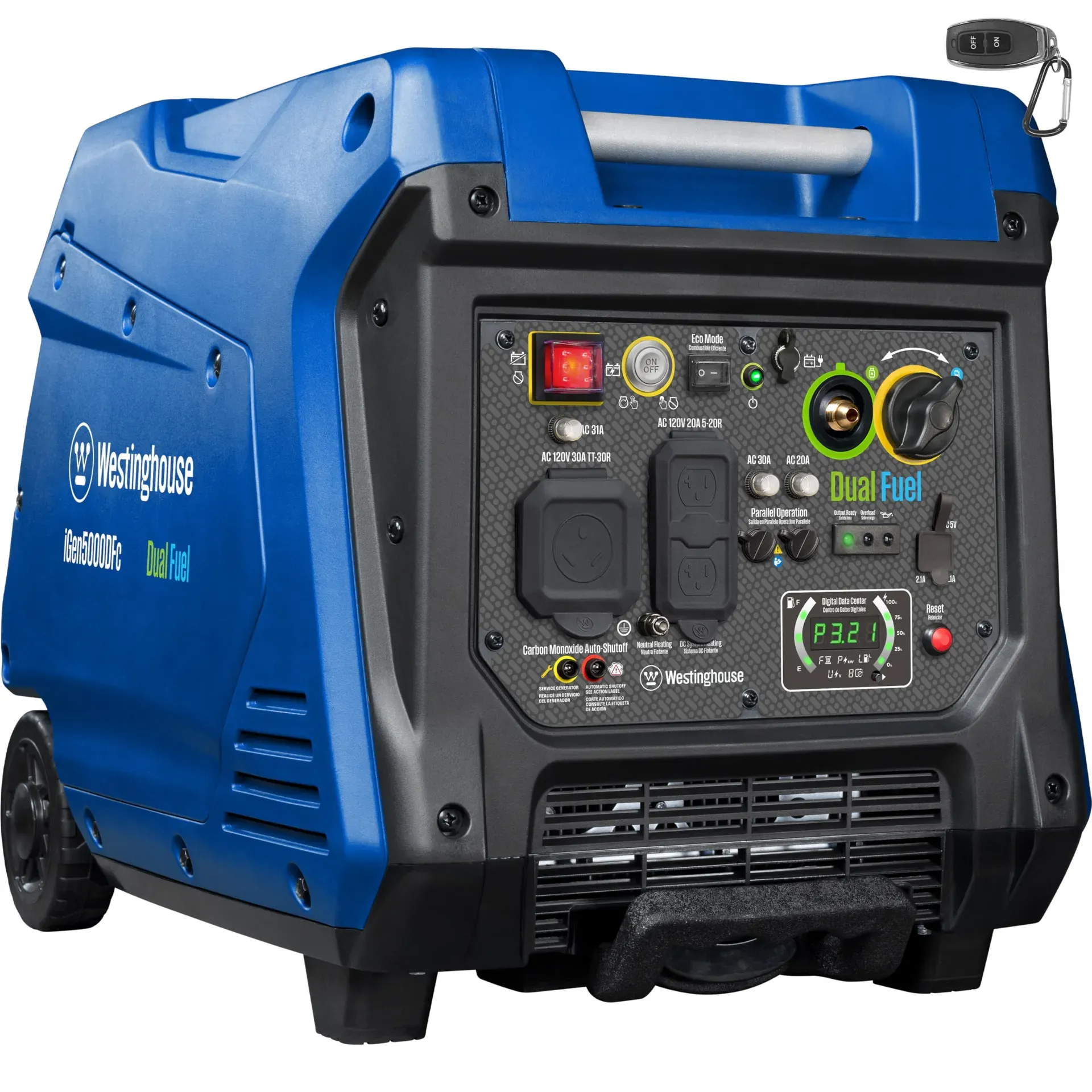
#5. Westinghouse iGen5000DFc 5000 Peak Watt Dual Fuel Portable Inverter Generator
The RV sweet spot: 5,000 watts, remote start, dual fuel, and 18-hour runtime for under $700.
Price: $680.00 Rating: 4.5/5 Best For: RV & Camping Check Price on Amazon
Here's the generator that makes the Honda's price tag look silly. The iGen5000DFc delivers more than double the running watts of the EU2200i for nearly half the money, and it runs on propane when gasoline isn't an option. Remote start from a key fob is the kind of feature you'll mock until the first time you fire it up from inside your RV during a rainstorm. Cross-shopping the WEN (#6)? The Westinghouse gives you roughly 1,000 more running watts. That's the gap between running a 13,500 BTU RV air conditioner and sweating through a humid night. At $680, this is the best mid-range generator on the market. The only real head-scratcher: no CO detection system, which both the WEN and Champion include at lower prices.
Pros
- 5,000 peak / 3,900 running watts with under 3% THD
- Remote start with key fob, electric start, and recoil backup
- 52 dBA in economy mode: extremely quiet for a 5,000-watt generator
- Up to 18 hours runtime on 3.4-gallon tank
- RV-ready TT-30R 30-amp outlet plus two USB ports
- 3-year limited warranty with service, labor, and parts coverage
Cons
- 3,900 running watts won't handle a full-size electric water heater
- Included wheel kit feels flimsy on rough or uneven terrain
- No CO detection system: found on the WEN (#6) and Champion (#7)
Verdict: The best mid-range RV generator for the money. Buy this if you want remote start and long runtime without the Honda price tag. Skip if CO detection is a must-have.
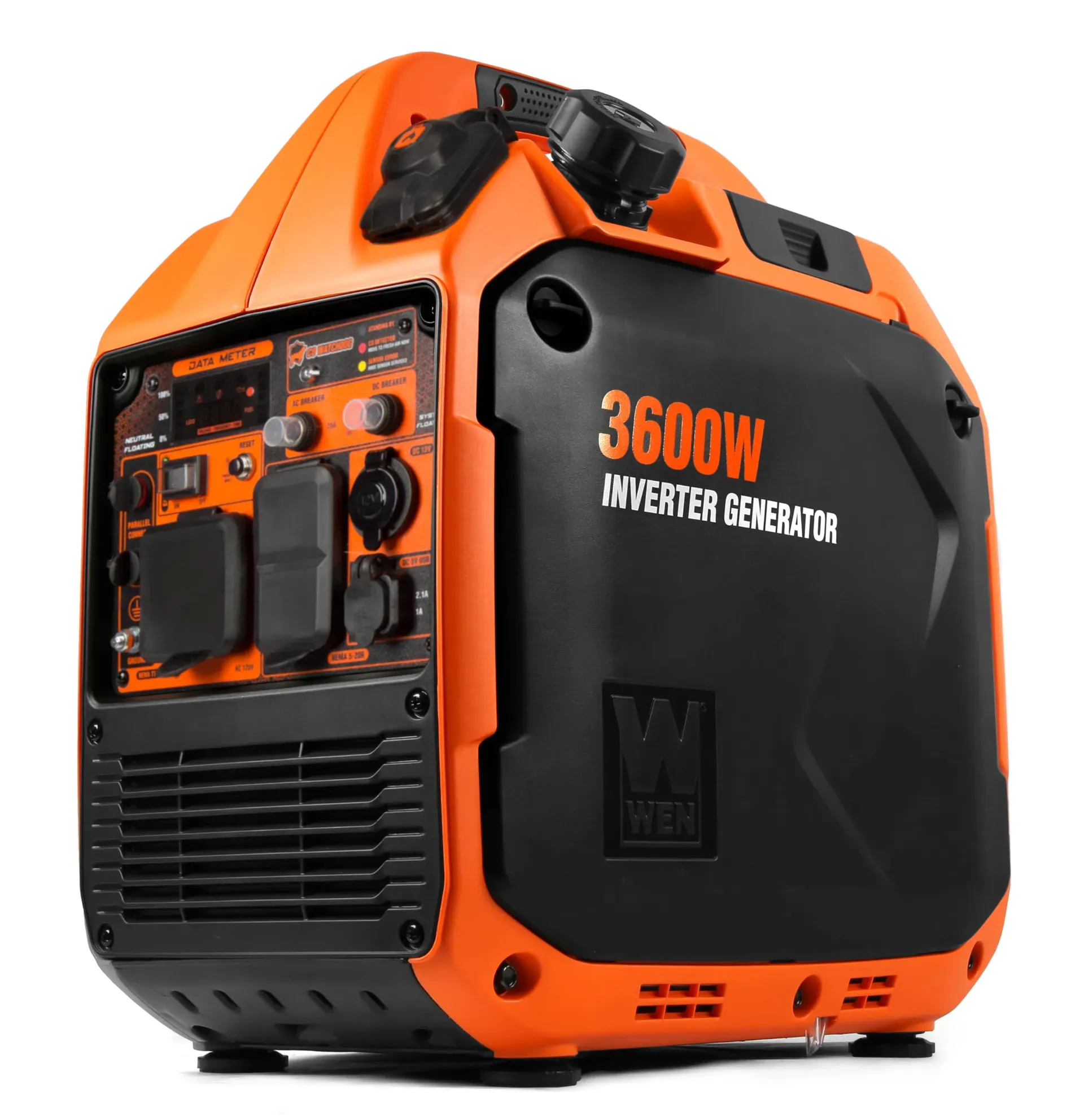
#6. WEN DF360iX 3600-Watt Dual Fuel RV-Ready Portable Inverter Generator
The best value on this list: clean inverter power and dual-fuel capability for just $444.
Price: $444.00 Rating: 4.5/5 Best For: Budget RV & Camping Check Price on Amazon
$444. For a dual-fuel inverter generator with a CO shutdown sensor. The WEN DF360iX is the budget pick that doesn't feel like one. At 49 pounds, it's barely heavier than the Honda while costing 63% less. The tradeoff is wattage: you'll need to load-manage carefully if you're running more than a fridge and some lights. Think weekend camping, tailgating, or keeping a sump pump alive during a summer storm. Not running an air conditioner. If that's your use case and you'd rather spend the savings on actual camping gear, the WEN is the smartest $444 you'll spend. Over 500 reviews at 4.5 stars suggest it punches well above its price class.
Pros
- $444: the best value inverter generator on this list
- Dual fuel: 3,600 surge watts gas / 3,500 surge watts propane
- Only 49 pounds: lighter than most competitors
- WEN Watchdog CO shutdown sensor
- Parallel-ready for doubled output with a second unit
- Two USB ports and TT-30R RV receptacle included
Cons
- 2,900 running watts on gas requires tight load management
- No fuel gauge on the unit: you're guessing how much gas is left
- Only 500 reviews: shorter track record than Honda or Champion
Verdict: The go-to pick for budget-conscious campers and tailgaters. Buy the WEN if saving money matters more than running an AC unit. Need more wattage? Step up to the Westinghouse (#5).
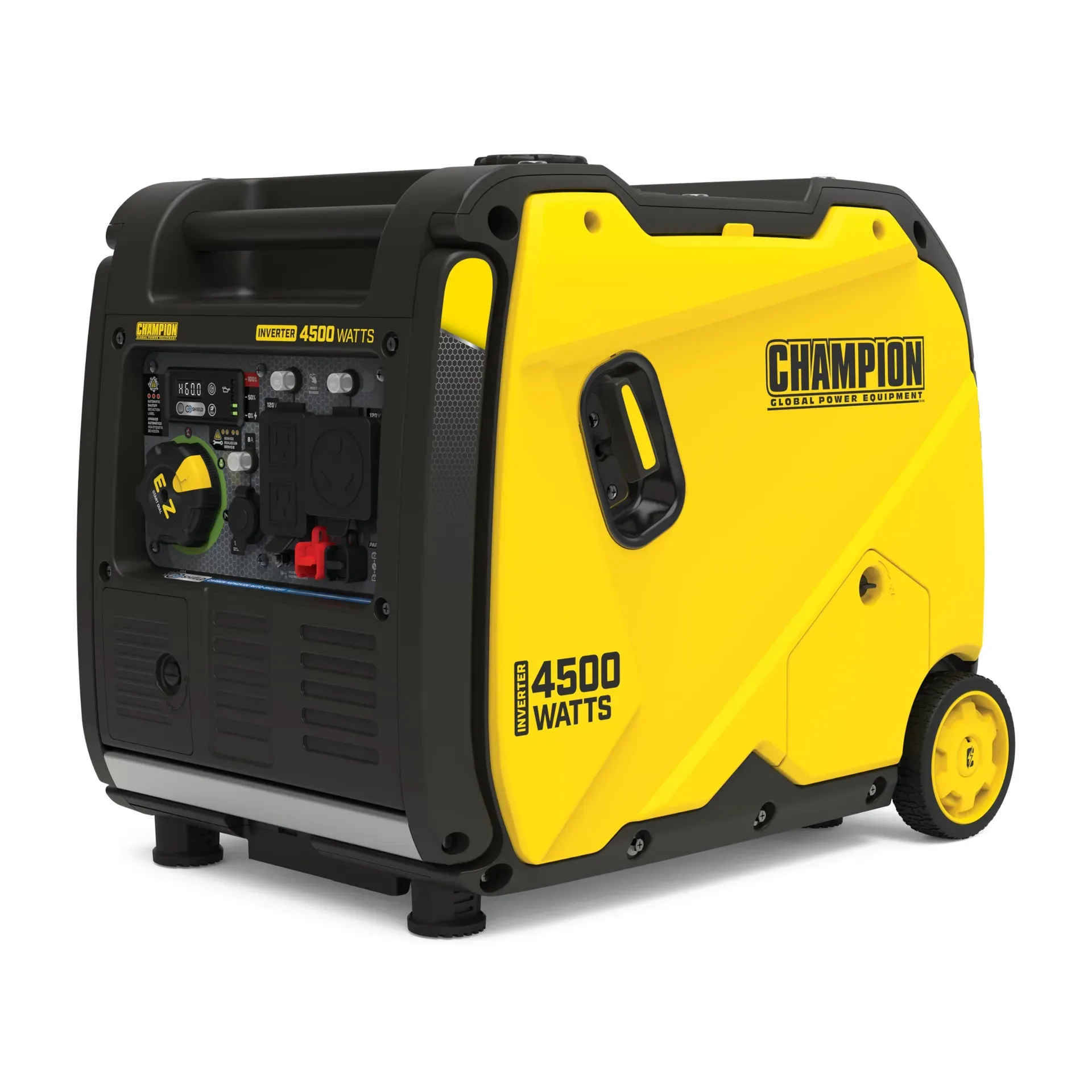
#7. Champion Power Equipment 4500-Watt Dual Fuel RV Ready Portable Inverter Generator
Quiet 61 dBA operation meets 4,500 watts and Champion's legendary support at a fair $585.
Price: $585.00 Rating: 4.5/5 Best For: RV Ready & Camping Check Price on Amazon
Champion's 4500-watt inverter sits in a tough spot: pricier than the WEN (#6), less powerful than the Westinghouse (#5). So why buy it? Because when your generator won't start at 2 AM during a blackout, Champion is the company most likely to have someone answering the phone. The 3-year warranty with free lifetime tech support is the best in the business. For a generator you might use twice a year, that safety net is genuinely valuable. The tradeoff: at 61 dBA, it's noticeably louder than the Westinghouse at 52 dBA. Campground neighbors will notice. Only 179 reviews so far, but early adopters seem happy. If support and peace of mind matter more than squeezing out every last watt or decibel, the Champion earns its spot.
Pros
- 4,500 starting / 3,500 running watts with under 3% THD
- CO Shield carbon monoxide auto-shutoff system
- Intelligauge display: voltage, frequency, and operating hours
- EZ Start Dial for simplified cold starts
- 3-year limited warranty with free lifetime technical support
- Parallel-ready with another Champion inverter
Cons
- Only 179 reviews: limited long-term reliability data available
- No 50A outlet: restricted to 30A RV or small home circuits
- 61 dBA is 9 dB louder than the Westinghouse iGen5000DFc (#5)
Verdict: Choose the Champion if warranty and support are your top priorities. If quiet operation matters more, the Westinghouse (#5) at 52 dBA is a stronger pick for campground use.
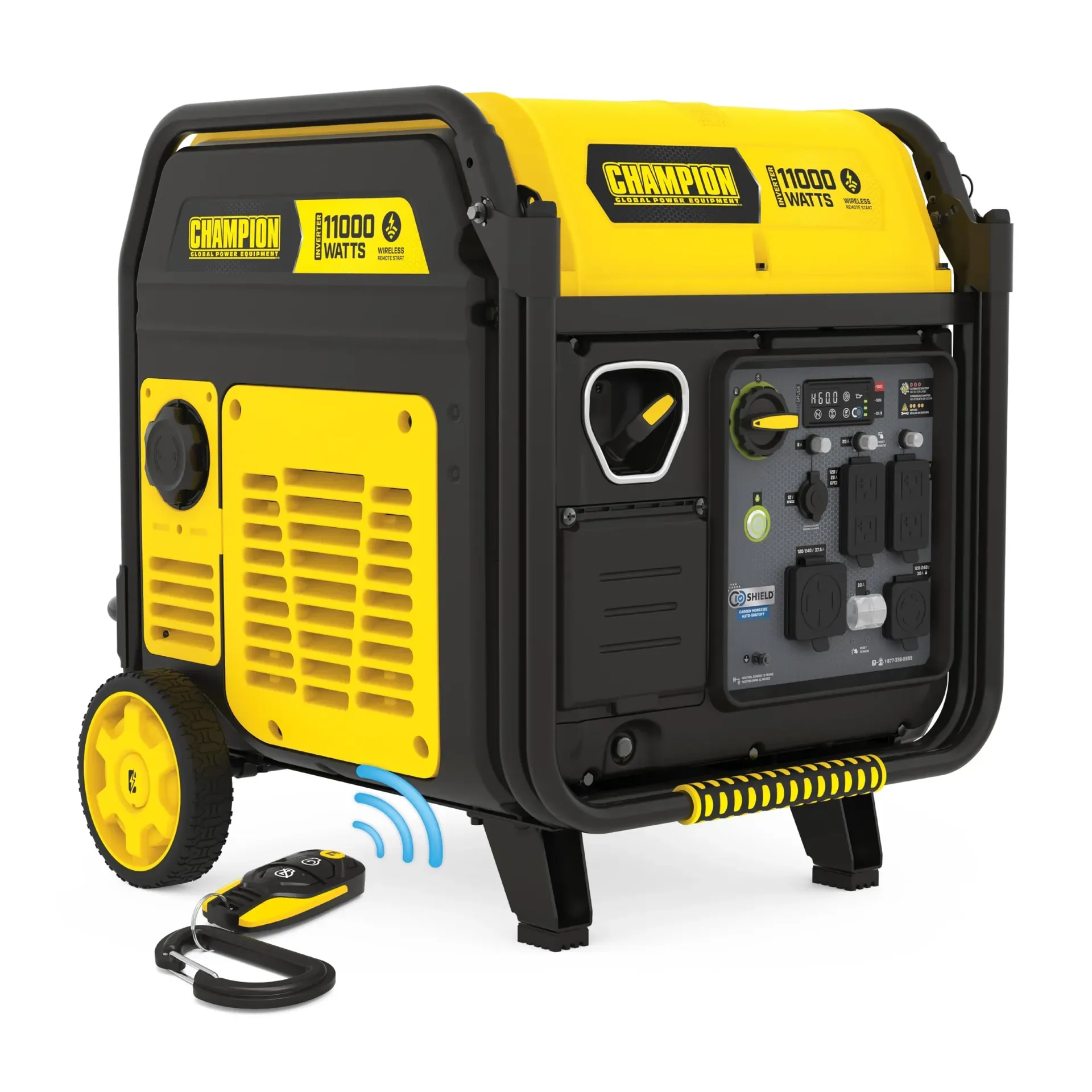
#8. Champion Power Equipment 11000-Watt Wireless Remote Start Home Backup Portable Inverter Generator
Tri-fuel, 11,000 watts, and wireless remote start: the premium pick for whole-home backup.
Price: $2,300.00 Rating: 4.3/5 Best For: Whole-Home Backup Check Price on Amazon
Two thousand three hundred dollars. That's the price of never storing gasoline again. Champion's flagship runs on natural gas from your home's existing line, meaning infinite runtime during an outage with zero fuel storage hassle. Wireless remote start from 80 feet away means firing it up without leaving the house during a blizzard. But here's the hard math: the Westinghouse (#3) delivers comparable power for $1,000 less, and the DuroMax (#4) offers more peak watts at nearly half the price. You're paying strictly for tri-fuel and remote start. If a natural gas hookup genuinely matters to you, the premium is defensible. If not, save your money and buy #3. Only 109 reviews so far: for $2,300, that should give anyone pause.
Pros
- Tri-fuel: gasoline, propane, or natural gas
- Wireless remote start from up to 80 feet
- 11,000 starting / 9,000 running watts
- 64 dBA: remarkably quiet for this power class
- 459cc Champion engine with Cold Start Technology
- 50A transfer-switch-ready outlet
Cons
- $2,300 is $1,000+ more than the Westinghouse (#3) and DuroMax (#4)
- Only 109 reviews: sparse data for a flagship product
- 15-hour runtime at 25% load is short given the price
Verdict: Buy the Champion 11000W if tri-fuel flexibility and remote start are essential. If you can live without a natural gas hookup, the Westinghouse (#3) delivers near-identical power for far less.
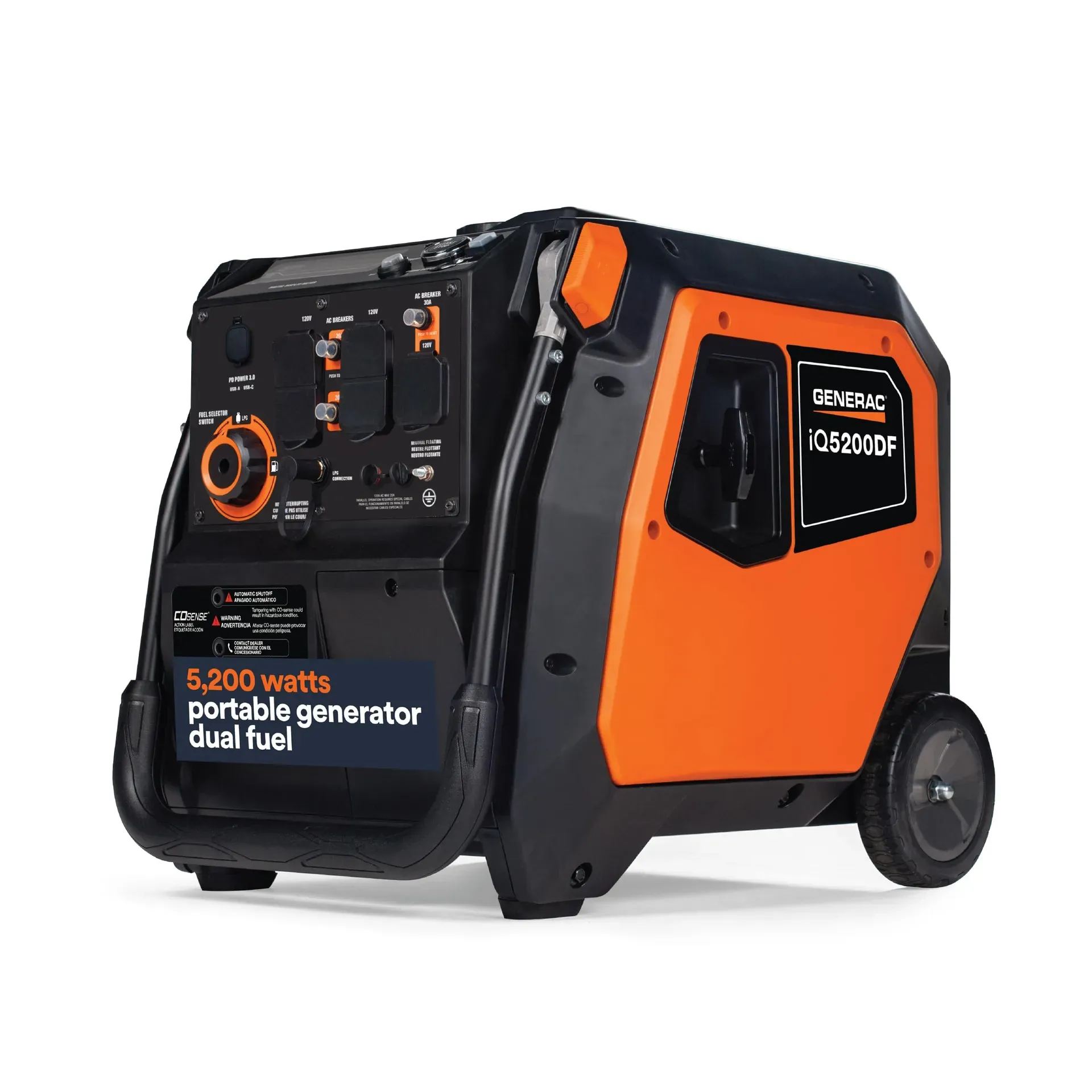
#9. Generac iQ5200 DF 5200 Watt Dual Fuel Inverter Generator
Generac's inverter entry brings COsense safety and USB-C charging, but faces stiff competition at this price.
Price: $1,099.00 Rating: 4.2/5 Best For: Home Backup & RV Check Price on Amazon
Generac dominates the standby generator market. Portable inverters? The iQ5200 DF suggests they're still finding their groove. Fifty-four reviews at 4.2 stars versus Honda's 3,200 reviews at 4.7: that's the gap between a proven product and one that's still building trust. The hardware isn't the problem. COsense auto-shutdown and USB-C charging are genuinely thoughtful touches you won't find on most competitors. But at $1,099, it costs $419 more than the identically-powered Westinghouse (#5) while offering less runtime at 50% load. If you're already a Generac household and want brand consistency, it's not a bad generator. For everyone else, the value math simply doesn't add up.
Pros
- Dual fuel: 5,200 starting watts gas / 4,700 starting watts propane
- COsense automatic carbon monoxide shutdown
- USB-C and USB-A ports for modern device charging
- LED display with real-time power output and fuel level
- Economy Mode: up to 9 hours gas / 11 hours propane at 50% load
- 3-year residential warranty from a trusted brand
Cons
- Only 54 reviews: the thinnest reliability data on the entire list
- $1,099 is $419 more than the similarly-powered Westinghouse (#5)
- 9-hour gas runtime at 50% load trails most competitors
Verdict: Consider the Generac if you want USB-C convenience and COsense in a familiar brand name. Most buyers will get better value and more proven reliability from the Westinghouse (#5) or WEN (#6).
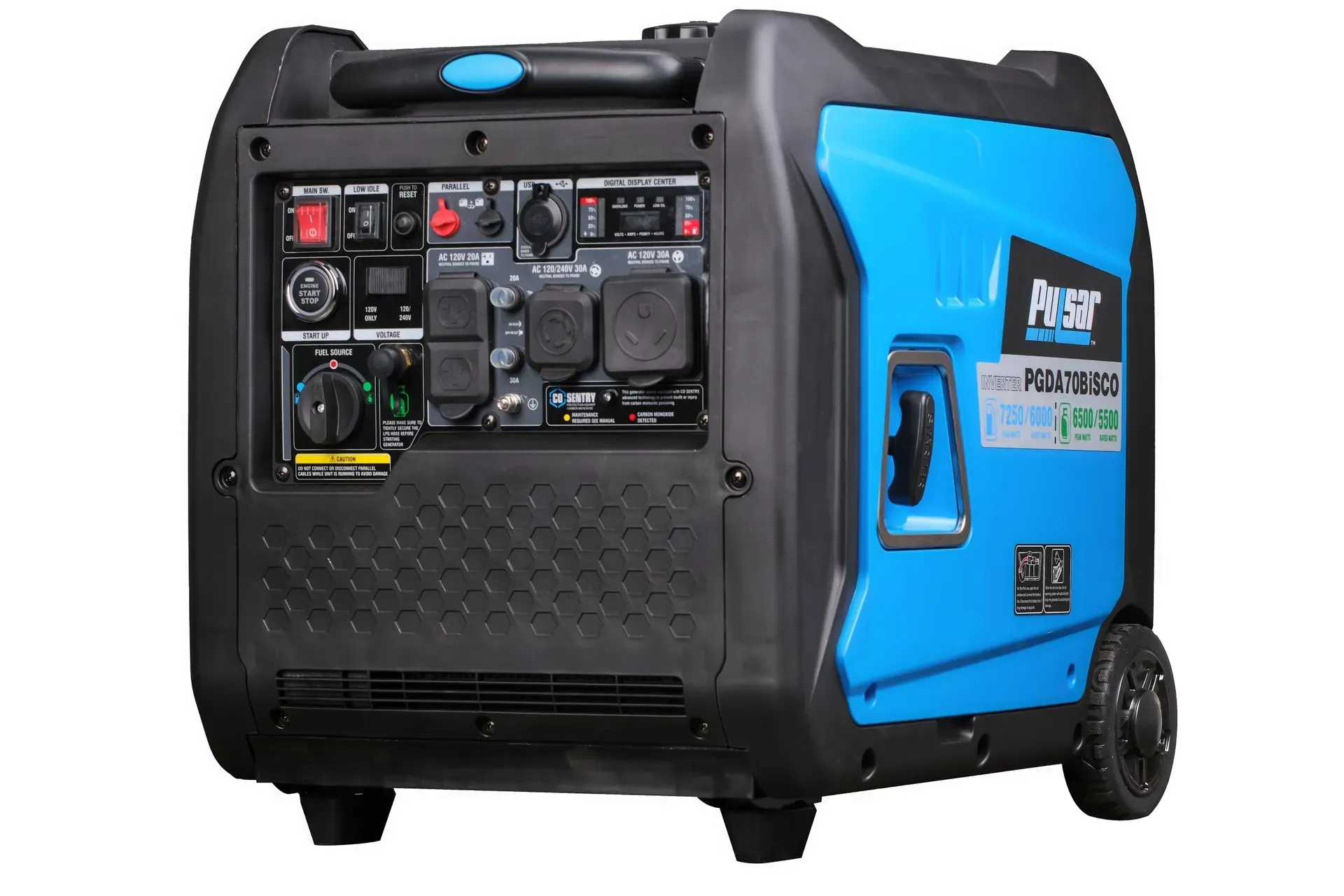
#10. Pulsar 7250-Watt Super Quiet Dual Fuel Inverter Generator
7,250 watts and 240V output at a competitive price, held back by a 3.8 rating and limited track record.
Price: $1,099.00 Rating: 3.8/5 Best For: RV & Home Backup Check Price on Amazon
A 3.8 rating on a generator is alarming. Generators are emergency equipment: when you need them, they must work. The Pulsar's specs are competitive on paper: 7,250 peak watts, 240V output, dual fuel, remote start. But 115 reviews averaging 3.8 stars suggest quality control isn't where it needs to be. At $1,099, you're dangerously close to the Westinghouse (#3) at $1,300, which delivers nearly double the running watts, carries a 4.6 rating, and comes from a brand with substantially better support. The Pulsar only makes sense if you absolutely need 240V output and 6,000 running watts at exactly this price point. Most buyers should either stretch to the Westinghouse or save more with the WEN (#6).
Pros
- 7,250 peak / 6,000 running watts on gas (5,500 on propane)
- 120V/240V output: supports both standard and high-voltage appliances
- Remote start, electric start, and recoil start options
- Digital control center: hours, voltage, load, and frequency
- TT-30R RV outlet plus USB-A and USB-C ports
- Parallel capable for combining two units
Cons
- 3.8 rating is the lowest on this list: quality control is a legitimate concern
- Pulsar's warranty and support network lag behind Champion and Honda
- Marketed as "super quiet" but refuses to publish actual decibel ratings
Verdict: Only consider the Pulsar if you need 240V output and 6,000+ running watts at this specific price. Most buyers will sleep better with the Westinghouse (#3) or DuroMax (#4).
How to choose the best portable generator in 2026
Wattage: what you actually need
Here's the single biggest mistake generator buyers make: they see "12,000 watts" on the box and think they're powering a small city. That's peak wattage, a brief surge for starting motors. What matters is running watts: the continuous output your appliances actually draw. Add up everything you plan to power simultaneously. Fridge, furnace blower, well pump, sump pump, a few lights. That's your baseline. Now add 20% headroom. That number is your minimum running wattage. For camping and tailgating, 2,000 to 3,000 running watts handles the basics. Coffee maker, phone charger, maybe a small heater. For home backup, plan for 7,000 to 9,000 running watts to cover a fridge, furnace blower, well pump, sump pump, and essential lights. That's Westinghouse (#3) and DuroMax (#4) territory. Whole-home setups with electric water heaters or central AC demand 9,000 running watts minimum, and even then you'll likely need a soft start for the AC unit.
Inverter vs. conventional: why clean power matters
Here's the short version: inverter generators produce clean power safe for anything with a circuit board. Conventional generators don't. Given that nearly everything these days has a circuit board (your fridge, your TV, your phone charger), the inverter premium is usually worth paying. On this list, only the DuroMax (#4) uses a conventional alternator. If you're running power tools and basic appliances during an outage, it's fine. If you're plugging in laptops, medical equipment, or anything with a microprocessor, buy an inverter. The extra cost is cheaper than replacing fried electronics. Every generator on this list except the DuroMax (#4) uses inverter technology for a reason.
Dual fuel: why propane flexibility is worth the premium
Gasoline goes bad. Even with stabilizer, 6 to 12 months is your limit before it gums up the carburetor. Propane stores indefinitely. That matters when your generator sits for 11 months and needs to start during a midnight storm. Dual-fuel generators also give you options when gas stations run dry before a hurricane. Propane tanks are often still available when pumps aren't. Every generator from #3 onward on this list offers dual fuel. The Hondas (#1 and #2) are gas-only, which is part of why the Westinghouse iGen5000DFc (#5) makes such a compelling case for RV owners who want fuel flexibility.
Brand reliability and real-world track records
Honda owns this conversation and it's not close. The EU2200i's 3,200 reviews at 4.7 stars aren't marketing fluff. They're evidence of a product that simply doesn't fail. Westinghouse and Champion have built reputations through generous 3-year warranties and responsive support networks. DuroMax earns trust through sheer volume: nearly 4,000 reviews on a single model means it's been tested through countless real outages. WEN is the value wildcard: fewer reviews but strong ratings at aggressive prices. Generac and Pulsar sit at the bottom here, not because their products are bad, but because the review counts are too thin to draw real conclusions. When a generator is your lifeline during an emergency, track record beats spec sheets every time.
Frequently asked questions
What are the best portable generators to buy right now?
It depends on what you're powering. For camping and RV trips, the Honda EU2200i Companion (#1) is the gold standard for reliability and quiet operation. For whole-home backup, the Westinghouse iGen12000DFc (#3) delivers clean inverter power at 12,000 peak watts. On a budget? The WEN DF360iX (#6) at $444 is the best value on the market by a wide margin.
Are portable generators worth it?
If you live somewhere with frequent outages, camp regularly, or rely on medical equipment that can't lose power: absolutely. One spoiled freezer of food often costs more than a budget generator like the WEN DF360iX. Add in hotel stays during extended outages or ruined camping trips, and a quality generator pays for itself faster than you'd expect.
Can a portable generator power a whole house?
Yes, with the right size and a transfer switch or interlock kit. The Westinghouse iGen12000DFc (#3) and DuroMax XP13000EH (#4) both deliver enough running wattage to cover essential household circuits. But powering absolutely everything (central AC, electric oven, dryer) typically requires a standby generator in the 20,000-watt range. For most homes, 9,000 to 10,500 running watts handles the critical stuff comfortably.
What size generator do I need for home backup?
For essential circuits only (fridge, furnace blower, well pump, sump pump, a few lights and outlets), 5,000 to 7,000 running watts will do the job. The Westinghouse iGen5000DFc (#5) at 3,900 running watts is the minimum for basic home backup: it'll handle a fridge, furnace, and lights but not much more. If you want to add a small window AC or electric water heater to the mix, step up to 9,000 running watts minimum. The Westinghouse iGen12000DFc (#3) is the right starting point.
What's the best portable generator for camping?
The Honda EU2200i Companion (#1) is the camping gold standard: whisper-quiet at 48 to 57 dB(A), only 47 pounds, and the 30A RV outlet simplifies hookups. If $1,199 is too steep, the WEN DF360iX (#6) delivers clean inverter power and dual-fuel capability at $444. Just know you're getting about 1,000 fewer running watts and a shorter track record.
Final verdict
The Honda EU2200i Companion (#1) remains the best portable generator of 2026 for anyone who camps or travels in an RV: unmatched reliability in a 47-pound package that sips fuel and barely makes a sound. For whole-home backup, the Westinghouse iGen12000DFc (#3) is the smartest money you'll spend: clean inverter power, dual fuel, and 19-hour runtime at a fair $1,300. And if budget is the priority, the WEN DF360iX (#6) at $444 proves you don't need four figures for reliable portable power. Every generator on this list earned its spot. The right one depends on what you're powering and how often you'll need it. Prices on Amazon shift regularly, so check current deals before you buy.